Understanding the Critical Role of Enzyme Used in Detergent Formulations
Understanding the Critical Role of Enzyme Used in Detergent Formulations
Understanding the Role of Enzyme Used in Detergent
Modern detergents rely heavily on enzymes to deliver superior cleaning performance. These biological catalysts break down stubborn stains like proteins, starches, and fats, going beyond the capabilities of traditional cleaning agents. This article will explore the various types of enzymes used in detergent formulations, their specific functions, benefits, and advancements in enzyme technology. Understanding the science behind these enzyme applications is crucial for both detergent manufacturers and consumers seeking effective cleaning solutions. Dyeingchem.com provides a range of high-quality enzymes for detergent applications.
Types of Enzymes Commonly Found in Detergents
Several types of enzymes are commonly incorporated into detergent formulations, each targeting specific types of stains. The four most prominent are Protease, Amylase, Lipase, and Cellulase. Each enzyme works by catalyzing the breakdown of large molecules into smaller, water-soluble pieces, making them easier to wash away. The choice of enzymes and their concentrations depend on the intended use of the detergent – laundry, dishwashing, or specialized cleaning applications. Explore our enzyme range to find the best solution for your needs.
Key Enzyme Functions: Protease targets protein-based stains, Amylase breaks down starches, Lipase tackles fats and oils, and Cellulase smooths fabric fibers.
Protease: Tackling Protein-Based Stains
Protease is arguably the most widely used enzyme in laundry detergents. It effectively breaks down protein-based stains like blood, grass, egg, and sweat. Different types of proteases are available, each with varying levels of activity and stability at different temperatures and pH levels. Subtilisin is a common type of protease used in detergents, derived from the bacterium Bacillus subtilis. The efficacy of protease enzymes is crucial for removing stubborn protein stains effectively, resulting in cleaner and fresher fabrics.
Protease Benefits:
• Effectively removes blood, grass, and food stains
• Works well in a wide range of temperatures
• Enhances overall cleaning performance
• Reduces the need for harsh chemicals
Comparing Enzyme Performance in Different Detergent Types
The optimal enzyme formulation varies depending on the detergent type. Laundry detergents typically contain a blend of protease, amylase, and lipase, while dishwashing detergents may focus more on lipase and amylase to target food residue. Industrial and institutional detergents often require higher enzyme concentrations and specialized enzyme blends to handle demanding cleaning tasks. Here’s a comparative overview:
Advancements in Enzyme Technology and Stability
Ongoing research focuses on improving enzyme stability, especially at high temperatures and in the presence of harsh chemicals like bleach. Techniques like enzyme encapsulation and genetic engineering are used to create more robust and efficient enzymes. Dyeingchem.com is at the forefront of these advancements, offering stabilized enzyme formulations designed for optimal performance in a wide range of detergent applications.
Product Specifications: Dyeingchem's Protease Enzyme
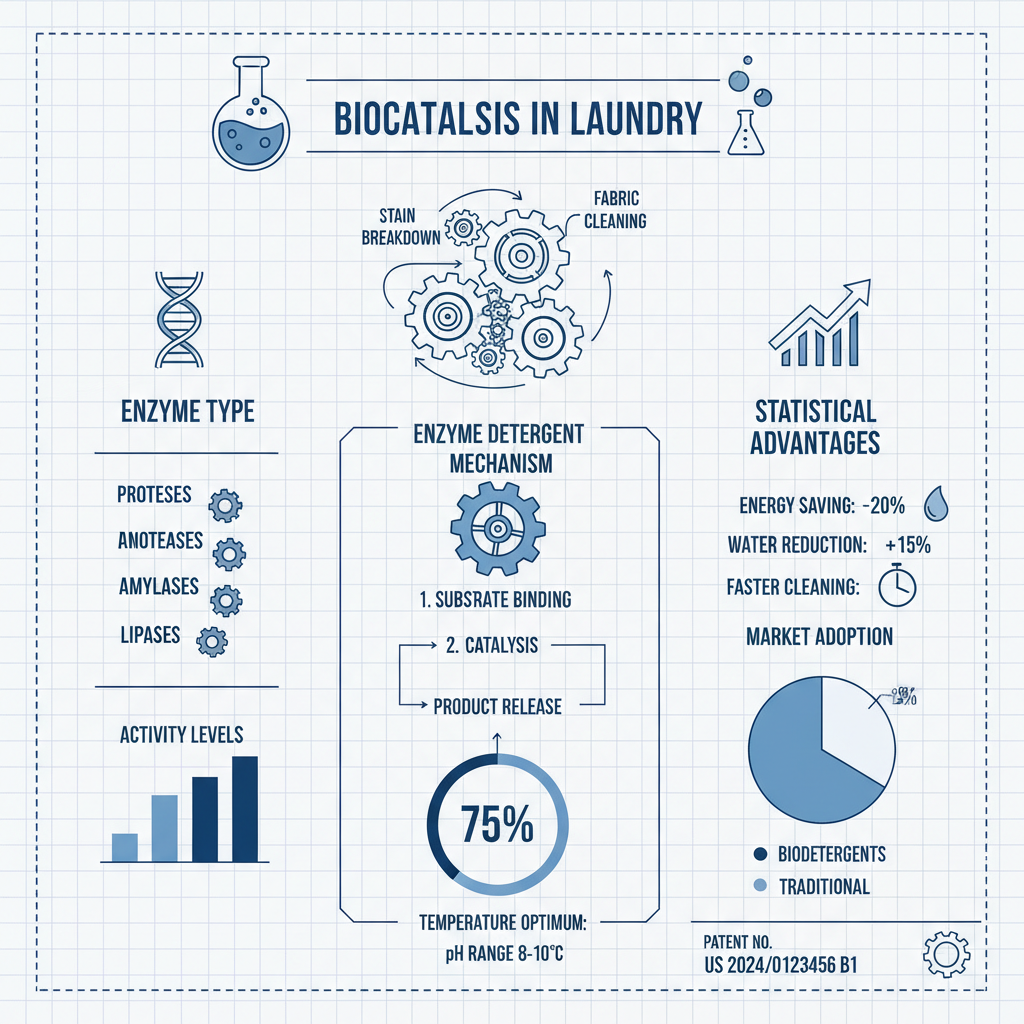
Here's a snapshot of the specifications for our widely used Protease Enzyme:
Conclusion: Enhancing Cleaning Power with Enzyme Technology
Enzymes are indispensable components of modern detergents, offering superior cleaning performance and environmentally friendly solutions. Dyeingchem.com is committed to providing high-quality enzymes and innovative solutions to meet the evolving needs of the detergent industry. By understanding the function and benefits of these biological catalysts, manufacturers can create more effective and sustainable cleaning products.
Frequently Asked Questions (FAQs)
What are the benefits of using enzymes in detergents compared to traditional cleaning agents?
Enzymes offer several advantages over traditional cleaning agents. They are highly specific, targeting and breaking down specific types of stains without damaging the fabric. Enzymes are also biodegradable, making them more environmentally friendly. Furthermore, they work effectively at lower temperatures, reducing energy consumption. Traditional cleaning agents often rely on harsh chemicals that can be damaging to fabrics and the environment, whereas enzymes provide a gentler and more sustainable cleaning solution. They are particularly effective against organic stains that chemical cleaners struggle with.
Are enzymes safe for all types of fabrics?
Generally, enzymes are safe for most commonly used fabrics like cotton, polyester, and nylon. However, delicate fabrics like silk and wool may be sensitive to certain enzymes, particularly proteases. Always check the garment care label before using enzyme-containing detergents. Some detergents are specifically formulated for delicate fabrics, using milder enzymes or excluding protease altogether. A patch test in an inconspicuous area is always recommended when using a new detergent on sensitive fabrics.
How does the pH level affect enzyme activity in detergents?
Each enzyme has an optimal pH range where it exhibits maximum activity. Proteases generally perform best in slightly alkaline conditions (pH 8-10), while amylases and lipases have broader pH ranges. Detergent formulations are carefully balanced to provide the optimal pH environment for the enzymes to function effectively. Extreme pH levels can denature the enzymes, reducing their activity and cleaning power. Formulators often include buffering agents to maintain the desired pH during the washing process.