Comprehensive Guide to Textile Auxiliaries PDF and Their Applications
Comprehensive Guide to Textile Auxiliaries PDF and Their Applications
Textile Auxiliaries PDF: A Comprehensive Guide
The world of textile manufacturing relies heavily on textile auxiliaries to enhance processes like dyeing, printing, and finishing. These chemicals are crucial for achieving desired fabric properties, improving efficiency, and meeting stringent quality standards. This article provides a detailed overview of textile auxiliaries, including their types, applications, and where to find valuable resources like textile auxiliaries PDF guides and product information. Understanding these auxiliaries is essential for anyone involved in the textile industry, from manufacturers to researchers.

What are Textile Auxiliaries?
Textile auxiliaries are a broad range of chemical compounds used in various stages of textile processing. Unlike dyes which impart color, auxiliaries don't usually contribute directly to the shade of the fabric. Instead, they perform essential supporting functions. They are often used in small quantities but have a significant impact on the final product's quality and performance. These auxiliaries include wetting agents, dispersing agents, leveling agents, fixing agents, softening agents, and many more. The selection of the right auxiliary depends on the specific textile fiber, processing method, and desired outcome.
Key Types of Textile Auxiliaries
Textile auxiliaries can be categorized based on their function. Here's a breakdown of some of the most important types:
Key Auxiliary Categories: Wetting agents improve water penetration, dispersing agents prevent dye aggregation, leveling agents ensure uniform dye distribution, fixing agents enhance color fastness, and softening agents improve fabric hand feel.
Textile Auxiliaries PDF: Resources and Information
Accessing detailed information about textile auxiliaries is crucial for informed decision-making. Many chemical suppliers, like DyeingChem, offer comprehensive textile auxiliaries PDF catalogs and technical data sheets. These documents provide specific product specifications, application guidelines, safety information (SDS), and regulatory compliance details. Searching online for "textile auxiliaries PDF" will also yield resources from industry associations, research institutions, and educational websites. Utilizing these resources ensures you have access to the latest advancements and best practices.
Benefits of Using PDF Resources:
• Detailed product specifications
• Application guidelines and troubleshooting tips
• Safety Data Sheets (SDS) for safe handling
• Regulatory compliance information
Comparing Common Textile Auxiliaries
Understanding the differences between similar auxiliaries is vital. Here's a comparison of some frequently used types:
Choosing the Right Supplier: DyeingChem
Selecting a reliable supplier of textile auxiliaries is crucial for consistent quality and performance. DyeingChem is a trusted provider of high-quality textile chemicals, offering a wide range of auxiliaries to meet diverse industry needs. They emphasize innovation, sustainability, and customer support. Their commitment to providing detailed product information, including textile auxiliaries PDF resources, makes them a valuable partner for textile manufacturers.
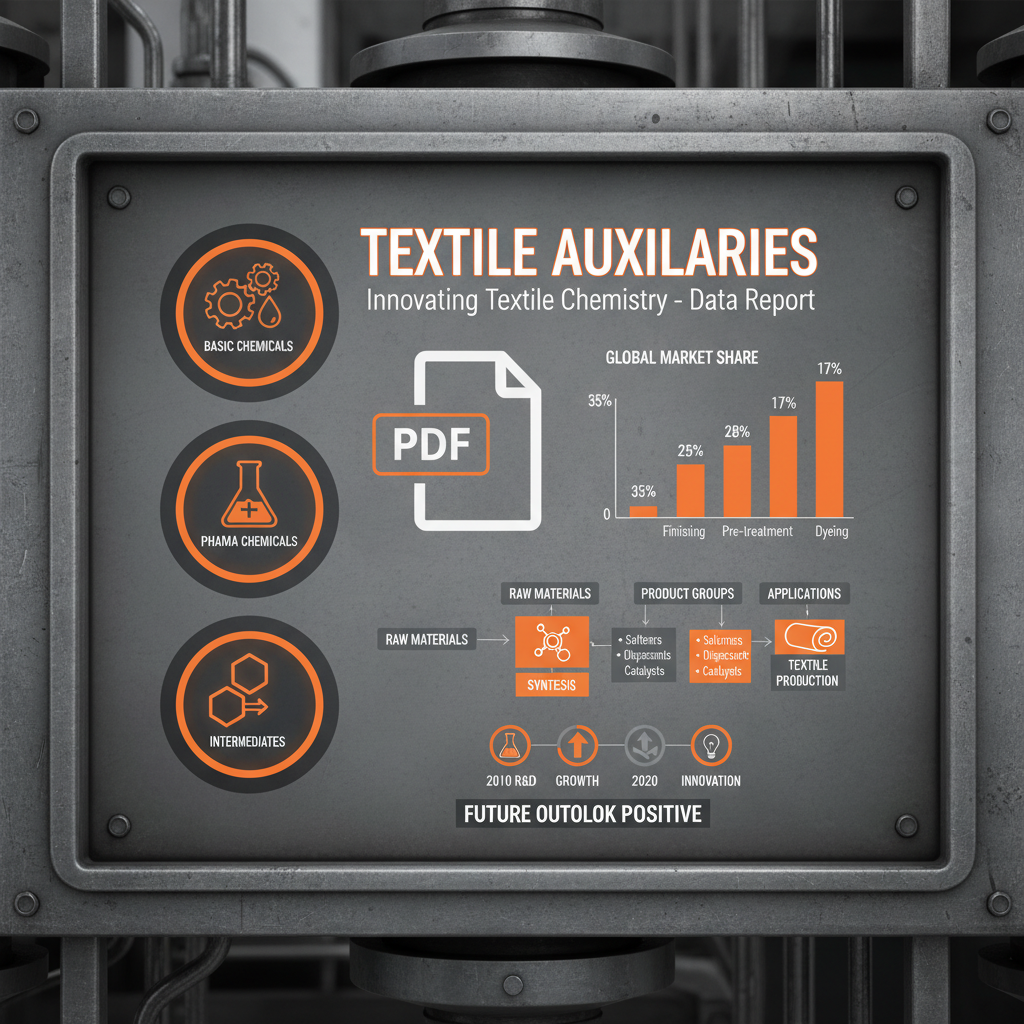
Conclusion: Mastering Textile Auxiliaries for Optimal Results
Textile auxiliaries are indispensable for modern textile processing. By understanding their functions, exploring available resources like DyeingChem's comprehensive product range and textile auxiliaries PDF documentation, manufacturers can optimize their processes, enhance product quality, and achieve a competitive edge. Don't underestimate the power of these essential chemicals!
Frequently Asked Questions (FAQs)
What are the environmental considerations when using textile auxiliaries?
Environmental impact is a significant concern. Many manufacturers now prioritize eco-friendly auxiliaries that are biodegradable, low in VOCs (volatile organic compounds), and free from harmful substances like APEOs (alkylphenol ethoxylates). Selecting suppliers committed to sustainable practices, like DyeingChem, is crucial. Proper wastewater treatment is also essential to minimize pollution from auxiliary residues. Choosing auxiliaries with certifications like OEKO-TEX Standard 100 can ensure compliance with environmental standards.
How do I determine the correct dosage of a textile auxiliary?
Determining the correct dosage depends on factors like the fiber type, processing conditions, desired effect, and the auxiliary's concentration. Always refer to the supplier's recommendations (often found in the textile auxiliaries PDF data sheets). Start with the recommended dosage and adjust based on trials and observations. Overdosing can lead to unwanted effects, while underdosing may result in insufficient performance. Careful monitoring and adjustment are key.
What is the difference between a pre-treatment auxiliary and a finishing auxiliary?
Pre-treatment auxiliaries are used to prepare the fabric for dyeing or printing. They include wetting agents, scouring agents, and bleaching agents, designed to remove impurities and improve absorbency. Finishing auxiliaries, on the other hand, are applied after dyeing or printing to impart specific properties to the fabric, such as softness, wrinkle resistance, or water repellency. The timing of application and intended function differentiate these two categories.
Where can I find Safety Data Sheets (SDS) for textile auxiliaries?
Safety Data Sheets (SDS) are crucial for safe handling and use. Suppliers like DyeingChem typically provide SDS documents on their websites, often alongside the product information and textile auxiliaries PDF catalogs. SDS documents contain detailed information about the chemical's hazards, handling precautions, and emergency procedures. Always review the SDS before using any auxiliary.