Understanding the Crucial Role of a Reducing Agent in Chemical Processes
Understanding the Crucial Role of a Reducing Agent in Chemical Processes
Understanding the Role of a Reducing Agent
In various chemical processes, particularly in industries like dyeing, pharmaceuticals, and water treatment, the concept of a reducing agent is fundamental. A reducing agent, also known as a reductant, is a substance that donates electrons to another substance in a redox (reduction-oxidation) reaction. This donation facilitates the reduction of the other substance. Understanding the different types of reducing agents and their applications is crucial for optimizing chemical processes and ensuring product quality. This article will explore the definition, types, and examples of reducing agents, with a focus on their importance in industrial applications.
What Defines a Reducing Agent?
At its core, a reducing agent is a species that loses electrons to another species during a chemical reaction. This loss of electrons causes the reducing agent itself to become oxidized. It’s essential to remember that reduction and oxidation always occur simultaneously. The strength of a reducing agent is determined by its tendency to lose electrons – the easier it is to lose electrons, the stronger the reducing agent. Factors influencing this tendency include ionization energy and electron affinity. Many reducing agents are metals, but they can also be organic compounds or inorganic ions. Choosing the right reducing agent is vital for controlling reaction rates and selectivity.
Key Takeaway: A reducing agent donates electrons, becoming oxidized in the process, and is crucial for facilitating reduction reactions in various chemical applications.
Common Examples of Reducing Agents
Numerous substances can function as reducing agents. Here are some common examples, categorized by type. These agents are widely used in diverse industrial processes. For instance, sodium borohydride is frequently employed in organic chemistry for selective reduction, while ascorbic acid (Vitamin C) is a powerful antioxidant and reducing agent in biological systems. Understanding the properties and reactivity of each agent is essential for optimal application.
Reducing Agents in the Dyeing Industry
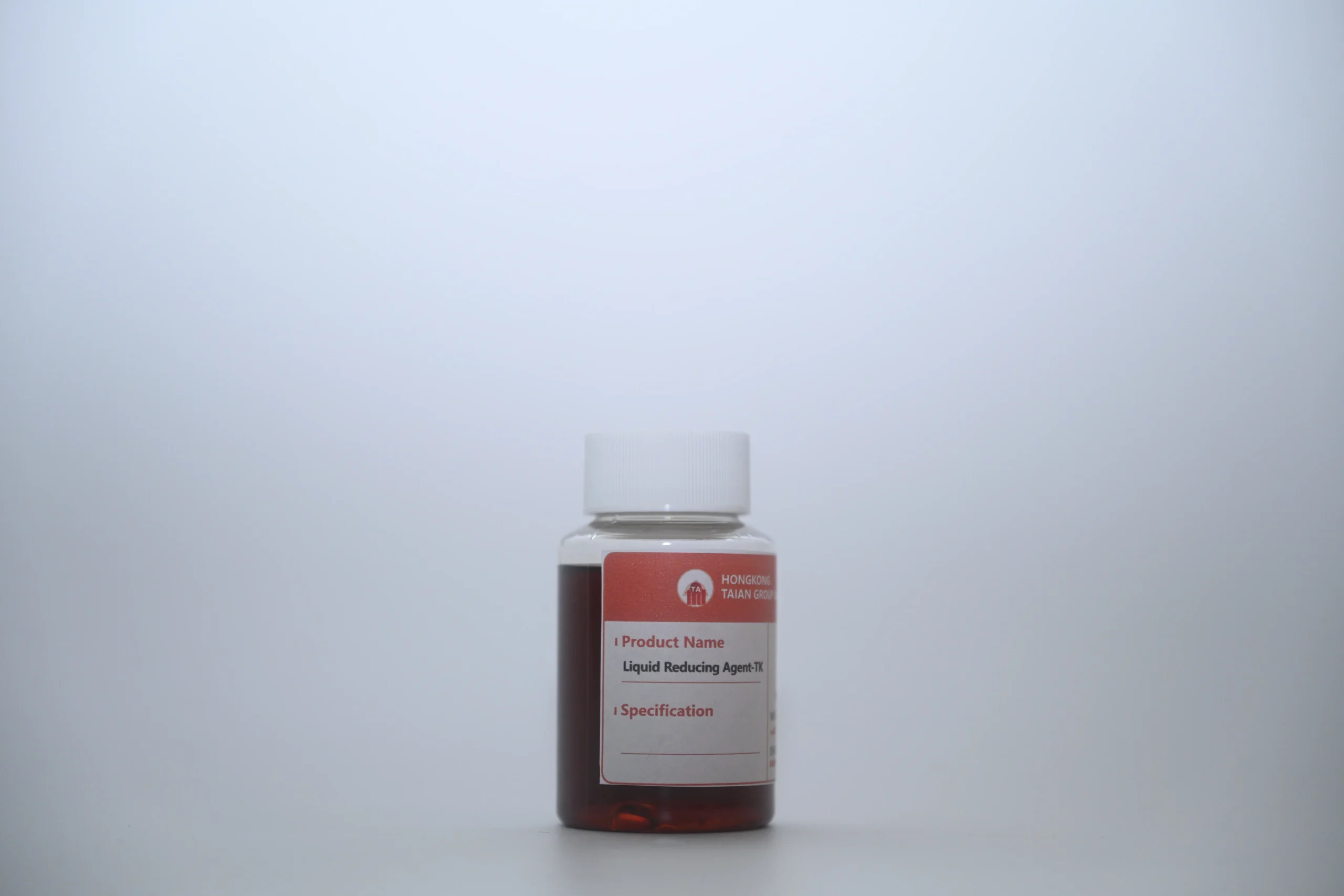
The dyeing industry heavily relies on reducing agents, particularly in vat dyeing and sulfur dyeing processes. In vat dyeing, insoluble dyes are reduced to a soluble leuco form, allowing them to penetrate the fabric. After dyeing, the fabric is oxidized to regenerate the insoluble dye, resulting in excellent colorfastness. Sodium hydrosulfite (Na₂S₂O₄), commonly known as hydrosulfite, is a primary reducing agent used for this purpose. Similarly, sulfur dyes require reduction with sodium sulfide (Na₂S) to become soluble and applicable to textiles. The effectiveness of these reducing agents directly impacts the quality and durability of the dyed fabric.
Key Reducing Agents in Dyeing:
• Sodium Hydrosulfite (Na₂S₂O₄)
• Sodium Sulfide (Na₂S)
• Thiourea Dioxide (CH₄N₂O₂S)
Factors Affecting the Choice of Reducing Agent
Selecting the appropriate reducing agent isn't arbitrary. Several factors come into play. These include the specific reaction requirements (e.g., desired reduction potential), compatibility with other reagents, cost-effectiveness, safety considerations (some reducing agents are highly reactive and potentially hazardous), and environmental impact. For instance, while lithium aluminum hydride is a powerful reducing agent, its reactivity and sensitivity to moisture make it unsuitable for large-scale industrial applications. Dyeingchem offers a range of reducing agents tailored to meet various industrial needs.

Comparing Reduction Potentials: A Visual Representation
The strength of a reducing agent is often quantified by its reduction potential. A more negative reduction potential indicates a stronger reducing agent. The following table provides a comparative overview of the standard reduction potentials for some common reducing agents.
Conclusion: Harnessing the Power of Reducing Agents
Understanding reducing agents and their applications is critical for success in numerous chemical industries. From dyeing textiles to synthesizing complex organic molecules, these substances play a pivotal role. Selecting the appropriate reducing agent requires careful consideration of reaction conditions, cost, safety, and environmental impact. Dyeingchem provides a comprehensive range of high-quality reducing agents and expert technical support to optimize your processes and achieve desired results.
Frequently Asked Questions (FAQs)
What is the difference between a reducing agent and an antioxidant?
While both reducing agents and antioxidants donate electrons, their contexts differ. A reducing agent is a broader term used in chemical reactions to facilitate reduction. An antioxidant specifically refers to a substance that inhibits oxidation, preventing damage to cells or materials caused by free radicals. Many antioxidants, like Vitamin C, are reducing agents, but not all reducing agents are antioxidants. Antioxidants primarily act to stabilize free radicals, while reducing agents are used in a wider range of chemical processes, including metal refining and organic synthesis.
Are reducing agents dangerous to handle?
Some reducing agents can be hazardous if not handled correctly. Highly reactive reducing agents like lithium aluminum hydride are pyrophoric (ignite spontaneously in air) and require strict safety precautions. Others, like sodium hydrosulfite, can release flammable gases upon contact with water. It's crucial to always wear appropriate personal protective equipment (PPE), such as gloves, goggles, and lab coats, and to follow safety data sheet (SDS) guidelines when working with any reducing agent. Proper ventilation and storage are also essential to minimize risks.
How do I choose the right reducing agent for my application?
Selecting the appropriate reducing agent depends on several factors: the specific reaction you're trying to achieve, the desired reduction potential, the compatibility of the agent with other reactants, and the cost and safety considerations. Consider the strength of the reducing agent needed – a weaker agent might be sufficient for some reactions, while others require a stronger one. Evaluate any potential side reactions and choose an agent that minimizes unwanted byproducts. Consulting with a chemical expert or reviewing technical literature can also aid in the selection process.