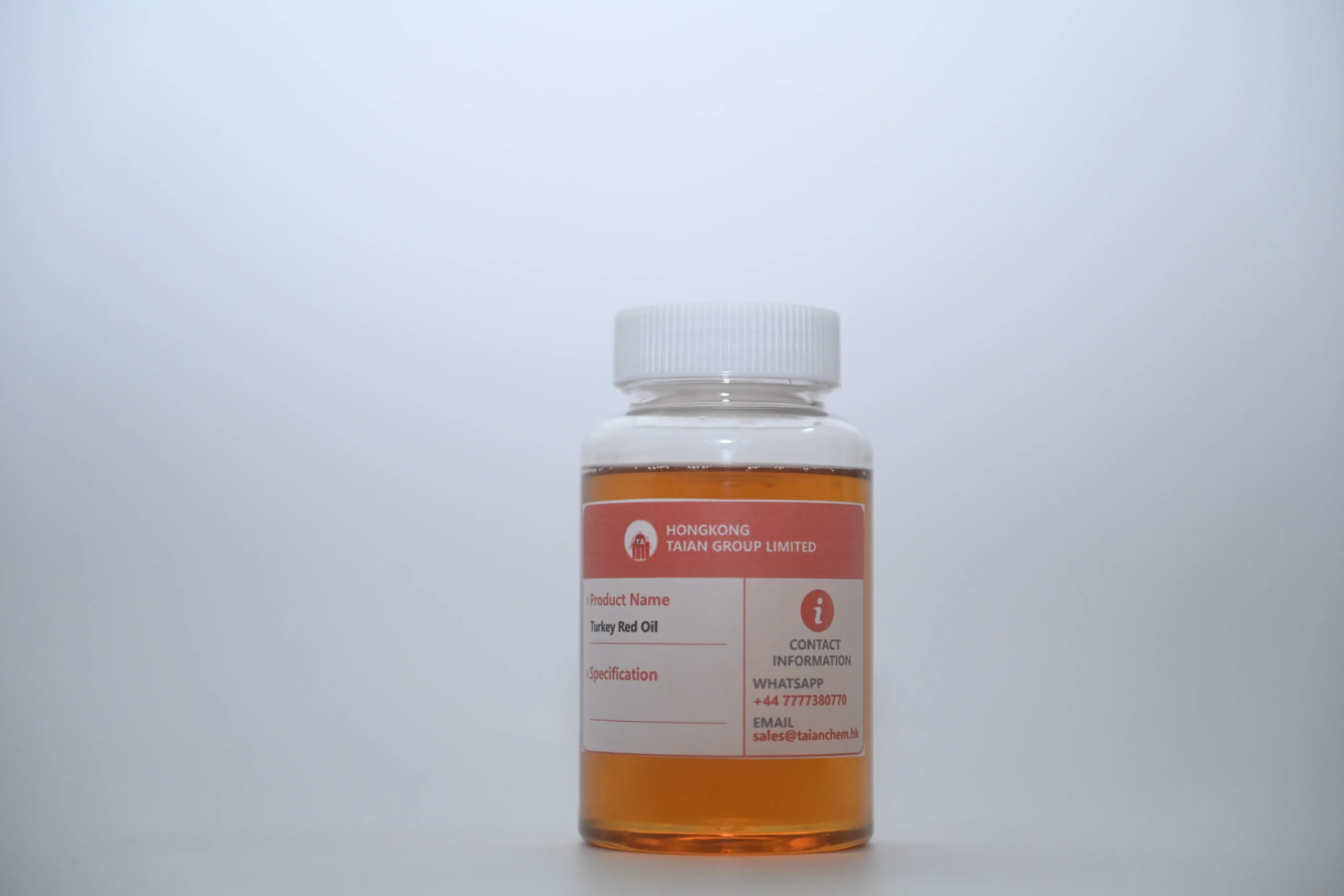
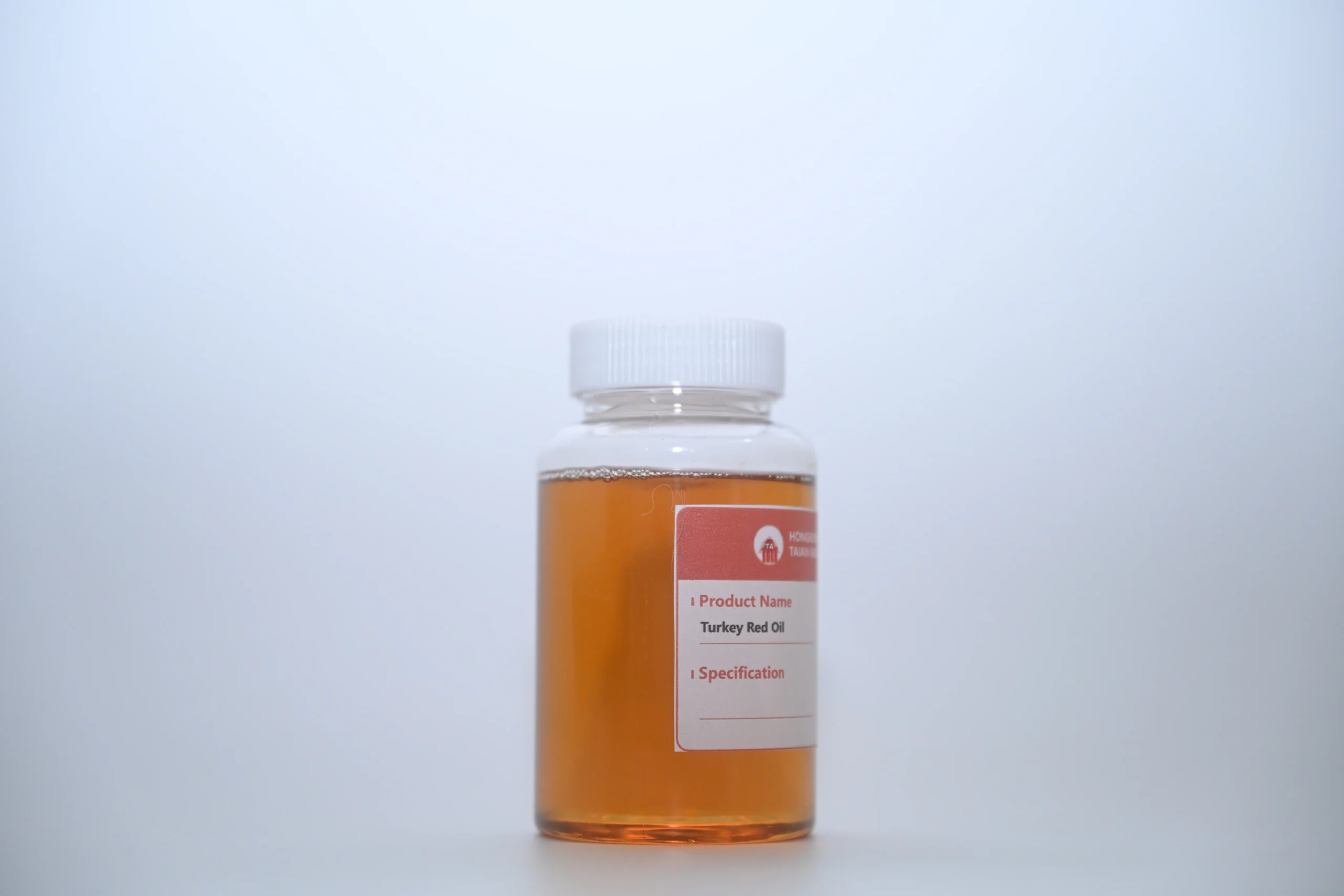
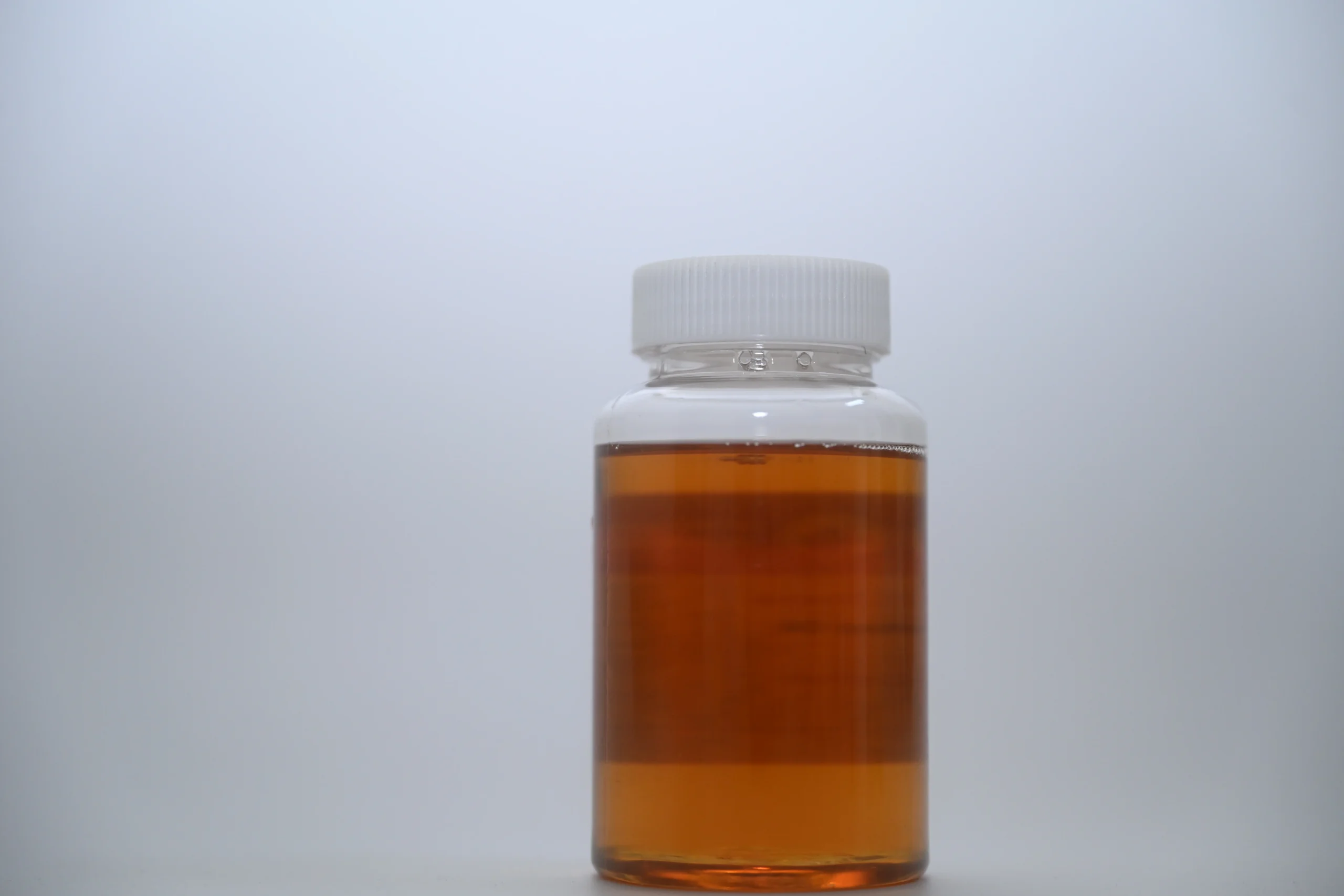

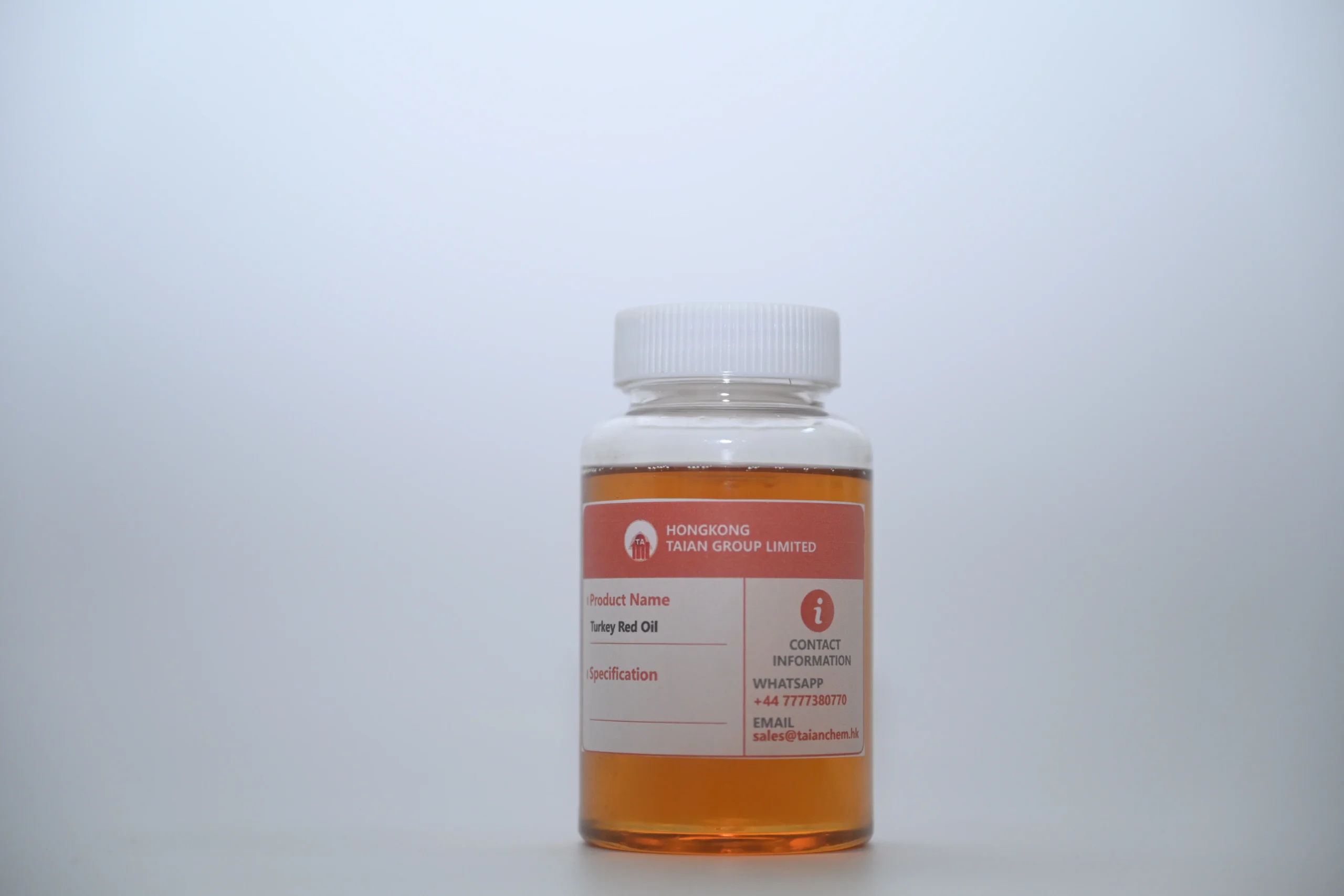
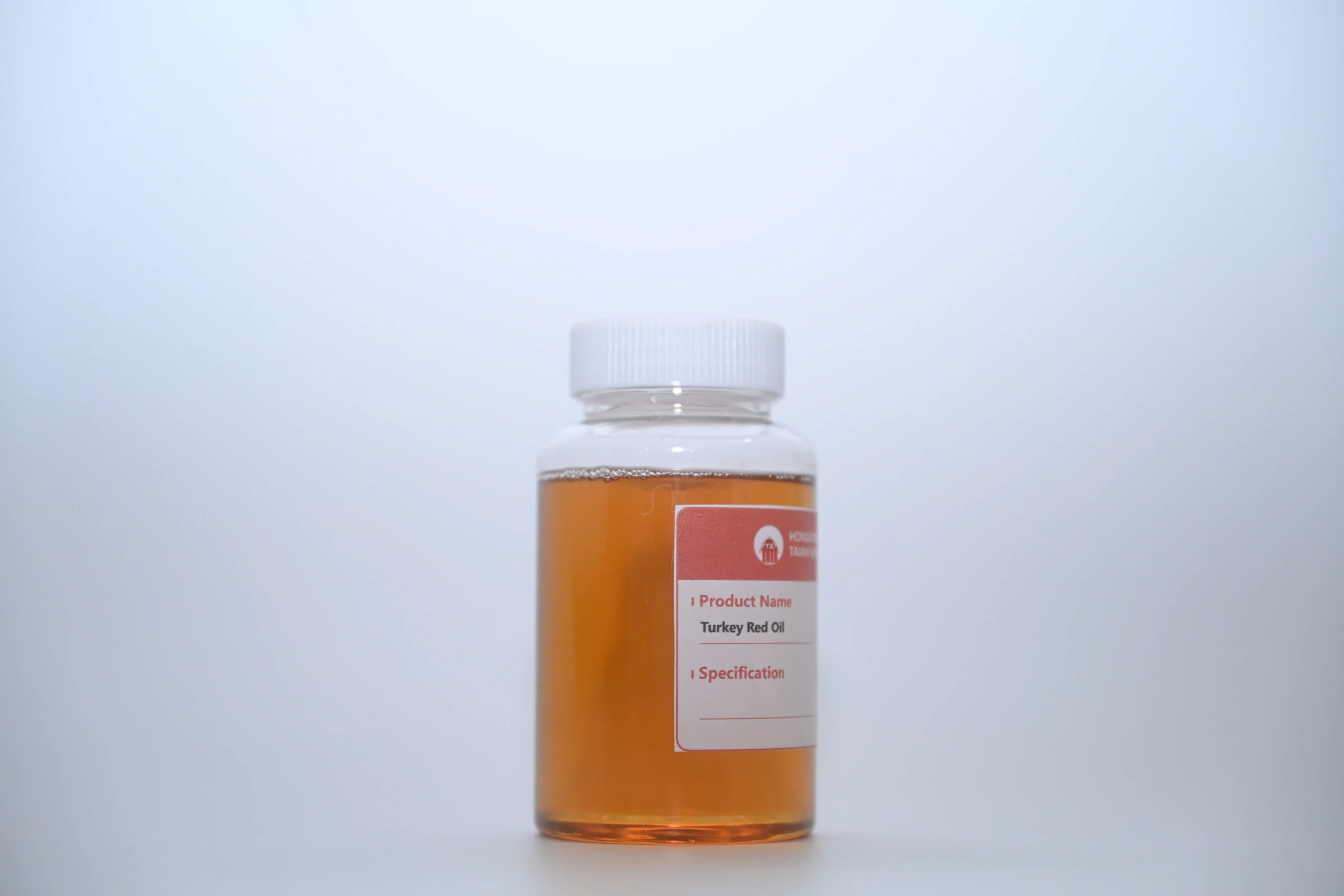
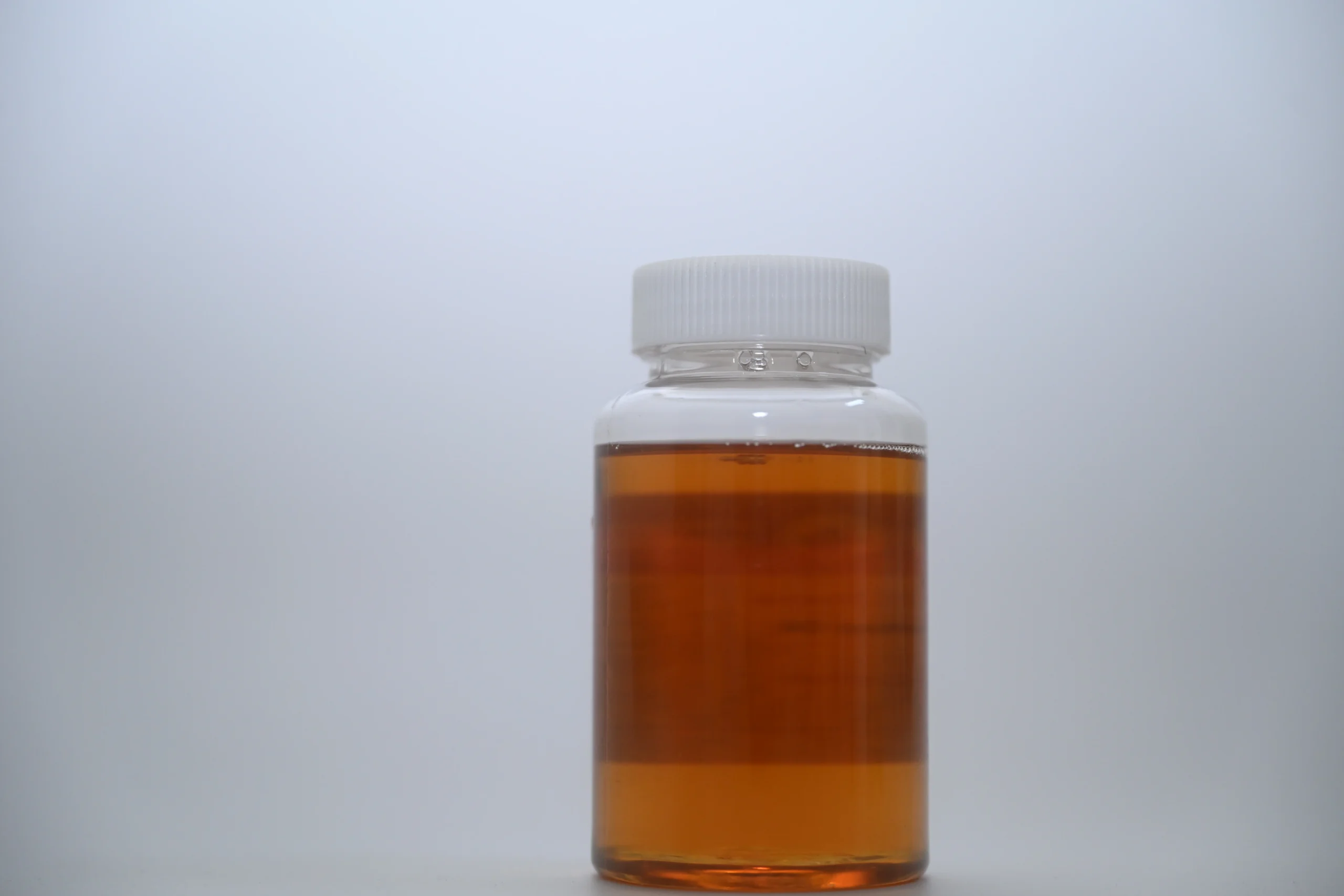
Turkey Red Oil, professionally known as sulfonated castor oil, is a high-performance textile auxiliary renowned for its exceptional emulsifying and wetting properties. By effectively dispersing oils, waxes, and hydrophobic substances within aqueous systems, it ensures maximum process stability and treatment uniformity. This makes it an indispensable tool for textile manufacturers seeking consistency in scouring, dyeing, and finishing operations.
Designed for versatility, this anionic auxiliary exhibits broad fiber compatibility, performing seamlessly on cotton, wool, silk, and various blended fabrics. Beyond its role as a wetting agent, it functions as a lubricant and softener, enhancing the hand feel and flexibility of the final textile without leaving a greasy residue. Derived from natural castor oil, it offers a more biodegradable and environmentally friendly alternative to purely synthetic surfactants.
Detailed Parameters
| Chemical Type | Sulfonated castor oil | Appearance | Brownish-red to dark red viscous liquid |
|---|---|---|---|
| Ionic Character | Anionic | Solubility | Easily soluble in water (stable emulsion) |
| pH Value | Mildly acidic to neutral | Emulsifying Ability | Excellent (Mineral & Vegetable oils) |
| Wetting Power | Strong penetration and wetting | Recommended Fibers | Cotton, Wool, Silk, Viscose, Blends |
| Compatibility | Anionic and Non-ionic auxiliaries | Storage Stability | Stable under cool, dry conditions |
Key Advantages
Superior Wetting
Rapidly reduces surface tension to ensure deep penetration of chemicals into fiber cores.
Shade Uniformity
Prevents patchiness during dyeing by promoting even distribution of dyes across the fabric.
Enhanced Softness
Acts as a lubricating agent to improve fabric smoothness and flexibility for a premium hand feel.
Broad Compatibility
Works efficiently across diverse fibers including natural cotton, wool, silk, and synthetic blends.
Eco-Friendly Origin
Derived from natural castor oil, providing better biodegradability compared to synthetic agents.
Easy Integration
Seamlessly integrates into existing formulations via padding, exhaust, or direct addition.
Product Gallery
Management Platforms
Formulation Control
Optimize dosage to balance wetting power and dye fixation for maximum efficiency.
Process Integration
Easily applied in scouring and dyeing baths without disrupting chemical stability.
Quality Monitoring
Consistent viscosity and pH levels ensure reproducible results across every production batch.
Fiber Adaptability
Adjustable application methods to suit different sensitivities of wool, silk, or cotton.
Storage Management
Maintained in cool, dry environments to prevent degradation and ensure long-term stability.
Environmental Compliance
Leveraging biodegradable castor oil derivatives to meet modern textile green standards.
Investment Return Comparison
| Performance Metric | Synthetic Surfactants | Turkey Red Oil |
|---|---|---|
| Eco-Friendliness | Low Biodegradability | High Biodegradability |
| Wetting Speed | Fast | Excellent & Stable |
| Fabric Hand Feel | Standard | Superior Smoothness |
| Dye Distribution | Moderate | Highly Uniform |
| Cost Efficiency | Variable | High Value-to-Cost |
Frequently Asked Questions
It primarily serves as a powerful emulsifier and wetting agent, allowing treatment chemicals and dyes to penetrate fibers deeply and uniformly, while also providing lubrication and softness.
It is highly versatile and effective on natural fibers such as cotton, wool, and silk, as well as viscose and various blended fabrics.
By ensuring the dye is distributed evenly across the fiber surface, it significantly reduces patchiness and improves shade reproducibility and color depth.
Yes, because it is derived from natural castor oil, it is generally more biodegradable than many fully synthetic chemical surfactants used in the industry.
It should be stored in a cool, dry place away from direct sunlight to prevent separation or chemical degradation.
Yes, it is compatible with most anionic and non-ionic auxiliaries, making it easy to integrate into complex chemical formulations.