Comprehensive Guide to Sulphur Black 200 Dye for Textile Applications
Comprehensive Guide to Sulphur Black 200 Dye for Textile Applications
Understanding Sulphur Black 200: A Comprehensive Guide
Sulphur Black 200 is a widely used sulfur dye in the textile industry, prized for its strong, dark shade and excellent wash fastness on cellulosic fibers like cotton. This article provides an in-depth look at Sulphur Black 200, covering its properties, applications, advantages, and considerations for use. We'll explore why it remains a popular choice for dyeing various textiles, particularly denim and workwear. Understanding the nuances of this dye is crucial for achieving optimal dyeing results and meeting quality standards. You can find a wide range of high-quality dyes, including Sulphur Black 200, at Dyeingchem.com.

The Chemical Properties of Sulphur Black 200
Sulphur Black 200 (C.I. 14395) is a complex, polymeric dye containing sulfur and carbon. Its chemical structure contributes to its excellent lightfastness and wash fastness properties. The dye is insoluble in water and requires reduction with sodium sulfide to become soluble for application. This reduction process creates a leuco form of the dye, which then penetrates the fiber before being oxidized back to its insoluble form, trapping it within the fabric. The dyeing process requires careful control of pH, temperature, and reducing agent concentration to achieve even and consistent color. Dyeingchem offers expert guidance on optimizing these parameters for your specific application.
Key Highlights: Sulphur Black 200 offers excellent wash and light fastness, a deep black shade, and is cost-effective for large-scale dyeing operations.
Applications of Sulphur Black 200
The primary application of Sulphur Black 200 is dyeing cellulosic fibers, particularly cotton. It's extensively used for dyeing denim, workwear, military uniforms, and other fabrics requiring a durable, dark black shade. Its cost-effectiveness and ability to produce deep shades make it a popular choice for mass production. While primarily used on cotton, it can also be used on viscose rayon and linen, though with varying degrees of success and requiring adjustments to the dyeing process. Sulphur Black 200 isn’t typically suitable for synthetic fibers like polyester or nylon.
Application Benefits:
• Excellent for dyeing denim and workwear.
• Cost-effective for large-scale production.
• Provides a deep, durable black shade.
Sulphur Black 200: Performance Comparison with Other Black Dyes
While Sulphur Black 200 is a popular choice, it’s important to understand how it compares to other black dyes. Reactive dyes offer brighter shades and better levelness but are generally more expensive. Direct dyes are also cost-effective but typically exhibit poorer wash fastness. Vat dyes provide excellent fastness properties but require a more complex and time-consuming dyeing process. The choice of dye depends on the specific requirements of the application, considering factors like cost, fastness properties, and environmental impact.
Considerations When Using Sulphur Black 200
Using Sulphur Black 200 effectively requires attention to several factors. The dye produces hydrogen sulfide (H2S), a toxic gas, during the reduction process, necessitating proper ventilation and safety measures. Thorough washing after dyeing is crucial to remove residual dye and avoid staining. The dye bath can also create a significant amount of wastewater, requiring appropriate treatment before disposal. Dyeingchem offers environmentally responsible dye solutions and expert advice on wastewater management.
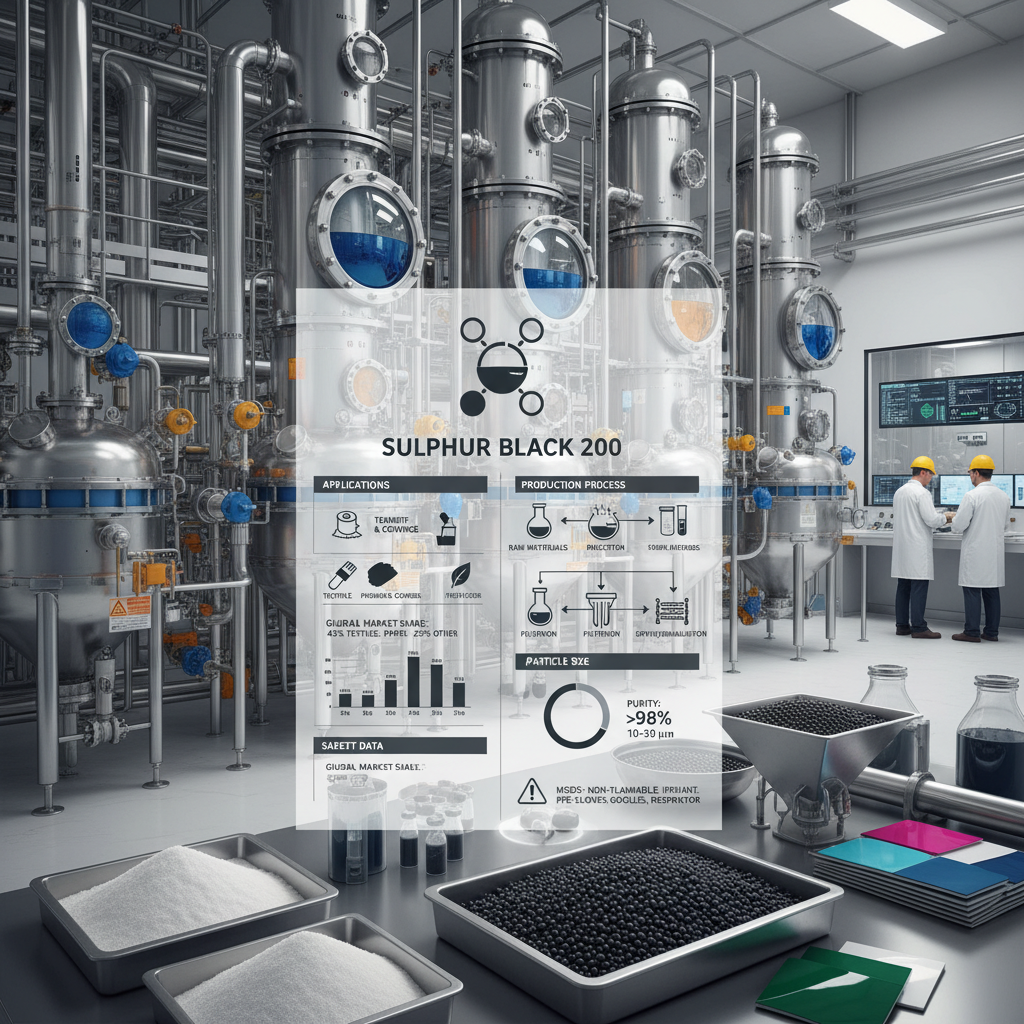
Product Specifications
Here’s a typical specification sheet for Sulphur Black 200:
Conclusion: Sulphur Black 200 - A Reliable Dyeing Solution
Sulphur Black 200 remains a vital dye for achieving deep, durable black shades on cellulosic fibers. While considerations regarding safety and wastewater management are essential, its cost-effectiveness and excellent fastness properties make it a preferred choice for many applications. For high-quality Sulphur Black 200 and expert technical support, visit Dyeingchem.com.
Frequently Asked Questions (FAQs)
What safety precautions should be taken when using Sulphur Black 200?
The primary safety concern with Sulphur Black 200 is the release of hydrogen sulfide (H2S) gas during the reduction process. This gas is highly toxic and can be fatal. Therefore, it’s crucial to work in a well-ventilated area, use appropriate respiratory protection (a respirator with an H2S filter), and wear protective gloves and clothing. Always follow the manufacturer’s safety data sheet (SDS) for detailed guidance. Regular monitoring of H2S levels is recommended to ensure a safe working environment. Proper disposal of the dye bath is also essential to prevent environmental contamination.
What is the best way to dispose of Sulphur Black 200 wastewater?
Sulphur Black 200 wastewater contains residual dye and sulfides and requires proper treatment before disposal. Direct discharge into waterways is environmentally harmful. Common treatment methods include chemical oxidation, biological treatment, and adsorption. Chemical oxidation utilizes oxidizing agents to break down the dye molecules. Biological treatment employs microorganisms to degrade the pollutants. Adsorption uses materials like activated carbon to remove the dye from the wastewater. Consult local environmental regulations and consider using specialized wastewater treatment services for optimal disposal.
How does the pH affect the dyeing process with Sulphur Black 200?
pH plays a critical role in the dyeing process with Sulphur Black 200. Maintaining the correct pH level is essential for optimal dye solubility, fiber penetration, and color development. Typically, the dyeing process is carried out under alkaline conditions, with a pH range of 9-11. This is achieved by adding sodium carbonate or other alkaline agents to the dye bath. If the pH is too low, the dye may not dissolve properly, leading to uneven dyeing. If the pH is too high, it can damage the fibers. Regular pH monitoring and adjustment are crucial throughout the dyeing process.
Can Sulphur Black 200 be used on fabrics other than cotton?
While Sulphur Black 200 is primarily used for cotton, it can also be applied to other cellulosic fibers like viscose rayon and linen, albeit with varying results. The dye's affinity for these fibers is lower than for cotton, requiring adjustments to the dyeing process, such as higher temperatures and longer dyeing times. However, Sulphur Black 200 is not suitable for synthetic fibers like polyester or nylon, as it lacks the necessary affinity for these materials. For synthetic fibers, alternative dye types, such as disperse dyes, are recommended.