Exploring Dyeing Auxiliaries and Their Uses for Enhanced Textile Production
Exploring Dyeing Auxiliaries and Their Uses for Enhanced Textile Production
Dyeing Auxiliaries and Their Uses
The textile dyeing industry relies heavily on dyeing auxiliaries to achieve optimal colorfastness, evenness, and overall quality. These chemical compounds are essential for enhancing the dyeing process and enabling efficient and sustainable textile production. Understanding the various types of dyeing auxiliaries and their specific applications is crucial for textile manufacturers. This article will delve into the world of dyeing auxiliaries, exploring their key functions, different categories, and practical uses, helping you navigate this important aspect of textile chemistry.
What are Dyeing Auxiliaries?
Dyeing auxiliaries are chemical substances added to dye baths to improve the dyeing process itself, or the quality of the dyed material. They don’t directly impart color, but they play a vital role in ensuring dyes are applied effectively and consistently. These auxiliaries can impact everything from dye solubility and leveling to colorfastness and fabric handle. Utilizing the correct auxiliaries can minimize dye wastage, reduce processing time, and enhance the overall performance of the dyed textile. Choosing the right auxiliaries depends on factors like the fiber type, dye class, and desired final properties of the fabric.
Key Benefits: Enhance dye solubility, improve leveling, increase colorfastness, reduce dye wastage, and optimize processing time.
Types of Dyeing Auxiliaries and Their Applications
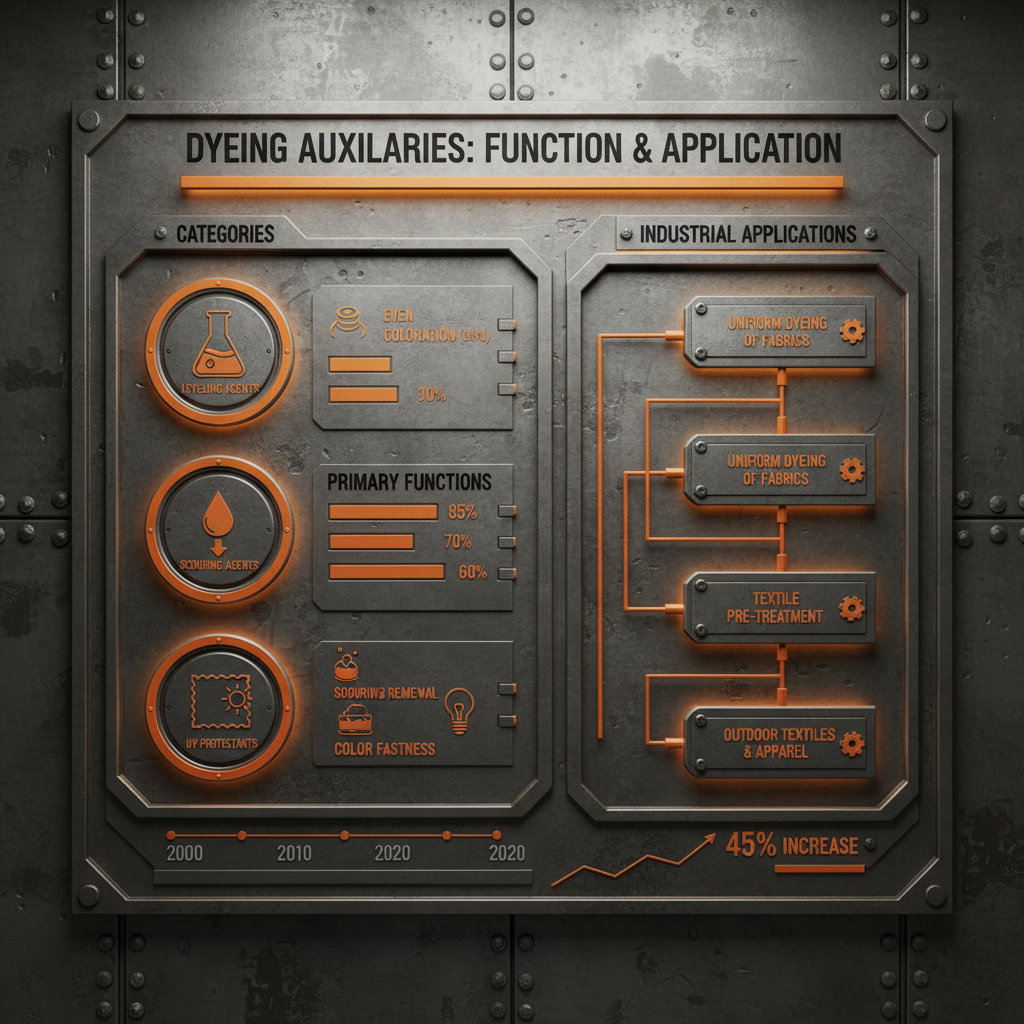
Dyeing auxiliaries can be broadly classified into several categories based on their function. Some of the most common include wetting agents, dispersing agents, leveling agents, fixing agents, and anti-foaming agents. Each category addresses specific challenges in the dyeing process. For example, wetting agents are essential for allowing the dye bath to penetrate the fabric, while dispersing agents prevent dye aggregation. Understanding these categories will allow you to select the most appropriate auxiliaries for your specific dyeing requirements.
Common Dyeing Auxiliary Categories:
• Wetting Agents: Improve dye bath penetration.
• Dispersing Agents: Prevent dye aggregation.
• Leveling Agents: Promote even dye distribution.
• Fixing Agents: Enhance colorfastness.
• Anti-foaming Agents: Reduce foam formation.
Dyeing Auxiliaries: A Comparative Overview
Different dyeing auxiliaries exhibit varying levels of effectiveness depending on the fiber type and dye class. A comparison of commonly used auxiliaries highlights their specific strengths and weaknesses. For instance, anionic auxiliaries are generally preferred for dyeing cotton and other cellulosic fibers, while non-ionic auxiliaries are more versatile and can be used with a wider range of fibers. Careful consideration of these factors is essential for achieving optimal dyeing results.
Selecting the Right Dyeing Auxiliaries for Optimal Results
Choosing the correct dyeing auxiliaries is a critical step in achieving high-quality, consistent dyeing results. Consider the type of fiber being dyed, the dye class used, the desired colorfastness properties, and the overall environmental impact. Consulting with a specialist or supplier can provide valuable insights and help you select the most appropriate auxiliaries for your specific needs. Dyeingchem.com offers a comprehensive range of dyeing auxiliaries, coupled with expert technical support, to help you optimize your dyeing processes.
Sustainability and Future Trends in Dyeing Auxiliaries
The textile industry is increasingly focused on sustainability, and this trend is driving innovation in dyeing auxiliaries. There's a growing demand for eco-friendly auxiliaries that are biodegradable, low in VOCs (volatile organic compounds), and derived from renewable resources. Researchers are exploring bio-based auxiliaries, enzymatic treatments, and novel formulations that minimize environmental impact. This shift towards sustainable dyeing auxiliaries is not only beneficial for the environment but also enhances the overall quality and appeal of textile products.
Conclusion: Optimizing Dyeing with the Right Auxiliaries
Choosing and effectively using dyeing auxiliaries is paramount for achieving exceptional dyeing results. By understanding the different types, their functions, and the key considerations for selection, you can optimize your dyeing processes, enhance product quality, and minimize environmental impact. Partnering with a reliable supplier like Dyeingchem.com provides access to innovative solutions and expert support to meet your specific dyeing needs.
Frequently Asked Questions (FAQs)
What factors should I consider when selecting a wetting agent?
When selecting a wetting agent, consider the fiber type, dye class, and water hardness. For hydrophobic fibers like polyester, a more powerful wetting agent is required compared to hydrophilic fibers like cotton. Also, hard water can reduce the effectiveness of certain wetting agents, so a chelating agent may be necessary to improve performance. The concentration of the wetting agent should also be optimized to ensure adequate penetration without causing foaming. A thorough understanding of these factors will help you choose the most effective wetting agent for your specific dyeing application.
How do dispersing agents prevent dye aggregation?
Dispersing agents work by creating a repulsive force between dye particles, preventing them from clumping together. They achieve this by adsorbing onto the surface of the dye particles, creating a steric or electrostatic barrier. Steric hindrance involves bulky molecules physically preventing the particles from approaching each other. Electrostatic repulsion involves imparting a negative charge to the particles, causing them to repel each other. Proper dispersion ensures that the dye remains evenly distributed throughout the dye bath, leading to more uniform and vibrant dyeing.
What is the role of fixing agents in improving colorfastness?
Fixing agents enhance colorfastness by forming a stronger bond between the dye molecules and the fiber. They can work through various mechanisms, such as forming insoluble complexes with the dye or crosslinking the dye to the fiber. This prevents the dye from being washed out during laundering or fading upon exposure to light. The choice of fixing agent depends on the dye class and fiber type, as different agents have varying affinities for different dyes and fibers.
Are there eco-friendly alternatives to traditional dyeing auxiliaries?
Yes, there’s increasing research and development in eco-friendly dyeing auxiliaries. These include bio-based auxiliaries derived from renewable resources like plant oils and sugars, as well as enzymatic treatments that replace harsh chemicals. Formulations with low VOC content and biodegradable options are also becoming more prevalent. Choosing these alternatives reduces the environmental impact of the dyeing process and aligns with sustainable textile production practices.