Exploring Sulfur Black Dye Applications Properties and Dyeing Processes
Exploring Sulfur Black Dye Applications Properties and Dyeing Processes
Sulfur Black Dye: A Comprehensive Guide
Sulfur black dye is a widely used dye in the textile industry, renowned for its cost-effectiveness and deep black shade. It’s a versatile dye suitable for cellulosic fibers like cotton, linen, and viscose. This article will provide a detailed overview of sulfur black dye, covering its properties, applications, dyeing processes, safety considerations, and current market trends. Whether you are a textile manufacturer, dyer, or involved in sourcing dyes, understanding sulfur black dye is crucial. Explore the versatility and benefits of this vital dye with Dyeingchem, your trusted partner in quality dyes and chemicals.

Understanding the Properties of Sulfur Black Dye
Sulfur black dye, chemically complex, isn't a single compound but a mixture of polymeric organic sulfur compounds. This composition contributes to its excellent wash fastness and relatively low cost. It’s insoluble in water and requires reduction with sodium sulfide to become soluble for application. The dye exhibits a dark brown to black color in its reduced form. Key properties include its affinity for cellulose, ability to produce deep black shades, good lightfastness (though can vary depending on application), and resistance to chlorine bleaching. However, it's important to note that sulfur black dye can sometimes exhibit a slight odor during application due to the release of hydrogen sulfide, which needs to be managed with proper ventilation. Dyeingchem's sulfur black dye offers consistent quality and minimized odor.
Key Highlights: Excellent wash fastness, cost-effective, deep black shade, affinity for cellulose fibers, and readily available.
Applications of Sulfur Black Dye
Sulfur black dye is primarily used for dyeing cotton, linen, viscose rayon, and other cellulosic fibers. It’s particularly favored for workwear, denim, towels, and other textiles requiring high wash fastness. Because of its cost-effectiveness, it's a popular choice for bulk dyeing operations. It’s also often used in dyeing yarns and fabrics for a wide range of apparel and industrial applications. Although largely used on cellulose fibres, it can be used on blends, however it's important to consider the differences in dye uptake. Explore our range of sulfur black dyes designed for diverse application needs.
Application Benefits:
• Excellent for high-volume dyeing
• Ideal for workwear and denim
• Cost-effective solution for deep black shades
• Suitable for cellulosic fiber dyeing
Sulfur Black Dyeing Process: A Step-by-Step Guide
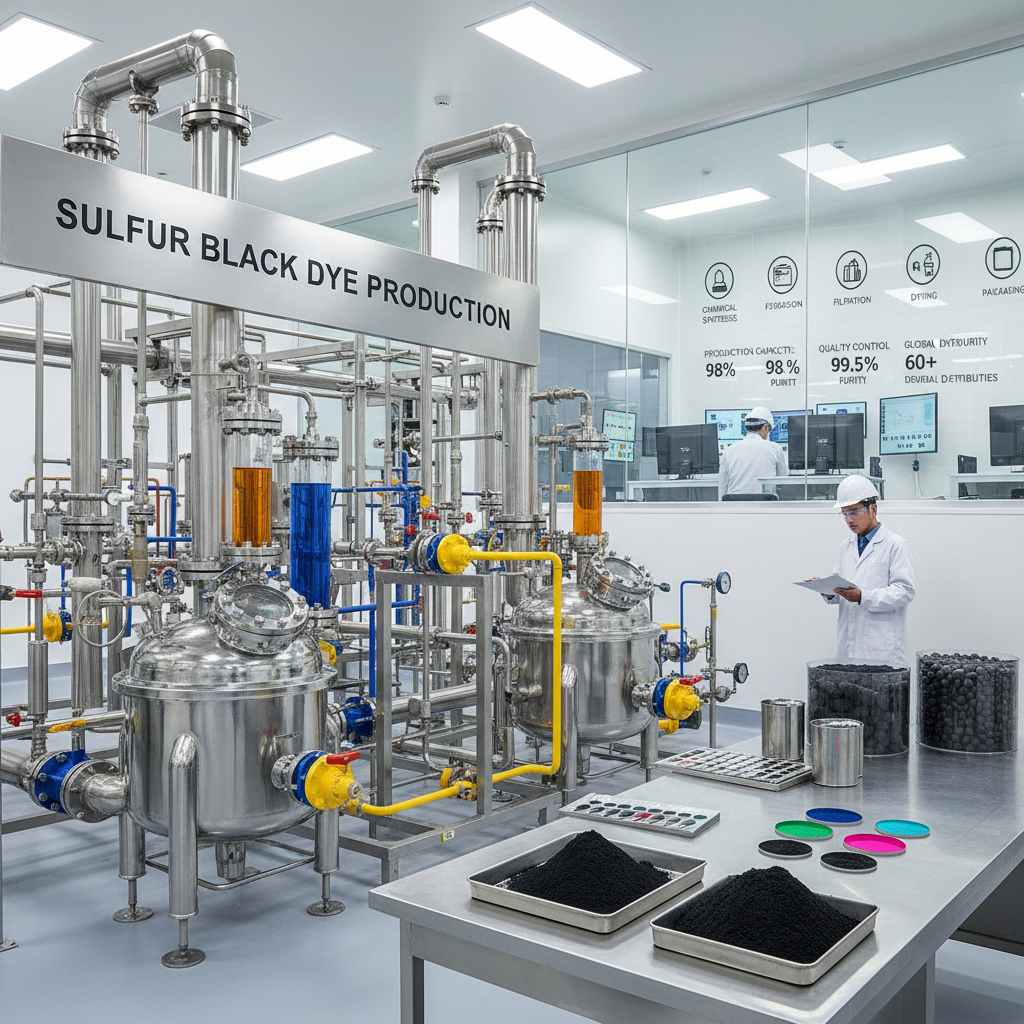
The dyeing process for sulfur black dye typically involves several key steps: preparation of the fabric, reduction of the dye, application of the dye, oxidation, and washing. The fabric is first prepared by scouring and bleaching to remove impurities. The dye is then reduced with sodium sulfide in an alkaline solution to make it soluble. The reduced dye is applied to the fabric in a dye bath, followed by oxidation with hydrogen peroxide to fix the dye. Finally, the fabric is thoroughly washed to remove any remaining chemicals and unfixed dye. Precise control of temperature, pH, and time is crucial for achieving optimal results. Dyeingchem provides comprehensive technical support to ensure successful dye application.
Sulfur Black Dye: Safety and Environmental Considerations
Handling sulfur black dye requires caution. It can cause skin and eye irritation, so the use of appropriate personal protective equipment (PPE) – gloves, goggles, and a respirator – is essential. During the reduction process, hydrogen sulfide gas can be released, necessitating adequate ventilation. Environmentally, the effluent from sulfur black dyeing contains sulfide and other pollutants that require treatment before discharge. Responsible dyehouses implement wastewater treatment systems to comply with environmental regulations. Dyeingchem is committed to providing dyes that meet stringent environmental standards.
Sulfur Black Dye: Market Trends and Future Outlook
The demand for sulfur black dye remains strong due to its cost-effectiveness and suitability for large-scale applications. However, there's increasing pressure to develop more environmentally friendly dyeing processes and dyes. Research is ongoing to reduce sulfide emissions and improve wastewater treatment. While alternative dyes exist, sulfur black dye’s unique properties and low cost ensure its continued relevance in the textile industry. The development of more sustainable sulfur black dyeing technologies will be key to its long-term viability. Dyeingchem stays at the forefront of these developments, offering innovative solutions to our clients.
Conclusion
Sulfur black dye remains a crucial component in the textile industry, offering a cost-effective and reliable solution for achieving deep black shades. Understanding its properties, applications, dyeing process, safety considerations, and market trends is essential for textile professionals. Choosing a trusted supplier like Dyeingchem ensures access to high-quality dyes and expert technical support.
Frequently Asked Questions (FAQs)
What are the common issues encountered during sulfur black dyeing?
Uneven dyeing, poor wash fastness, and spotting are common issues. These can be caused by inadequate preparation of the fabric, improper dye reduction, insufficient oxidation, or incorrect temperature control. Ensuring the fabric is thoroughly scoured and bleached, maintaining the correct pH during reduction, and applying the dye at the recommended temperature are crucial. Hydrogen sulfide gas release during reduction can also be problematic, requiring good ventilation. Dyeingchem's technical team can provide support for troubleshooting and optimization.
How does water quality affect sulfur black dyeing?
Water quality significantly impacts the dyeing process. High levels of minerals, particularly iron, can interfere with dye uptake and cause undesirable shades. Hard water can also reduce the effectiveness of reducing agents. It is recommended to use softened or demineralized water for sulfur black dyeing to ensure consistent results. Regular monitoring of water quality and appropriate pretreatment are essential.
Is sulfur black dye suitable for all types of cotton fabrics?
Sulfur black dye is generally well-suited for most types of cotton fabrics, however, certain fabric finishes or treatments can affect dye uptake. For example, fabrics treated with silicone softeners may require adjustments to the dyeing process. It is recommended to conduct shade matching and fastness testing on the specific fabric before proceeding with large-scale production.
What are the alternatives to sulfur black dye?
Alternatives to sulfur black dye include reactive dyes, direct dyes, and vat dyes. Reactive dyes offer excellent wash fastness and a wider range of shades, but are typically more expensive. Direct dyes are easier to apply but have lower wash fastness. Vat dyes provide good fastness but require a more complex dyeing process. The choice of alternative dye depends on the specific requirements of the application and the desired performance characteristics.