Exploring the Realm of Strong Reducing Agents in Organic Chemistry
Exploring the Realm of Strong Reducing Agents in Organic Chemistry
Strong Reducing Agents in Organic Chemistry
In the realm of organic chemistry, reducing agents are pivotal for a vast array of reactions. These substances donate electrons to other chemical species, facilitating transformations crucial in synthesis, analysis, and industrial processes. Understanding the strength and selectivity of different reducing agents is paramount for achieving desired outcomes. This article will delve into the world of strong reducing agents commonly employed in organic chemistry, exploring their properties, applications, and safety considerations. We will examine how these agents impact reactions and contribute to the creation of complex organic molecules.
What Defines a Strong Reducing Agent?
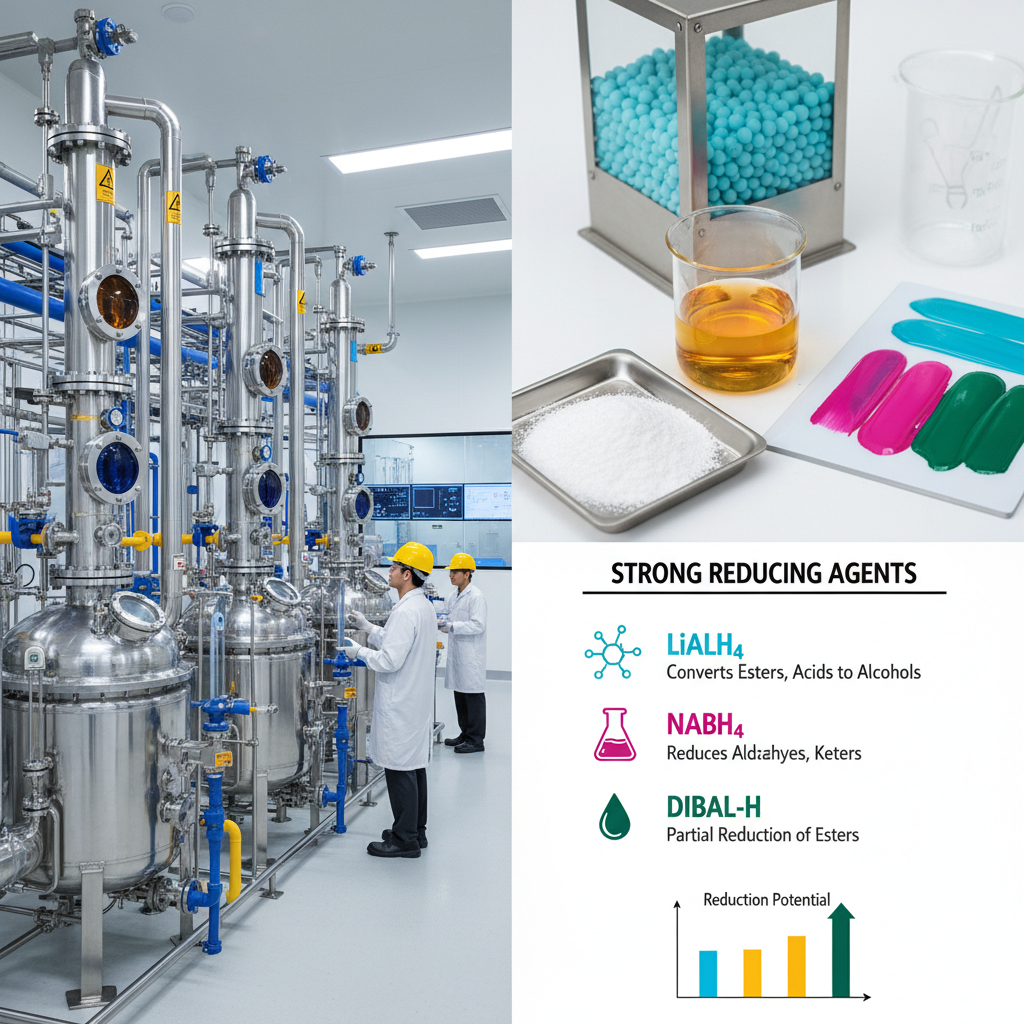
A strong reducing agent possesses a significant tendency to lose electrons. This is often quantified by its reduction potential – a lower reduction potential indicates a stronger reducing agent. These agents are capable of reducing a wide range of functional groups, including ketones, aldehydes, carboxylic acids, and even nitro groups. They are typically employed when milder reducing agents are insufficient to drive a reaction to completion. Factors influencing reducing power include the metal's electropositivity (in metal hydrides) and the presence of electron-donating groups. Common examples include lithium aluminum hydride (LiAlH₄), sodium borohydride (NaBH₄), and diborane (B₂H₆). Understanding the nuanced differences between these agents is key to optimizing reaction conditions and maximizing product yield.
Key Considerations: Reduction potential is a critical indicator of reducing strength. The choice of reducing agent depends on the functional group being reduced and the desired selectivity. Safety precautions are vital due to the reactivity of these compounds.
Lithium Aluminum Hydride (LiAlH₄): A Powerful Reducer
Lithium aluminum hydride (LiAlH₄) is arguably the most potent reducing agent commonly used in organic chemistry. It's capable of reducing a remarkably broad spectrum of functional groups, including carboxylic acids, esters, amides, ketones, aldehydes, and epoxides. However, this power comes with caveats. LiAlH₄ is highly reactive with water and alcohols, requiring strictly anhydrous conditions. Reactions are typically carried out in ethereal solvents like diethyl ether or tetrahydrofuran (THF). Due to its reactivity, careful quenching procedures are essential to safely decompose excess reagent after the reaction is complete. It’s a workhorse reagent, but demands respect and careful handling.
LiAlH₄ Applications:
• Reduction of carboxylic acids to primary alcohols.
• Reduction of esters and amides to alcohols and amines, respectively.
• Reduction of ketones and aldehydes to secondary and primary alcohols.
Sodium Borohydride (NaBH₄) vs. LiAlH₄: A Comparative Look
While LiAlH₄ is a powerful, all-encompassing reducing agent, it’s not always the most suitable choice. Sodium borohydride (NaBH₄) offers a milder alternative with greater selectivity. NaBH₄ is less reactive than LiAlH₄, and crucially, it can be used in protic solvents like water and alcohols. This makes it significantly easier and safer to handle. However, NaBH₄ is not capable of reducing carboxylic acids or esters directly; it primarily reduces ketones and aldehydes. Choosing between these two reagents depends on the specific functional groups present in the molecule and the desired outcome. You can refer to Dyeingchem's product catalog for various reducing agents.
Diborane (B₂H₆): A Specialized Reducing Agent
Diborane (B₂H₆) is a highly selective reducing agent, particularly effective for reducing carboxylic acids to primary alcohols without affecting other functional groups like ketones or esters. It's often used when chemoselectivity is crucial. However, diborane is a toxic and flammable gas, requiring specialized equipment and handling procedures. It is commonly used as a solution in THF. Despite these challenges, its unique selectivity makes it indispensable in certain synthetic applications.
Safety Precautions When Working with Strong Reducing Agents
Working with strong reducing agents demands strict adherence to safety protocols. Always wear appropriate personal protective equipment (PPE), including gloves, safety glasses, and a lab coat. Reactions should be conducted in a well-ventilated fume hood to avoid exposure to hazardous fumes. Quenching procedures must be carefully planned and executed to safely deactivate excess reagent. Never add water directly to LiAlH₄ – controlled addition of ethyl acetate or a similar solvent is crucial. Familiarize yourself with the specific hazards and handling instructions for each reducing agent before use. Refer to the Dyeingchem safety data sheets (SDS) for detailed information.
Conclusion: Mastering the Art of Reduction
Understanding the nuances of strong reducing agents is essential for any organic chemist. By carefully considering the reactivity, selectivity, and safety aspects of each reagent, you can effectively harness their power to achieve complex synthetic transformations. Remember to always prioritize safety and consult relevant resources for detailed guidance.
Frequently Asked Questions (FAQs)
What is the best way to quench excess LiAlH₄?
Quenching LiAlH₄ requires a carefully controlled procedure due to its violent reaction with water. The most common method involves the slow, dropwise addition of ethyl acetate, followed by the cautious addition of water. It's critical to add the ethyl acetate before the water to initially react with the excess LiAlH₄, forming less reactive species. The reaction mixture should be cooled in an ice bath during the quenching process to manage the heat generated. Always perform the quenching in a fume hood and ensure adequate ventilation. The resulting aluminum salts should then be filtered off after the reaction is complete.
Can NaBH₄ reduce aldehydes and ketones selectively in the presence of esters?
Yes, NaBH₄ exhibits good selectivity and can generally reduce aldehydes and ketones in the presence of esters. Esters are significantly less reactive towards NaBH₄ under typical reaction conditions. However, the selectivity isn't absolute, and prolonged reaction times or elevated temperatures can potentially lead to some ester reduction. Controlling the stoichiometry of the NaBH₄ and monitoring the reaction progress are crucial for maximizing selectivity.
What are the main hazards associated with diborane?
Diborane is a highly toxic, flammable, and reactive gas. Exposure can cause severe respiratory irritation and even death. It forms explosive mixtures with air. Due to its gaseous nature, it can easily leak and pose an inhalation hazard. Handling diborane requires specialized equipment, including gas cylinders, regulators, and a well-ventilated fume hood. Proper training and adherence to safety protocols are absolutely essential when working with this reagent.
Where can I find high-quality reducing agents for my research?
Dyeingchem offers a comprehensive selection of high-quality reducing agents, including LiAlH₄, NaBH₄, and diborane solutions. We provide detailed product specifications, safety data sheets, and reliable supply chain services to meet the needs of researchers and industrial customers. We also offer custom packaging and synthesis options to suit your specific requirements.