Harnessing Leather Enzyme Technology for Enhanced Tanning and Sustainable Production
Harnessing Leather Enzyme Technology for Enhanced Tanning and Sustainable Production
Unlocking Efficiency: The Power of Leather Enzyme in Tanning Processes
The leather industry is constantly evolving, seeking innovative solutions to enhance processing efficiency, reduce environmental impact, and improve final product quality. Leather enzyme technology represents a significant advancement in this pursuit. These biological catalysts offer a greener, more precise approach to various stages of leather manufacturing, from soaking and liming to bating and finishing. This article will delve into the benefits, applications, and future potential of leather enzymes, providing a comprehensive overview for tanners, researchers, and industry professionals. Embracing enzymatic solutions is key to sustainable and high-quality leather production.

Understanding Leather Enzymes: A Biological Approach to Tanning
Unlike traditional chemical processes, leather enzymes utilize biological catalysts to accelerate specific reactions. These enzymes are proteins that selectively break down complex molecules, such as proteins, fats, and carbohydrates, found in animal hides. Different enzymes are tailored for various stages of the tanning process, offering targeted action and minimizing unwanted side effects. This precision results in improved leather characteristics, reduced chemical consumption, and a more environmentally friendly production cycle. From initial hide preparation to final finishing, enzymes provide a versatile and effective solution for modern tanneries.
Key Benefits: Reduced chemical usage, Improved leather softness & suppleness, Enhanced grain tightness, Lower environmental impact, Faster processing times.
Key Applications of Leather Enzymes in the Tanning Process
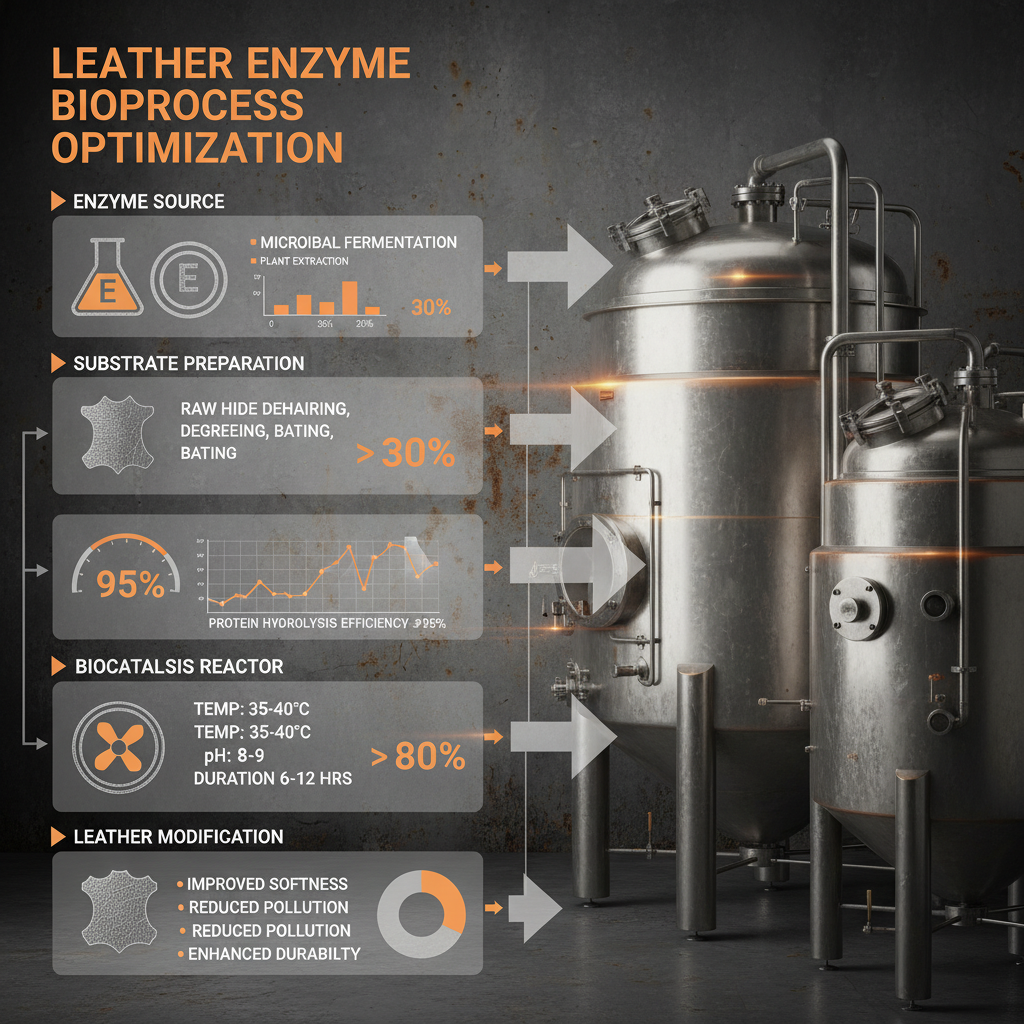
Leather enzymes are employed across a broad spectrum of tanning stages. In soaking, enzymes aid in removing dirt, blood, and other extraneous matter, improving water penetration. During liming, they assist in hair removal and swelling of the hide, preparing it for subsequent processes. Bating utilizes proteases to break down unwanted proteins, enhancing leather softness and grain structure. Furthermore, enzymes find application in de-greasing, enhancing dye uptake, and even in finishing stages to modify leather surfaces. The versatility of enzymatic treatments allows tanneries to optimize each step of the process for superior results.
Application Areas:
• Soaking: Enhanced wetting and dirt removal
• Liming: Efficient hair removal and hide swelling
• Bating: Improved leather softness and grain structure
• De-greasing: Effective fat removal without harsh chemicals
Enzymatic vs. Traditional Chemical Processes: A Comparative Analysis
Traditional leather processing heavily relies on harsh chemicals, such as sodium sulfide and lime, which can have significant environmental consequences. Leather enzymes offer a sustainable alternative, reducing the need for these pollutants and minimizing waste generation. While chemical processes often result in a more uniform but potentially rigid leather structure, enzymatic treatments yield a softer, more natural feel with enhanced grain tightness. The precision of enzymatic action also minimizes damage to collagen fibers, preserving the inherent quality of the hide.
Product Spotlight: Dyeingchem's Range of Leather Enzymes
Dyeingchem offers a comprehensive portfolio of high-quality leather enzymes designed to meet the diverse needs of tanneries. Our product line includes proteases, amylases, lipases, and cellulases, each formulated for specific applications. We prioritize enzyme stability, activity, and purity, ensuring consistent and reliable performance. Here's a glimpse into some of our key offerings:
Conclusion: Embracing a Sustainable Future with Leather Enzymes
Leather enzymes represent a transformative technology for the tanning industry, offering a pathway towards more sustainable, efficient, and high-quality leather production. By reducing reliance on harsh chemicals and enhancing process precision, enzymes contribute to a greener footprint and superior leather characteristics. Dyeingchem is committed to providing innovative enzymatic solutions that empower tanneries to thrive in a rapidly evolving market. Embrace the power of enzymes and unlock a brighter future for the leather industry.
Frequently Asked Questions (FAQs)
What factors affect the activity of leather enzymes?
Several factors can influence enzyme activity, including pH, temperature, and the presence of inhibitors. Enzymes function optimally within a specific pH range, typically between 5 and 8 for most leather processing enzymes. Temperature also plays a crucial role; higher temperatures generally increase activity up to a certain point, beyond which the enzyme can denature and lose function. The presence of heavy metals or certain chemicals can also inhibit enzyme activity. Dyeingchem provides technical support to optimize enzyme usage based on specific process conditions.
Are leather enzymes compatible with all tanning methods?
While leather enzymes are highly versatile, compatibility depends on the specific tanning method and enzyme type. They are particularly well-suited for wet-white and chrome-free tanning processes, enhancing softness and reducing environmental impact. However, enzymes can also be effectively integrated into chrome tanning with careful optimization. It's essential to conduct compatibility tests and adjust process parameters to ensure optimal results. Dyeingchem's technical team can assist in developing customized enzyme protocols for various tanning systems.
How does enzyme dosage affect the tanning process?
Enzyme dosage is a critical parameter that directly impacts process efficiency and leather quality. Under-dosage may result in incomplete reactions, leading to suboptimal performance. Over-dosage, on the other hand, can cause excessive degradation of collagen fibers, compromising leather strength and durability. The optimal dosage varies depending on the enzyme type, hide characteristics, and process conditions. Dyeingchem provides detailed dosage recommendations and technical support to help tanneries achieve consistent and reliable results.