Understanding the Crucial Meaning of Reducing Agent in Chemical Reactions
Understanding the Crucial Meaning of Reducing Agent in Chemical Reactions
Understanding the Meaning of Reducing Agent in Chemical Processes
In the realm of chemistry, particularly in oxidation-reduction (redox) reactions, the concept of a reducing agent is fundamental. But what exactly does it mean? Simply put, a reducing agent is a substance that donates electrons to another substance in a chemical reaction. This donation causes the other substance to be reduced. Understanding reducing agents is crucial in various applications, including industrial chemistry, analytical chemistry, and even biological processes. This article will delve into the definition, examples, applications, and importance of reducing agents, providing a comprehensive overview for chemists and anyone interested in the fascinating world of chemical reactions.
Defining a Reducing Agent: Electron Donors
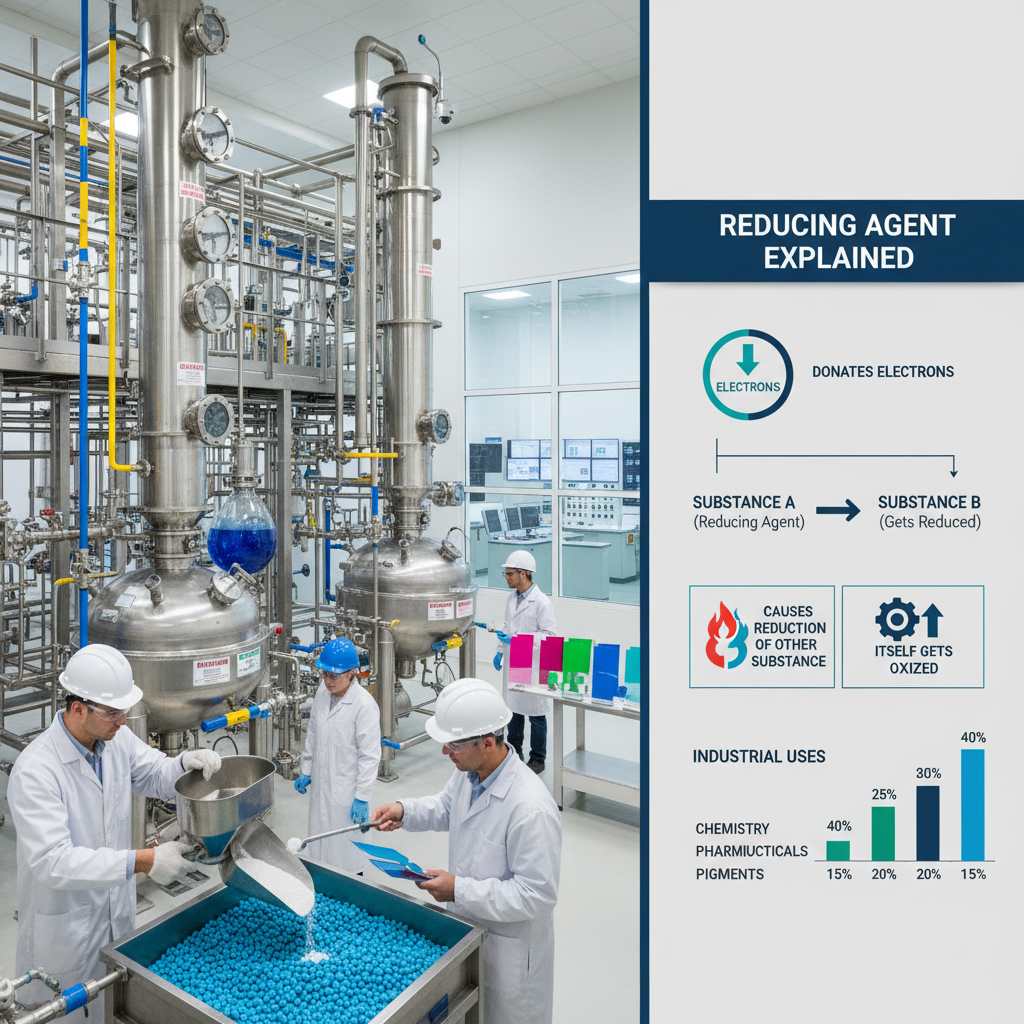
A reducing agent, also known as a reductant, is a chemical species that loses electrons during a redox reaction. This loss of electrons results in an increase in the oxidation state of the reducing agent itself. It's important to remember that reduction and oxidation always occur simultaneously. One substance gains electrons (is reduced) while another loses electrons (is oxidized). The reducing agent causes the reduction to happen in another substance, while being oxidized in the process. Common reducing agents include metals (like zinc and iron), gases (like hydrogen), and various organic compounds. The strength of a reducing agent is measured by its reduction potential – the more negative the potential, the stronger the reducing agent.
Key Takeaway: A reducing agent donates electrons, leading to the reduction of another substance and its own oxidation.
Common Examples of Reducing Agents
Numerous substances can act as reducing agents, each with varying degrees of strength. Some prevalent examples include:
- Sodium Borohydride (NaBH4): A commonly used selective reducing agent in organic chemistry, particularly for reducing ketones and aldehydes to alcohols.
- Lithium Aluminum Hydride (LiAlH4): A much stronger reducing agent than NaBH4, capable of reducing a wider range of functional groups.
- Zinc (Zn): Used in various industrial applications, like galvanizing steel, and in laboratory settings for reducing reactions.
- Iron (Fe): Frequently employed in the production of iron compounds and in catalytic processes.
- Hydrogen Gas (H2): A vital reducing agent in hydrogenation reactions, used extensively in the petrochemical industry.
- Ascorbic Acid (Vitamin C): A biological reducing agent, playing a crucial role in antioxidant defense mechanisms within the body.
Understanding Reducing Agent Strength: A Comparative Look
The strength of a reducing agent dictates its ability to donate electrons. This strength is quantified by its standard reduction potential (E°). A more negative E° indicates a stronger reducing agent. Here's a comparison of some common reducing agents and their approximate standard reduction potentials:
Applications of Reducing Agents in Industry
Reducing agents are integral to a vast array of industrial processes. Here are a few key applications:
- Metal Extraction: Used to reduce metal ions from their ores, allowing for the extraction of pure metals.
- Chemical Synthesis: Essential in the production of various organic and inorganic compounds, including pharmaceuticals, polymers, and fertilizers.
- Water Treatment: Employed to remove contaminants, such as nitrates and sulfates, from water sources.
- Photography: Historically used in developing photographic film, reducing silver halide crystals to metallic silver.
- Dyeing Industry: DyeingChem provides various reducing agents critical in textile dyeing processes, ensuring vibrant and lasting colors.
Importance of Selecting the Right Reducing Agent
Choosing the appropriate reducing agent for a specific reaction is paramount. Factors to consider include: the strength of the reducing agent required, the selectivity needed (to avoid unwanted side reactions), cost, and environmental impact. A stronger reducing agent isn't always better; it might react with unintended components in the mixture. Careful selection ensures efficient reaction rates, high product yields, and minimal waste. Understanding these nuances is vital for successful chemical processes.
Conclusion: The Cornerstone of Redox Chemistry
The concept of a reducing agent is central to understanding redox reactions and their widespread applications. From industrial processes to biological systems, these electron donors play a critical role. By carefully selecting the right reducing agent and understanding its properties, chemists and engineers can optimize reactions and achieve desired outcomes.
Frequently Asked Questions (FAQs)
What's the difference between a reducing agent and an oxidizing agent?
The key difference lies in their electron behavior. A reducing agent donates electrons and becomes oxidized, while an oxidizing agent accepts electrons and becomes reduced. They always work in pairs – one cannot act without the other in a redox reaction. Think of it as a give-and-take relationship. An oxidizing agent has a strong affinity for electrons, while a reducing agent readily gives them up. Their opposing roles are fundamental to the entire redox process.
Can a substance act as both a reducing and oxidizing agent?
Yes, in some cases, a substance can act as both a reducing and oxidizing agent. This is known as a disproportionation reaction. In such reactions, the same element is both reduced and oxidized. For example, chlorine gas (Cl2) can act as both an oxidizing and reducing agent depending on the other reactants present. This typically occurs when the element can exist in multiple oxidation states.
How are reduction potentials used to predict the direction of a reaction?
Reduction potentials provide a quantitative measure of the tendency of a species to be reduced. A species with a more positive reduction potential is a stronger oxidizing agent and will more readily accept electrons. To predict the direction of a reaction, compare the reduction potentials of the two half-reactions. The reaction will proceed spontaneously in the direction that results in a net positive cell potential (calculated from the reduction potentials). Essentially, the more positive potential indicates the greater driving force for the reaction.
What are some safety considerations when working with reducing agents?
Many reducing agents are highly reactive and can pose safety hazards. Some are flammable, corrosive, or react violently with water or air. It’s crucial to always handle reducing agents with appropriate personal protective equipment (PPE), such as gloves, goggles, and a lab coat. Work in a well-ventilated area and follow proper handling procedures outlined in the Safety Data Sheet (SDS) for the specific reducing agent. Always add reducing agents slowly and cautiously to avoid uncontrolled reactions.