Understanding the Power of a List of Strong Reducing Agents and Their Applications
Understanding the Power of a List of Strong Reducing Agents and Their Applications
Understanding the Power of a List of Strong Reducing Agents
In the realm of chemistry, understanding reducing agents is crucial for numerous applications, from industrial processes to laboratory research. A list of strong reducing agents provides a foundational understanding of compounds capable of donating electrons, facilitating redox reactions. These agents are vital in various sectors including textile dyeing, water treatment, metal processing, and pharmaceutical synthesis. Choosing the correct reducing agent is paramount, dependent on the specific reaction and desired outcome. We will explore several key examples, their properties, and considerations for safe and effective use.
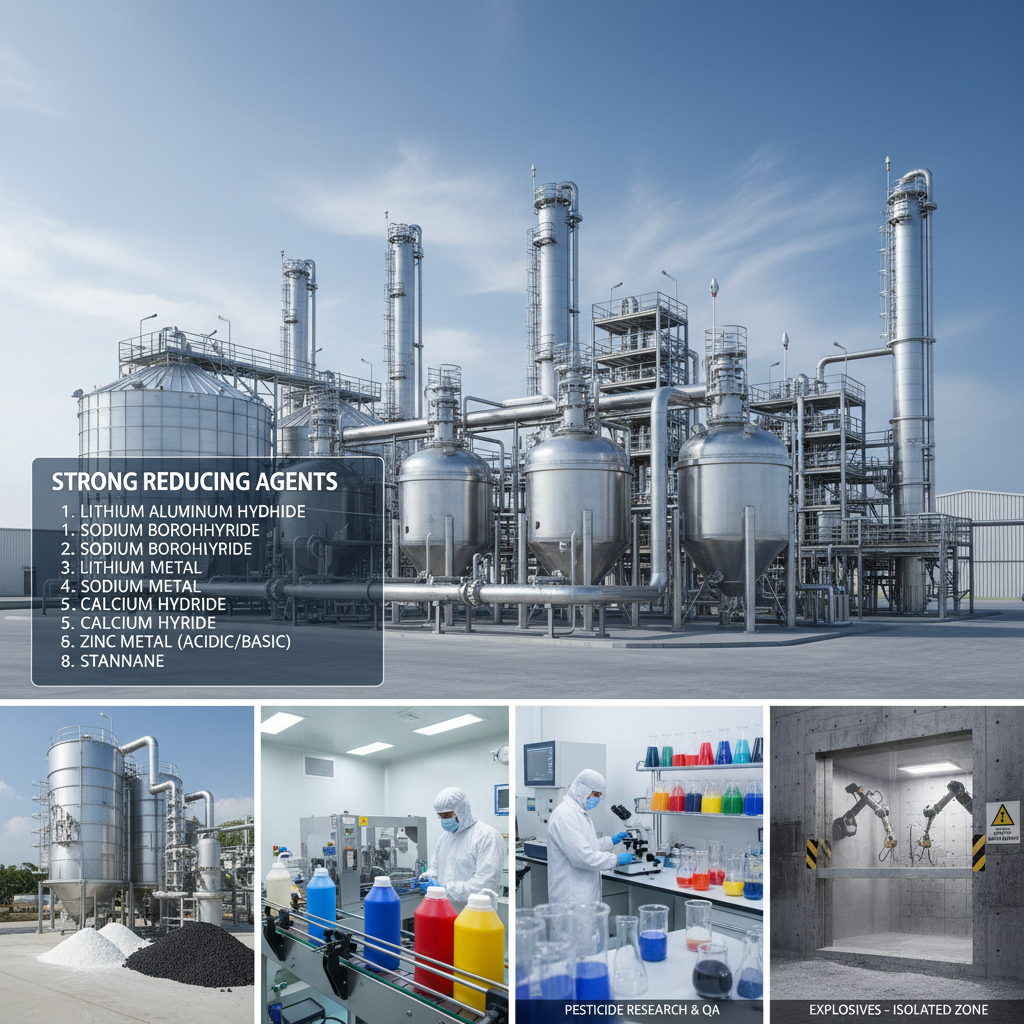
Defining Reducing Agents and Their Importance
A reducing agent, also known as a reductant, is a substance that loses electrons to another substance in a redox (reduction-oxidation) reaction. This process causes the other substance to be reduced. Strong reducing agents readily donate electrons and have a high negative reduction potential. Their ability to facilitate reactions makes them invaluable in a diverse range of industrial applications. For example, in the textile industry, reducing agents are used in vat dyeing processes to convert insoluble dyes into a soluble form for fabric penetration. In water treatment, they help remove chlorine and other oxidizing agents. The efficient and safe utilization of these agents is vital for optimal process control and product quality.
Key Benefits of Using Strong Reducing Agents: Facilitate crucial redox reactions, enable various industrial processes, improve product quality, and contribute to effective waste management.
A Comprehensive List of Strong Reducing Agents
Here’s a look at some of the most potent reducing agents commonly used in various industries. Each agent possesses unique properties and applications. Understanding these nuances is critical for selection.
Factors Influencing Reducing Agent Selection
Choosing the right reducing agent depends on several key factors. Reactivity is paramount; stronger reducing agents can handle more challenging reductions but may also be less selective. Solubility is also crucial, ensuring the agent can effectively interact with the target compound. Cost and safety are equally important considerations. Some reducing agents are hazardous and require stringent handling protocols. Understanding the reaction mechanism and potential byproducts is vital for optimizing the process and minimizing waste. Dyeingchem.com offers a range of high-quality reducing agents tailored to diverse industrial needs.
Key Selection Criteria:
• Reactivity
• Solubility
• Cost
• Safety
Safety Considerations When Handling Reducing Agents
Strong reducing agents can pose significant safety hazards. Many are highly reactive with air, water, and other chemicals. Always wear appropriate personal protective equipment (PPE), including gloves, safety glasses, and a lab coat. Work in a well-ventilated area to avoid inhalation of fumes. Understand the specific hazards of each reducing agent before use and follow established safety protocols. Proper storage is also crucial – keep reducing agents in tightly sealed containers, away from incompatible materials. Refer to the Safety Data Sheet (SDS) for detailed safety information.

Applications of Strong Reducing Agents in Key Industries
The applications of strong reducing agents are far-reaching. In the pharmaceutical industry, they're used in the synthesis of complex organic molecules. The textile industry relies on them for vat dyeing and textile processing. Water treatment uses reducing agents to remove chlorine and heavy metals. Metal processing employs them for metal refining and surface treatment. The versatility of these agents underscores their importance across multiple sectors. Dyeingchem.com provides solutions for various industrial applications.
Conclusion: Harnessing the Power of Reduction
Understanding the properties and applications of a list of strong reducing agents is critical for success in numerous scientific and industrial fields. By carefully selecting the appropriate agent and adhering to stringent safety protocols, you can unlock its full potential for innovation and efficiency. Don't compromise on quality or safety - choose a reliable supplier like Dyeingchem.com for your reducing agent needs.
Frequently Asked Questions (FAQs)
What are the primary risks associated with using lithium aluminum hydride (LiAlH4)?
Lithium aluminum hydride (LiAlH4) is a highly reactive reducing agent that poses significant risks. It reacts violently with water, releasing flammable hydrogen gas. It’s also pyrophoric, meaning it can ignite spontaneously in air. Exposure can cause severe burns to skin and eyes. Handling requires meticulous technique, including the use of inert atmospheres (e.g., nitrogen or argon), anhydrous solvents, and proper personal protective equipment (PPE). Always add LiAlH4 slowly to the reaction mixture and never add water directly to it. Emergency procedures must be in place in case of spills or fires.
How does the reduction potential impact the strength of a reducing agent?
The reduction potential is a measure of a substance's tendency to gain electrons and become reduced. A more negative reduction potential indicates a stronger reducing agent, meaning it readily donates electrons. This is because a more negative potential suggests a greater driving force for the substance to be oxidized (lose electrons). Therefore, the more negative the reduction potential, the more powerful the reducing agent.
Can sodium borohydride (NaBH4) be used in water?
Yes, sodium borohydride (NaBH4) is unique among strong reducing agents in that it can be used in aqueous (water) solutions. However, it does decompose slowly in water, releasing hydrogen gas. This decomposition is accelerated at higher temperatures or pH levels. For best results and safety, it's often used in alcohol-water mixtures or with careful pH control. While less reactive than LiAlH4, it is a safer alternative for reactions where water compatibility is required.