0%

Table of Contents

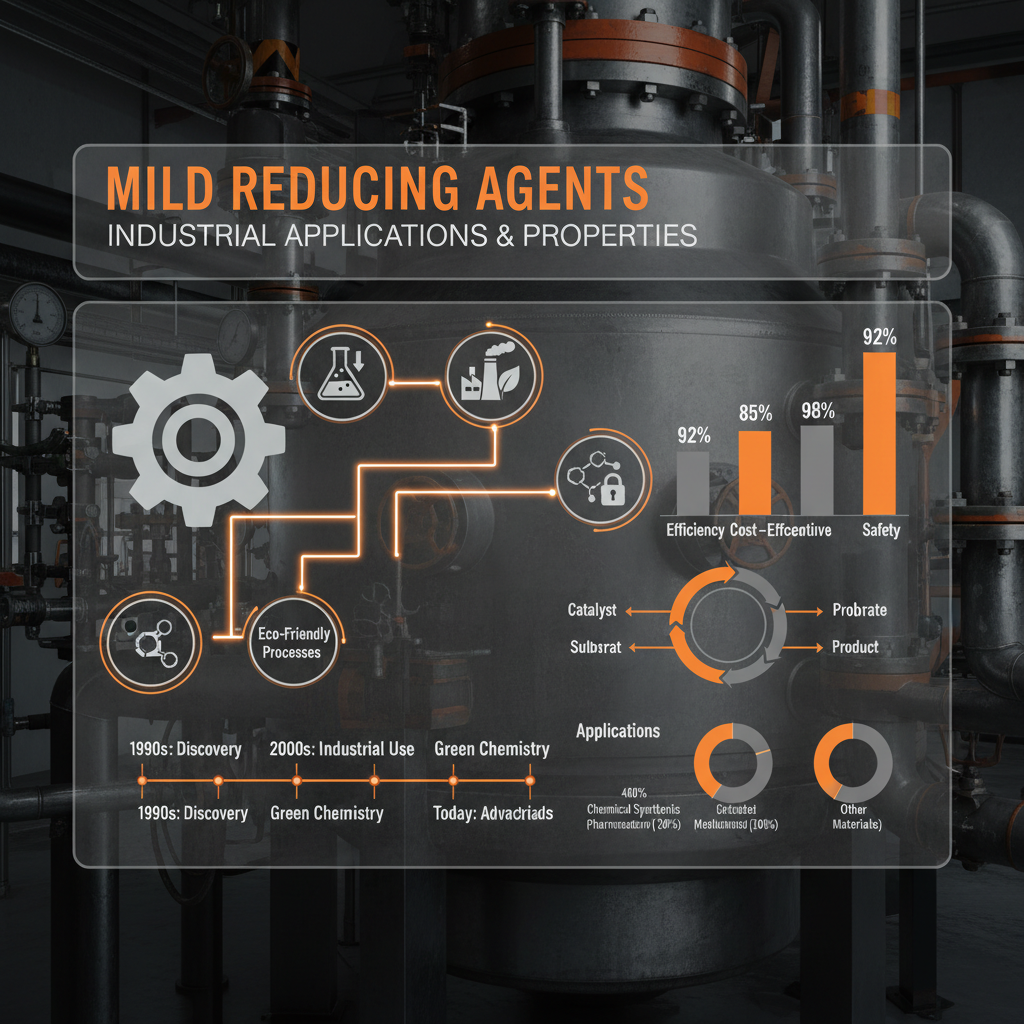
Mild reducing agents are crucial components in a vast array of industrial processes, ranging from textile dyeing and food preservation to environmental remediation and pharmaceutical synthesis. Their ability to facilitate chemical reactions without introducing excessive oxidation makes them invaluable in applications where maintaining product integrity and minimizing unwanted byproducts is paramount. Understanding the nuances of mild reducing agents – their properties, applications, and safety considerations – is therefore essential for professionals across multiple disciplines.

The global demand for mild reducing agents is steadily increasing, driven by factors like stringent environmental regulations, a growing focus on sustainable manufacturing practices, and the need for high-purity chemical products. According to a recent report by the UN Environment Programme, industries are actively seeking greener alternatives to traditional, more aggressive reducing agents. This shift is not merely a regulatory response but also a strategic move for businesses aiming to enhance their brand image and appeal to environmentally conscious consumers.

The importance of these agents extends beyond industrial applications. They play a vital role in wastewater treatment, removing pollutants and restoring water quality, and in the development of advanced materials with tailored properties. The effective utilization of a mild reducing agent is therefore integral to a sustainable future.

mild reducing agent

Introduction to Mild Reducing Agents

mild reducing agent

Mild reducing agents are essential in numerous chemical processes, offering a controlled reduction capability that minimizes unwanted side reactions. They are preferred over strong reducing agents in applications where selectivity and preservation of substrate integrity are critical. This makes them vital for industries demanding high product quality and adherence to stringent safety standards.

The careful selection of a mild reducing agent depends on the specific application, considering factors such as reaction conditions, substrate sensitivity, and cost-effectiveness. Their role is expanding as the chemical industry moves towards more sustainable and environmentally friendly practices.

Defining Mild Reducing Agents

A mild reducing agent is a chemical species that donates electrons to another species, facilitating a reduction reaction, but does so at a controlled rate and with a limited reduction potential. Unlike strong reducing agents, they do not readily cause complete or indiscriminate reduction. This controlled reactivity is the defining characteristic, making them suitable for delicate applications.

The significance of mild reducing agents lies in their ability to selectively reduce specific functional groups within a molecule without affecting others. This is crucial in organic synthesis, pharmaceutical manufacturing, and analytical chemistry where precise control over reaction outcomes is paramount. Their use directly correlates with increased product purity and reduced waste generation.

In essence, the term ‘mild’ refers to the agent’s relative ability to transfer electrons, making it a powerful tool in circumstances where forceful reduction would be detrimental.

Key Characteristics of Mild Reducing Agents

Several key characteristics distinguish effective mild reducing agents. Firstly, their reduction potential must be carefully tuned to the specific application. A reduction potential that is too high may lead to unwanted side reactions, while one that is too low may result in an incomplete reaction. Secondly, solubility in the reaction medium is essential for efficient electron transfer.

A third important characteristic is selectivity; a good mild reducing agent will preferentially reduce a specific functional group in the presence of others. Finally, stability under reaction conditions is critical to prevent decomposition and maintain consistent performance. The optimal choice of a mild reducing agent hinges on a delicate balance of these properties.

The cost-effectiveness and environmental impact are also increasingly important factors driving the selection of mild reducing agents. Researchers are actively developing new agents that are both efficient and sustainable, minimizing environmental footprint without compromising performance.

Application Areas for Mild Reducing Agents

Mild reducing agents find extensive use in the textile industry for dye fixation and color stabilization. They are also crucial in the food industry for preventing enzymatic browning and preserving the color and flavor of processed foods. Moreover, they play a significant role in the pharmaceutical industry, used in the synthesis of complex drug molecules.

Performance Comparison of Mild Reducing Agent Methods

Global Impact and Use Cases

In post-disaster relief operations, mild reducing agents are utilized in portable water purification systems to remove contaminants and ensure access to safe drinking water. This is particularly critical in areas where infrastructure is damaged and conventional water treatment facilities are non-operational.

Furthermore, in remote industrial zones, these agents are deployed in on-site wastewater treatment plants, minimizing environmental pollution and adhering to local regulations. The ability to effectively treat wastewater without relying on complex infrastructure makes them invaluable in challenging environments.

Advantages and Long-Term Value

The advantages of using mild reducing agents are multifaceted. From a cost perspective, they often require lower dosages compared to stronger alternatives, reducing overall chemical consumption and associated expenses. They also promote sustainability by minimizing the formation of harmful byproducts and reducing the environmental impact of industrial processes.

Beyond the tangible benefits, mild reducing agents contribute to improved product quality, enhanced safety, and increased innovation. By allowing for precise control over chemical reactions, they enable the development of new materials and technologies with tailored properties, fostering a competitive edge in the global market.

Future Trends and Innovations

Future trends in mild reducing agent technology focus on the development of bio-based alternatives and the integration of advanced materials like nanomaterials. These innovations aim to enhance efficiency, reduce toxicity, and improve sustainability. Furthermore, advancements in process monitoring and control, coupled with machine learning algorithms, are enabling real-time optimization of reduction reactions, minimizing waste and maximizing yield.

The convergence of green chemistry principles and digital transformation is driving the development of highly selective and environmentally friendly mild reducing agent formulations. These advancements will be crucial in meeting the growing demand for sustainable chemical solutions in the coming years.

Ultimately, the future of this field is heavily intertwined with a commitment to circular economy principles and the development of closed-loop systems where waste is minimized and resources are reused.

Summary of Mild Reducing Agent Performance Characteristics

Agent Type Reduction Potential (mV) Selectivity Score (1-10) Environmental Impact (1-5, 1=Low)
Sodium Borohydride -1.6 8 3
Sodium Dithionite -0.9 7 4
Ascorbic Acid 0.69 6 1
Hydrazine Hydrate -1.2 9 5
Tin(II) Chloride -0.14 7 4
Formic Acid 0.06 5 2

FAQS

What are the key safety considerations when handling mild reducing agents?

While generally less hazardous than strong reducing agents, mild reducing agents can still pose risks. Proper ventilation is crucial to avoid inhalation of fumes. Skin and eye protection should always be worn, and contact should be avoided. Always refer to the Material Safety Data Sheet (MSDS) for specific handling instructions and first aid measures. Proper storage, away from incompatible materials, is also critical.

How do I select the most appropriate mild reducing agent for my specific application?

Selecting the right agent involves considering several factors: the target functional group you want to reduce, the sensitivity of the surrounding chemical environment, the desired reaction rate, and cost. Evaluate the reduction potential, selectivity, and solubility of different agents. Small-scale testing is highly recommended to optimize conditions and ensure compatibility.

What are some eco-friendly alternatives to traditional mild reducing agents?

Bio-based reducing agents, like ascorbic acid (Vitamin C) and plant extracts, are gaining popularity as sustainable alternatives. Researchers are also exploring the use of enzymatic reduction methods and nanomaterials as environmentally benign reducing agents. These options reduce reliance on synthetic chemicals and minimize environmental impact.

Can mild reducing agents be used in conjunction with other chemical treatments?

Yes, mild reducing agents can often be effectively combined with other treatments, such as oxidation or neutralization, to achieve desired outcomes. However, careful consideration must be given to compatibility and potential interactions. It's crucial to assess the combined effects on reaction kinetics and product selectivity.

How does the pH of the reaction medium affect the performance of a mild reducing agent?

The pH of the reaction medium can significantly influence the reduction potential and stability of many mild reducing agents. Some agents perform optimally under acidic conditions, while others are more effective in alkaline environments. Careful pH control is often necessary to maximize reaction efficiency and minimize unwanted side reactions.

What is the shelf life of mild reducing agents, and how should they be stored to maintain their potency?

The shelf life of mild reducing agents varies depending on the specific agent and storage conditions. Generally, they should be stored in tightly sealed containers, protected from light, moisture, and air. Cool, dry conditions are ideal. Regularly checking the expiry date and appearance of the agent is recommended to ensure its potency.

Conclusion

In conclusion, mild reducing agents represent a critical component in numerous industries and scientific fields. Their ability to facilitate controlled reduction reactions, coupled with their increasing availability in sustainable forms, makes them indispensable for achieving high product quality, environmental responsibility, and innovative advancements. Understanding their properties, applications, and future trends is essential for professionals across a wide range of disciplines.

Looking ahead, the development of novel, bio-based mild reducing agents and the integration of advanced process control technologies promise to further enhance their efficiency, sustainability, and versatility. Continued research and investment in this field will unlock new possibilities for cleaner, more efficient chemical processes and contribute to a more sustainable future.
David Miller

David Miller

David Miller serves as the Senior Production Manager at our company, bringing over 18 years of experience in chemical manufacturing, specifically within the textile industry. He's instrumental in ensuring our 6,000-ton annual production capacity consistently meets the highest quality standards, a cornerstone of our commitment. David joined us in 2015 and has spearheaded several key process improvements, including the integration of advanced equipment in 2018. He is deeply involved in maintaining our ISO certification and ZDHC LEVEL 3 compliance. David’s focus is not just on output but on efficiency and sustainability, aligning with our company’s long-term vision. He holds a degree in Chemical Engineering and is a known problem-solver within the team.
Previous Exploring the Potential of Natural Reducing Agents for Sustainable Solutions
Next Exploring the Versatile Applications of Inorganic Reducing Agents in Industry and Beyond

If you are interested in our products, you can choose to leave your information here, and we will be in touch with you shortly.