Comprehensive Guide to Types of Textile Auxiliaries and Their Applications
Comprehensive Guide to Types of Textile Auxiliaries and Their Applications
Types of Textile Auxiliaries: A Comprehensive Guide
Textile auxiliaries are crucial components in modern textile processing, enhancing the quality, performance, and aesthetics of fabrics. These chemicals are used at various stages, from pre-treatment to finishing, to achieve desired effects. Understanding the different types of textile auxiliaries is essential for optimizing production processes and meeting consumer demands. This article provides a detailed overview of the key categories, their functions, and applications within the textile industry. Selecting the appropriate auxiliary chemicals is vital for ensuring superior textile products.

Pre-treatment Auxiliaries: Preparing the Fabric
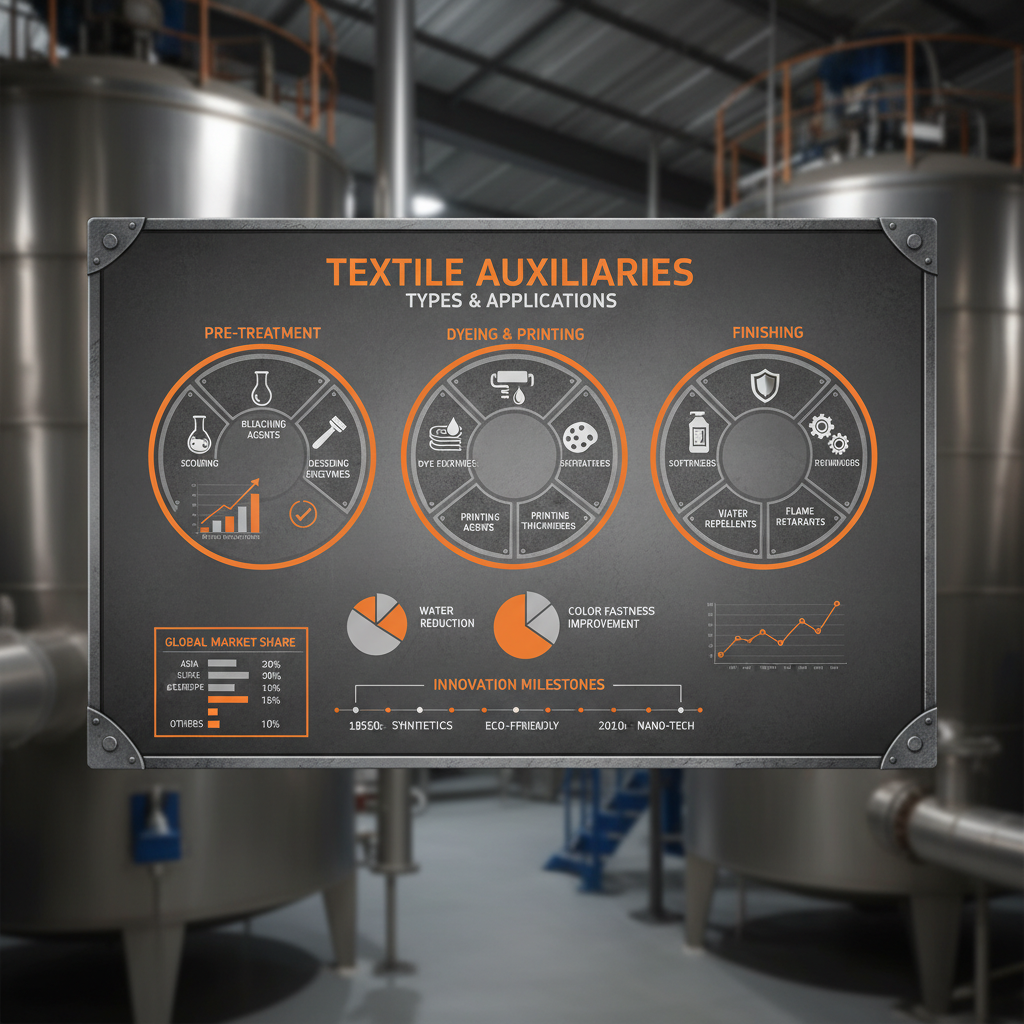
Pre-treatment auxiliaries are used to clean and prepare fabrics for subsequent dyeing, printing, or finishing processes. This stage is critical for ensuring optimal results. Common types include wetting agents (to improve water absorption), scouring agents (to remove impurities like waxes and oils), and bleaching agents (to whiten fabrics). Enzymes are also increasingly used for bio-scouring, offering an eco-friendly alternative to traditional chemical methods. Properly prepared fabrics will demonstrate more even dye uptake and better overall performance. You can find a variety of these at Dyeingchem.
Key Benefits of Effective Pre-treatment: Enhanced dye uptake, improved fabric handle, increased whiteness, and reduced processing time.
Dyeing Auxiliaries: Enhancing Color Application
Dyeing auxiliaries are used to facilitate the dyeing process, ensuring uniform color distribution and improved colorfastness. These include leveling agents (to promote even dye distribution), dispersing agents (to prevent dye aggregation), and fixing agents (to improve dye-fiber bonding). Carriers are used to enhance dye penetration in synthetic fibers. The choice of auxiliary depends on the dye class and fiber type. Selecting the right dyeing auxiliary is pivotal for achieving vibrant, long-lasting colors.
Factors influencing auxiliary selection:
• Dye class (reactive, direct, disperse, etc.)
• Fiber type (cotton, polyester, nylon, etc.)
• Desired colorfastness properties
• Environmental considerations
Finishing Auxiliaries: Adding Functional Properties
Finishing auxiliaries are applied to fabrics after dyeing and printing to impart specific functional properties, such as water repellency, wrinkle resistance, softness, or antimicrobial properties. Common types include softeners, resins (for wrinkle resistance), water repellents, and flame retardants. These auxiliaries enhance the fabric's performance and appeal to consumers. Discover cutting-edge finishing auxiliaries at Dyeingchem.
Types of Textile Auxiliaries: A Comparison
Here's a comparative overview of various textile auxiliaries and their key functions:
Specialty Auxiliaries: Meeting Niche Requirements
Beyond the core categories, various specialty auxiliaries cater to specific needs. These include anti-foaming agents (to prevent foam formation during processing), sequestering agents (to remove metal ions that can interfere with dyeing), and anti-static agents (to reduce static electricity build-up). Microencapsulation technology is also gaining prominence, allowing for the delivery of functional agents with controlled release. The development of innovative auxiliaries is a continuous process driven by industry demands.
The Future of Textile Auxiliaries: Sustainability and Innovation
The textile industry is increasingly focused on sustainability, driving demand for eco-friendly auxiliaries. Bio-based auxiliaries, derived from renewable resources, are gaining traction as alternatives to traditional petrochemical-based products. Research and development efforts are also focused on minimizing the environmental impact of auxiliary production and use, including reducing water consumption and waste generation. Companies like Dyeingchem are at the forefront of these advancements.
Conclusion: Optimizing Textile Processing with the Right Auxiliaries
Choosing the right textile auxiliaries is crucial for achieving optimal results in textile processing. Understanding the different types, their functions, and their applications allows manufacturers to improve product quality, enhance efficiency, and minimize environmental impact. As the industry evolves, embracing sustainable and innovative auxiliary solutions will be key to success.
Frequently Asked Questions (FAQs)
What are the environmental considerations when selecting textile auxiliaries?
Environmental impact is a major concern. Look for auxiliaries that are biodegradable, low in VOCs (volatile organic compounds), and free from hazardous chemicals like APEOs (alkylphenol ethoxylates). Consider auxiliaries with certifications like OEKO-TEX Standard 100, which ensures they meet stringent ecological requirements. Reducing water and energy consumption during auxiliary application is also important. Prioritizing bio-based alternatives and closed-loop systems can further minimize environmental footprint.
How do I determine the correct dosage of a textile auxiliary?
Dosage recommendations are typically provided by the auxiliary manufacturer and depend on factors like fiber type, fabric construction, and desired effect. It's crucial to follow the manufacturer's guidelines and conduct trials to optimize the dosage for your specific process. Overdosing can lead to undesirable effects like staining or reduced fabric performance, while underdosing may not achieve the desired results. Regular monitoring and adjustments may be needed to maintain optimal performance.
What is the role of sequestering agents in textile processing?
Sequestering agents are used to bind metal ions present in water, preventing them from interfering with dyeing and finishing processes. Metal ions can cause color variations, reduce dye yield, and even damage fabrics. By effectively sequestering these ions, the auxiliary ensures consistent color results and improves the overall quality of the finished product. They are particularly important when using hard water or processing fabrics that may contain residual metal impurities.