0%

Table of Contents

Let’s talk about strong reducing agents. You don’t just learn about these things in a lab; you get to know them on the job, wrestling with corrosion, trying to get a reaction to go exactly as planned. I’ve spent years watching pipelines fail prematurely, concrete crack, and materials degrade faster than they should. And a lot of that comes down to understanding—and properly applying—reducing agents. It’s not just chemistry; it’s about preventing massive headaches, safety issues, and serious financial losses on a project. A solid grasp of a list of strong reducing agents is absolutely crucial for anyone involved in construction, manufacturing, or even environmental remediation.

Honestly, you start to see the impact everywhere. From the deoxygenation of boiler water to prevent corrosion, to the treatment of wastewater, to the processes involved in creating the very metals we build with – it all relies on controlled reduction. Ignoring these principles means facing unexpected failures, costly repairs, and potentially dangerous situations. I’ve seen entire projects delayed because someone skimped on the right reducing agent, or didn’t understand the nuances of the application.

We’re not talking about theoretical concepts here. This is about practical, real-world solutions. It's about preventing disasters and ensuring structures stand the test of time. And knowing your list of strong reducing agents – what they do, how they work, and when to use them – is the first step to building better, safer, and more durable infrastructure.
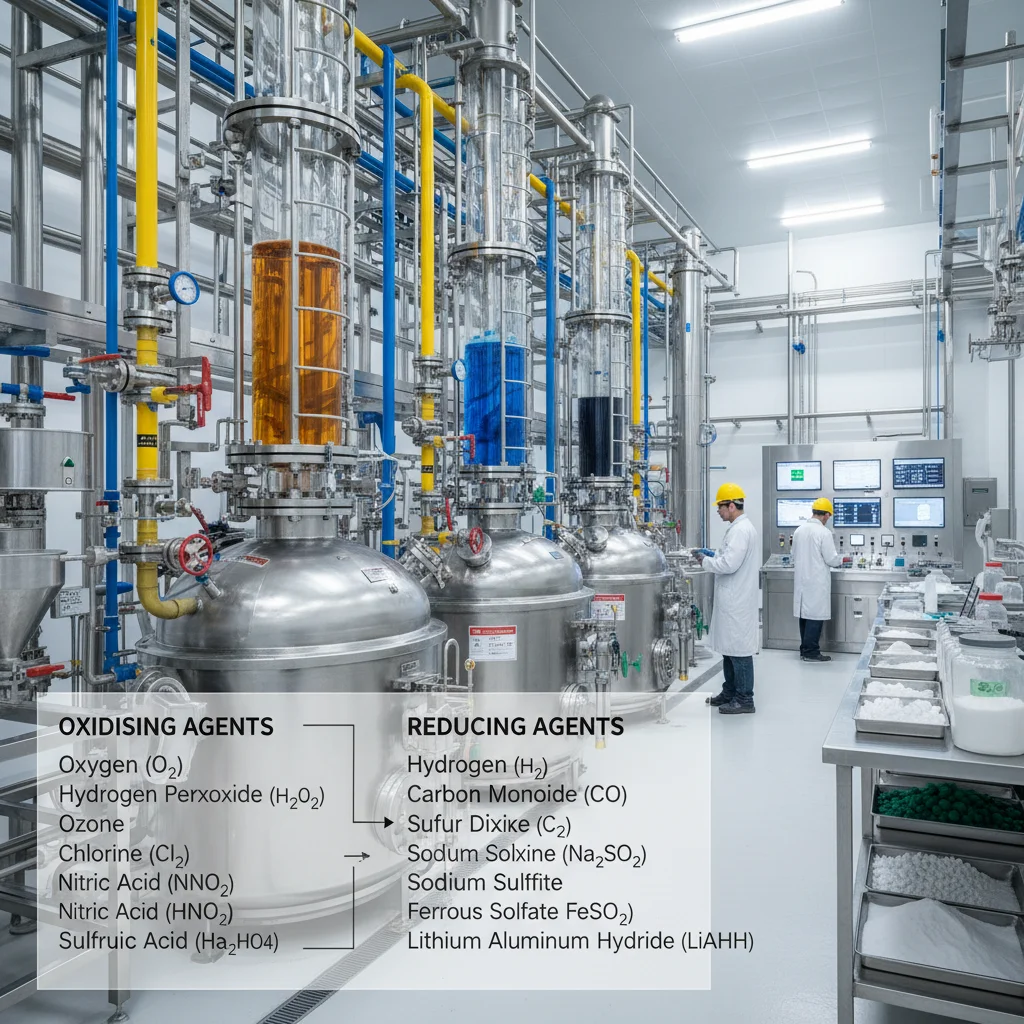
list of strong reducing agents

Understanding the Importance of List of Strong Reducing Agents
list of strong reducing agents

Look, on a construction site, you’re constantly fighting oxidation – rust, corrosion, things breaking down. A list of strong reducing agents gives us the tools to control those processes, to protect our investments. It’s not just about immediate fixes; it's about long-term durability. Think about steel reinforcement in concrete – if you don't address the potential for corrosion, you're setting yourself up for major structural problems down the road.

Understanding the specific agents available and their suitability for different applications is key. You can't just grab the cheapest option; you need to consider the environment, the materials involved, and the desired outcome. It's a calculated risk, and choosing the wrong agent can have serious consequences.

Defining Strong Reducing Agents in Practical Terms

Okay, so what are we talking about? In simple terms, a reducing agent donates electrons. That's the chemistry part. But practically, that means it prevents oxidation – it stops things from rusting, corroding, or otherwise degrading. The strength of a reducing agent depends on how easily it gives up those electrons. A “strong” reducing agent does it very readily.

Think about cleaning up a metal surface before welding. You’re using a reducing agent to remove oxides and prepare a clean surface for a strong bond. Or consider the process of extracting metals from ores – reduction is a central part of that. It's fundamental to so many industrial processes.

It’s crucial to remember that these agents aren’t magic bullets. They require proper application, understanding of the reaction conditions, and careful monitoring. You're manipulating chemical processes, and that needs to be done with precision and respect for safety protocols.

Key Properties Influencing Agent Selection

When I’m picking a reducing agent, I’m not just looking at its chemical formula. I’m looking at its stability, its reactivity with different materials, and its environmental impact. Something super-powerful might be effective, but if it’s incredibly toxic or creates hazardous byproducts, it’s a no-go.

The temperature and pH of the environment play huge roles. An agent that works great in a neutral solution might be completely ineffective in acidic conditions. Also, consider the scalability of the process. Can you easily and safely handle larger volumes if needed? Cost is always a factor, but you can't sacrifice performance or safety just to save a few bucks.

Finally, compatibility with the materials you’re working with is critical. You don’t want a reducing agent that will attack the base metal you’re trying to protect. It’s about finding the right balance of strength, selectivity, and safety.

Real-World Applications Across Industries

I’ve seen these agents used in everything from wastewater treatment plants (removing sulfates) to the oil and gas industry (preventing corrosion in pipelines). In power plants, they're used to deoxygenate boiler water, preventing scale formation and improving efficiency.

In metal fabrication, they're used for surface treatment, cleaning, and preparing materials for coating. And in environmental remediation, they can be used to detoxify contaminated soil and water. The list goes on and on.

Effectiveness of Different list of strong reducing agents Methods

Advantages & Long-Term Value Proposition

The biggest advantage is, hands down, extending the lifespan of critical infrastructure. Preventing corrosion and degradation saves companies massive amounts of money in the long run by reducing repair costs and downtime.

It’s not just about money, either. Using the right reducing agents contributes to safer working conditions and reduces environmental impact. That's a huge win-win.

Future Trends & Innovations in Reducing Agent Technology

We’re seeing a push towards more environmentally friendly reducing agents – things that are biodegradable or have lower toxicity. There's a lot of research going into nanotechnology and using nano-materials to enhance reduction processes.

Also, I’m noticing increased use of automated monitoring systems to precisely control the amount of reducing agent being used, optimizing performance and minimizing waste. This ties into the broader trend of digitalizing construction and industrial processes.

And with increasing focus on sustainability, we're starting to explore reducing agents derived from renewable resources, rather than relying on fossil fuels.

Challenges and Mitigation Strategies

One of the biggest challenges is dealing with complex chemical interactions. Sometimes, the reducing agent reacts with something unexpected, creating unwanted byproducts or reducing its effectiveness.

Proper testing and analysis are essential. You need to understand the specific chemistry of your system before you apply a reducing agent. Another challenge is ensuring consistent application – uneven distribution can lead to localized corrosion or degradation.

And, of course, safety is paramount. Many reducing agents are hazardous, so you need to have robust safety protocols in place, including proper handling procedures, personal protective equipment, and emergency response plans.

Summary of Challenges and Mitigation Strategies for Effective Reducing Agent Use

Challenge Potential Impact Mitigation Strategy Severity (1-10)
Unexpected Chemical Reactions Reduced Effectiveness, Byproduct Formation Thorough Chemical Analysis & Compatibility Testing 7
Uneven Application Localized Corrosion, Reduced Protection Automated Application Systems, Quality Control Checks 8
Hazardous Material Handling Safety Risks, Environmental Contamination Strict Safety Protocols, PPE, Emergency Plans 9
Environmental Impact of Byproducts Regulatory Compliance Issues, Pollution Selection of Eco-Friendly Agents, Waste Treatment 6
Cost of High-Performance Agents Budget Constraints, Project Delays Life Cycle Cost Analysis, Optimization of Usage 5
Lack of Skilled Personnel Improper Application, Reduced Effectiveness Comprehensive Training Programs, Certification 7

FAQS

What's the difference between a strong and a weak reducing agent?

The main difference lies in their ability to donate electrons. Strong reducing agents readily give up electrons, making them highly effective at preventing oxidation. Weak reducing agents have a lower tendency to donate electrons, meaning they are less powerful and may only work in specific conditions. It all comes down to the potential for electron transfer and the stability of the resulting ions.

Are all reducing agents environmentally friendly?

Absolutely not. Some reducing agents can be highly toxic and generate harmful byproducts. That's why it's crucial to carefully consider the environmental impact when selecting an agent. There's a growing trend towards using more sustainable options, like bio-based reducing agents, but they may not always be suitable for every application. A thorough assessment of the risks and benefits is essential.

How do I know which reducing agent is right for my specific application?

That's a great question! It depends on several factors, including the material you're trying to protect, the environment you're working in, and the type of corrosion or degradation you're trying to prevent. Start by identifying the specific chemical processes at play. Then, research agents that are compatible with those processes and safe for your application. If you're unsure, consult with a materials scientist or corrosion expert.

What safety precautions should I take when handling reducing agents?

Safety is paramount. Always wear appropriate personal protective equipment (PPE), including gloves, eye protection, and respirators, if necessary. Ensure adequate ventilation. Follow the manufacturer's instructions for handling and storage. Be aware of potential hazards, such as flammability or toxicity. And always have a spill response plan in place.

Can reducing agents be used to reverse existing corrosion?

In some cases, yes. Reducing agents can help remove rust or other corrosion products from a surface, but it's not always a complete fix. The underlying cause of the corrosion needs to be addressed as well. For example, if corrosion is caused by saltwater exposure, you'll need to protect the surface from further exposure after cleaning it. It's often more effective to prevent corrosion in the first place.

What is the role of pH in the effectiveness of a reducing agent?

pH plays a huge role. Many reducing agents are pH-sensitive, meaning their effectiveness changes depending on the acidity or alkalinity of the environment. Some agents work best in acidic conditions, while others are more effective in alkaline conditions. You need to ensure the pH is within the optimal range for the chosen agent to achieve the desired results. That's why careful monitoring and control of pH are critical.

Conclusion

We’ve covered a lot here, but the core message is simple: a solid understanding of list of strong reducing agents is essential for anyone involved in industries where corrosion and degradation are concerns. It’s about more than just chemistry; it’s about protecting investments, ensuring safety, and building durable infrastructure.

Looking ahead, I expect to see continued innovation in this field, with a focus on more sustainable and environmentally friendly solutions. Investing in training and development for personnel handling these agents will also be crucial. Ultimately, a proactive approach to corrosion control—backed by a strong understanding of reducing agents—is the key to long-term success.

Daniel Garcia

Daniel Garcia

Daniel Garcia is our Quality Control Manager, guaranteeing that every batch of our textile auxiliaries meets stringent standards. He possesses 15 years of experience in quality assurance, with a zero-tolerance approach to defects. Daniel’s role is critical in maintaining our ZDHC LEVEL 3 certification and ensuring consistent product performance for our clients. He's responsible for implementing and overseeing rigorous testing protocols throughout the production process. Since joining us in 2010, Daniel has dramatically improved our quality control systems and reduced potential risks. He holds several certifications in quality management and is a strong advocate for process standardization.
Previous Understanding the Crucial Role of List of Reducing Agents in Organic Chemistry
Next Optimizing Textile Processes by Finding Oxidation and Reduction Agents for Enhanced Quality

If you are interested in our products, you can choose to leave your information here, and we will be in touch with you shortly.