In the intricate world of textile chemistry, the ability to define oxidizing agent and reducing agent is not merely an academic exercise but a cornerstone of industrial production. These chemical entities drive the redox reactions that allow for the bleaching of raw fabrics, the fixation of vibrant dyes, and the precision stripping of unwanted colors in denim washing. Without a precise understanding of these agents, the consistency and quality of textile auxiliaries would be impossible to maintain.
Globally, the chemical manufacturing sector relies on the precise balance of oxidation and reduction to create everything from high-performance enzymes to specialized leather auxiliaries. The interplay between these agents determines the stability of a chemical compound and its reactivity with various fibers, such as cotton, polyester, or wool. For professionals in the printing and dyeing industry, mastering these concepts ensures that the final product meets stringent international standards for colorfastness and material integrity.
Understanding how to define oxidizing agent and reducing agent allows manufacturers to optimize their processes, reducing waste and enhancing the sustainability of their operations. By leveraging the correct redox potential, factories can transition toward greener chemistry, utilizing more efficient catalysts and reducing the environmental footprint of wastewater. This guide explores the technical nuances and practical applications of these agents within the specialized scope of textile and daily chemical auxiliaries.
Fundamental Chemistry of Redox Agents in Textiles
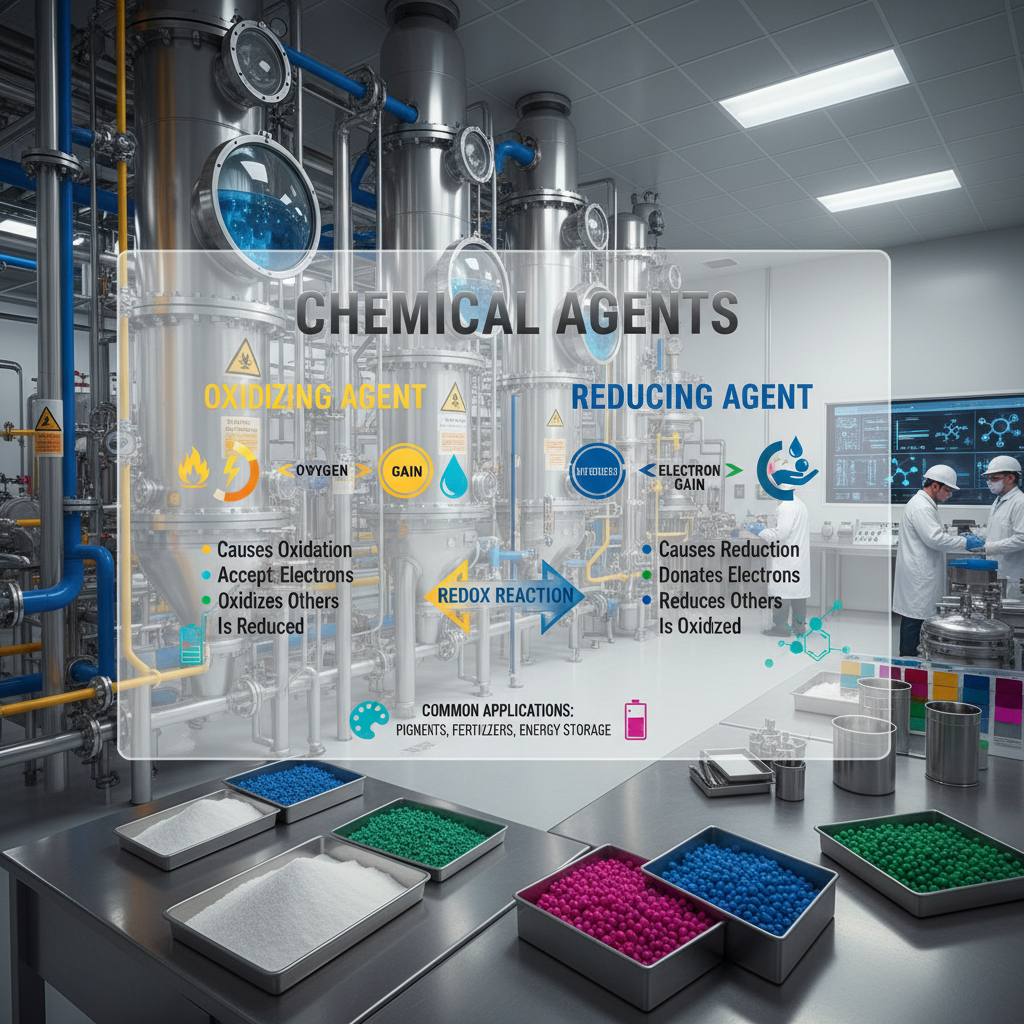
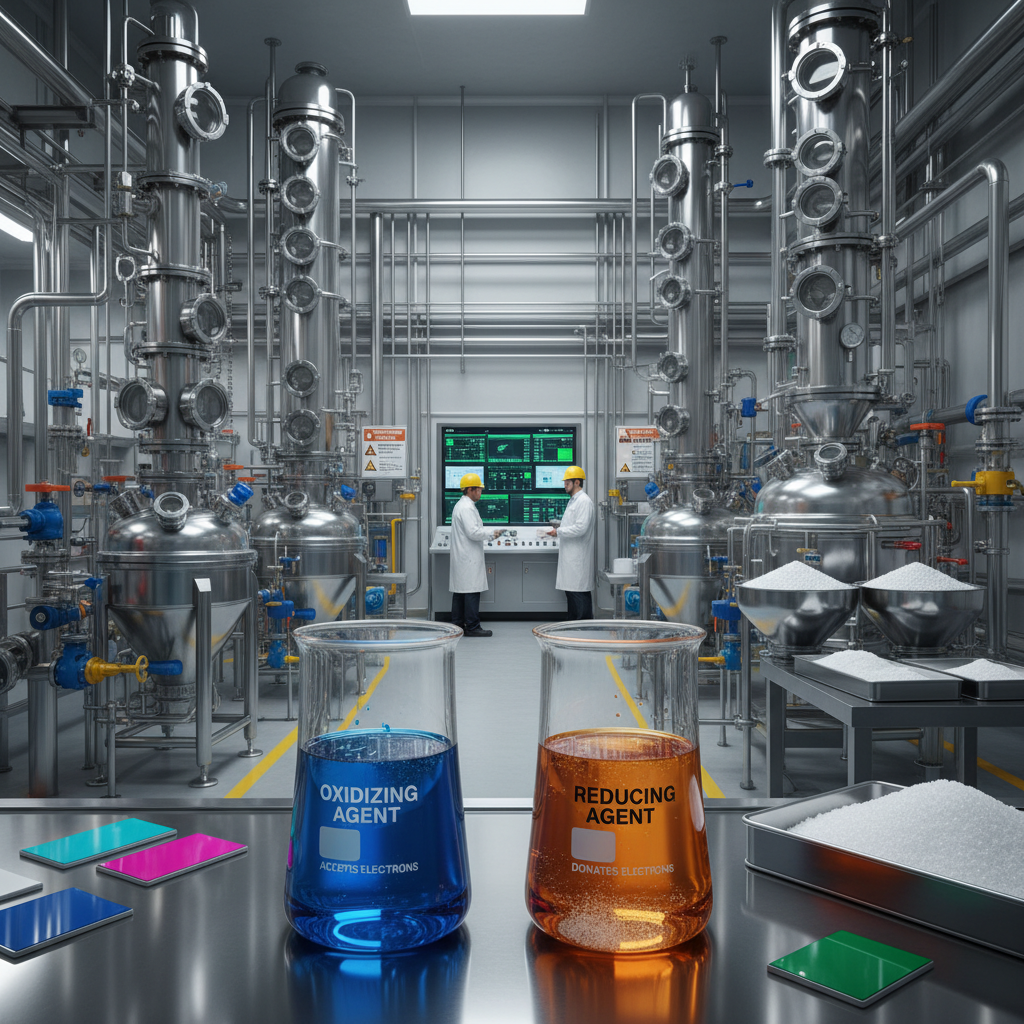
To define oxidizing agent and reducing agent simply: an oxidizing agent is a substance that gains electrons in a chemical reaction, thereby oxidizing another substance. In textile pre-treatment, hydrogen peroxide is a classic example, used to remove natural pigments from cotton fibers to create a pure white canvas for dyeing. By accepting electrons, the oxidizer breaks down the chromophores of the impurity, effectively bleaching the fabric.
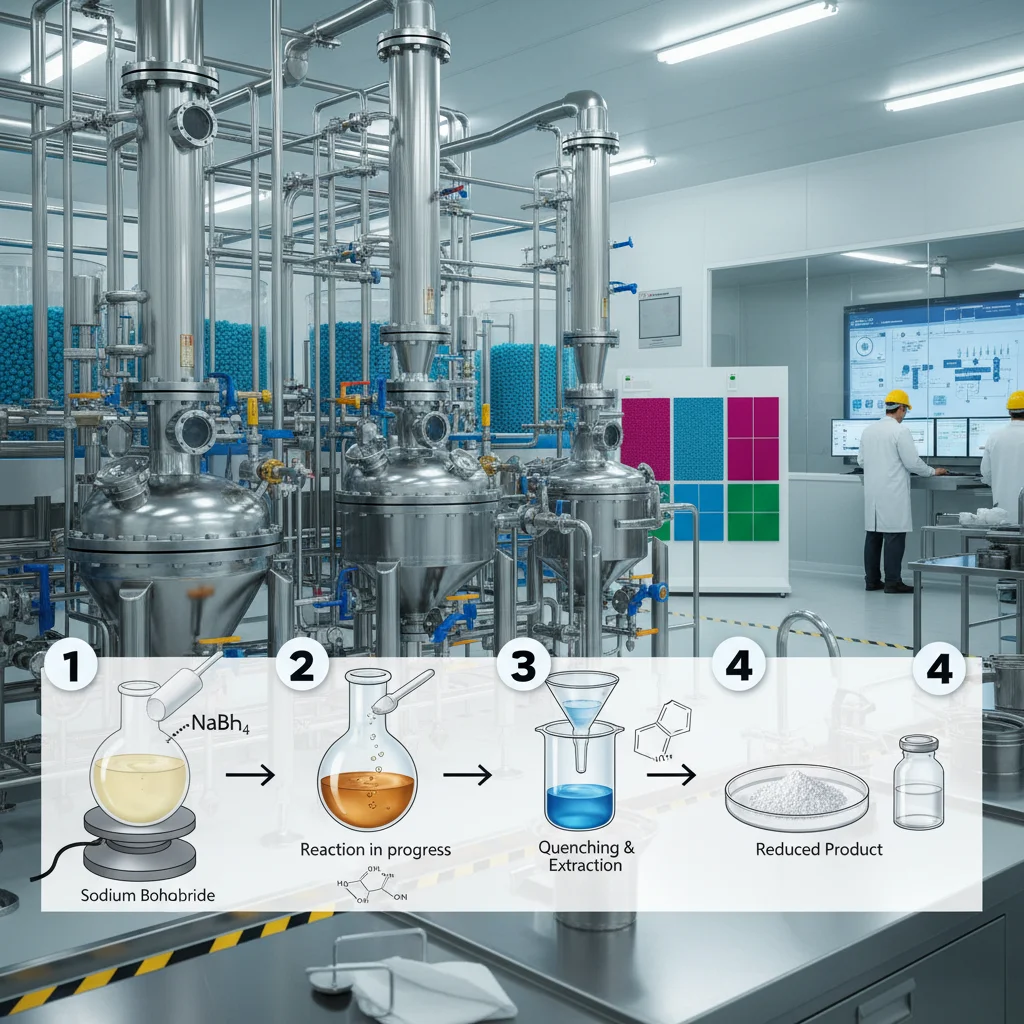
Conversely, a reducing agent is a substance that loses electrons, providing them to another reactant. In the realm of sulfur dyes and vat dyeing, reducing agents like sodium hydrosulfite are indispensable. They convert insoluble dyes into a soluble "leuco" form, allowing the dye to penetrate deep into the textile fibers before being re-oxidized to lock the color in place, ensuring a durable and vivid finish.
Industrial Context and Global Relevance
The global textile and chemical auxiliary market is governed by strict ISO standards and environmental regulations that demand precision in chemical dosing. The ability to accurately define oxidizing agent and reducing agent helps manufacturers maintain the "Right First Time" (RFT) ratio, which is critical for profitability. According to industry benchmarks, improper redox balance can lead to fabric degradation or inconsistent shading, resulting in rejection rates that can cost large-scale mills millions of dollars annually.
In the context of denim washing and leather auxiliaries, the application of these agents is a high-stakes operation. Reducing agents are used to strip indigo from specific areas to create the "vintage" look, while oxidizing agents are employed to neutralize residues. This chemical tug-of-war requires an expert understanding of pH levels and temperature, as these variables drastically alter the efficiency of the electron transfer process.
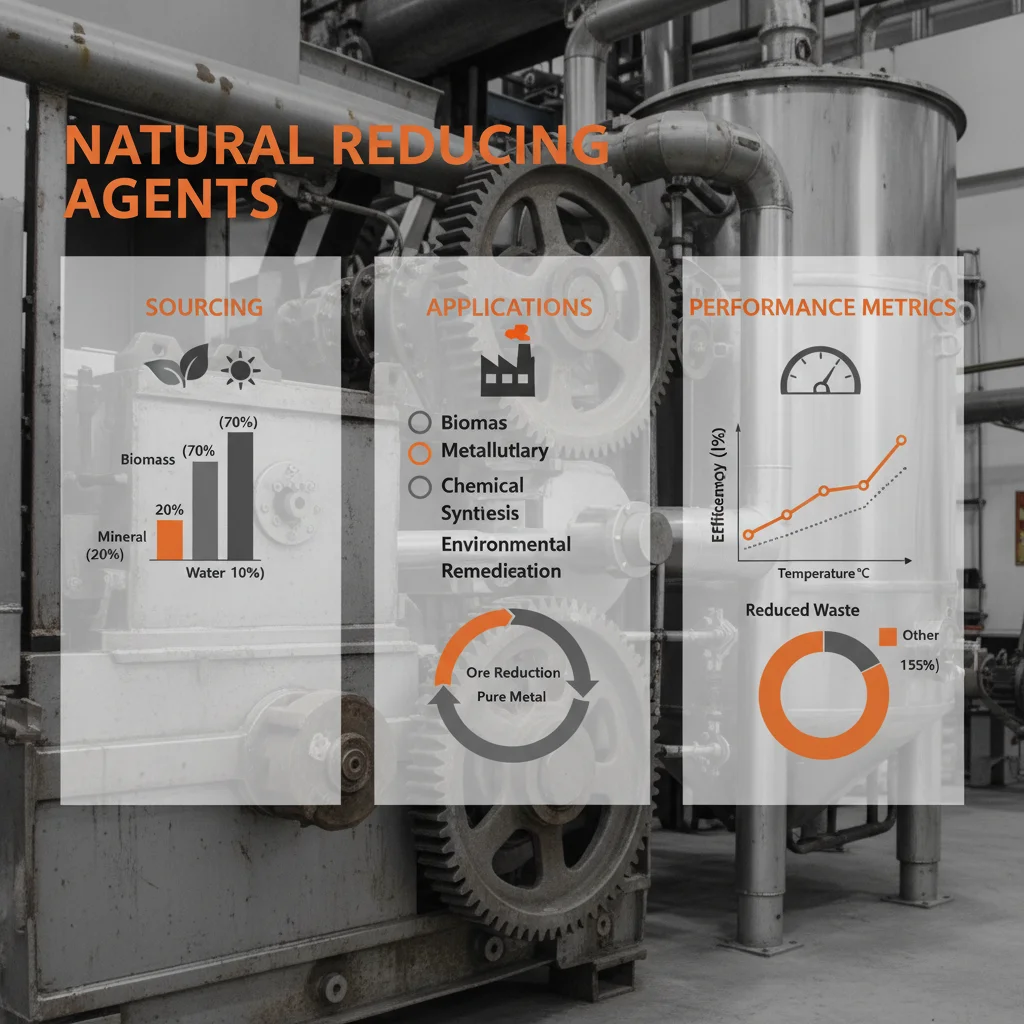
Furthermore, the rise of global sustainability initiatives, such as the ZDHC (Zero Discharge of Hazardous Chemicals) roadmap, has pushed the industry toward safer alternatives. Modern chemical plants are now replacing traditional, harsh reducing agents with bio-based alternatives or electrochemical methods, proving that the fundamental need to define oxidizing agent and reducing agent remains, even as the materials used to achieve these reactions evolve.
Core Components of Oxidizing and Reducing Systems
The first critical factor when we define oxidizing agent and reducing agent is Reaction Selectivity. In specialized chemical manufacturing, it is not enough for an agent to be powerful; it must be selective. For instance, an oxidizer used in pre-treatment must remove impurities without damaging the cellulose structure of the cotton fiber, balancing potency with material safety.
Another core component is Thermodynamic Stability. When manufacturers define oxidizing agent and reducing agent for use in oilfield or paper-making auxiliaries, they must ensure the agents remain stable under extreme pressures or temperatures. This stability prevents premature decomposition, ensuring that the redox reaction occurs exactly when and where it is intended within the production line.
Finally, Concentration Control serves as the operational backbone. The molar ratio between the oxidizer and the reducer determines the speed of the reaction. In the production of daily chemical auxiliaries, precise concentration prevents over-oxidation, which could lead to the yellowing of white fabrics or the degradation of delicate enzyme-based additives.
Performance Metrics in Auxiliary Applications
Measuring the effectiveness of redox agents requires a quantitative approach. In textile auxiliaries, performance is often measured by the "bleaching degree" or the "reduction potential" (measured in millivolts). When we define oxidizing agent and reducing agent for a specific process, we are essentially mapping out the energy required to move an electron from one molecule to another to achieve a desired visual or structural result.
Efficiency is also tied to the cost-per-kilogram of fabric treated. Higher-grade agents may have a higher initial price but offer better solubility and faster reaction times, reducing the total energy consumption of the dyeing machines. The following chart illustrates the relative efficiency ratings of different redox methods used in modern textile mills.
Comparative Efficiency of Redox Agent Methods
Real-World Global Use Cases in Dyeing
In the denim hubs of Southeast Asia and India, the ability to define oxidizing agent and reducing agent is applied daily to achieve the "stone-washed" effect without using actual stones. By applying a controlled reducing agent to the fabric, the indigo dye is stripped selectively. This is followed by a carefully timed oxidation step—often using air or a mild peroxide—to stabilize the remaining color, ensuring the garment doesn't bleed during consumer use.
Similarly, in the high-end leather auxiliary industry in Italy, redox agents are used for "degreasing" and "tanning." Reducing agents help in removing natural fats from hides, while oxidizing agents are used to treat the surface for better pigment adherence. These processes are critical for luxury goods where the tactile feel and color depth of the leather are paramount, demonstrating that the technical application of redox chemistry transcends simple fabric dyeing.
Long-Term Value and Sustainability Gains
The long-term value of mastering how to define oxidizing agent and reducing agent lies in the transition toward "Green Chemistry." By optimizing the redox potential, factories can reduce the amount of chemical runoff. For example, replacing heavy-metal-based catalysts with organic reducing agents minimizes the toxicity of effluent water, directly impacting the biodiversity of local river systems near industrial zones.
Beyond the environment, there is a significant economic incentive. Precise redox control leads to fewer "re-dyes," which are the bane of any textile mill's budget. When a batch is correctly oxidized or reduced the first time, the company saves on water, energy, and raw materials. This operational reliability builds trust with global brands that demand strict adherence to quality and sustainability KPIs.
From a social perspective, utilizing safer, more stable agents improves the health and safety of factory workers. Reducing the reliance on volatile or highly caustic redox agents lowers the risk of workplace accidents and respiratory issues, aligning industrial growth with human dignity and occupational safety.
Future Innovations in Redox Chemistry
The future of how we define oxidizing agent and reducing agent is moving toward automation and digital twin technology. Real-time sensors can now monitor the redox potential of a dye bath in milliseconds, automatically adjusting the dosage of the reducing agent via AI-driven pumps. This eliminates human error and ensures a level of consistency that was previously unattainable in manual batch processing.
Another exciting frontier is the use of "Photo-Redox" catalysis, where light energy is used to trigger the electron transfer. This could potentially eliminate the need for harsh chemical reducing agents entirely, using sunlight or LED arrays to activate the dyeing process. Such innovations would revolutionize the printing and dyeing sector, making it one of the cleanest industries in the manufacturing chain.
Furthermore, the integration of biotechnology is introducing "Enzymatic Redox" systems. These bio-catalysts act as highly specific reducing agents, operating at lower temperatures and neutral pH. As these enzymes become more scalable and cost-effective, they will likely replace traditional inorganic agents in the production of daily chemical auxiliaries.
Comparative Analysis of Traditional vs. Innovative Redox Agents
| Agent Type |
Environmental Impact |
Process Cost |
Efficiency Score |
| Sodium Hydrosulfite |
High (Sulfates) |
Low |
7/10 |
| Hydrogen Peroxide |
Low (Water/O2) |
Medium |
8/10 |
| Bio-Enzymes |
Very Low |
High |
9/10 |
| Electrochemical Cells |
Very Low |
Medium-High |
10/10 |
| Ozone Gas |
Low |
Medium |
8/10 |
| Organic Acids |
Medium |
Low-Medium |
6/10 |
FAQS
The simplest way is to use the "Electron Transfer" rule: an oxidizing agent "steals" electrons from another substance, while a reducing agent "gives" electrons away. In the textile factory, you can explain that oxidizers are generally used for bleaching and cleaning, while reducers are used to make dyes soluble and penetrate fabrics.
Yes, some substances are amphoteric in a redox sense. Depending on the strength of the other reactant and the pH of the solution, a chemical can either lose or gain electrons. This versatility is often utilized in specialized textile auxiliaries to maintain a stable chemical equilibrium during complex dyeing cycles.
Sodium hydrosulfite is the industry standard due to its strength and cost, but for eco-friendly production, many mills are switching to glucose-based reducers or electrochemical reduction. The "best" agent depends on your specific goals for color stripping and your wastewater treatment capabilities.
Absolutely. Most redox reactions are temperature-dependent. Higher temperatures generally increase the reaction rate but can also lead to the premature decomposition of the agents. For example, hydrogen peroxide can decompose too quickly at high temperatures, leading to uneven bleaching if not stabilized correctly.
Strong oxidizers can be highly reactive and may cause fires if they come into contact with organic materials or reducing agents prematurely. It is crucial to store them in cool, ventilated areas and use appropriate Personal Protective Equipment (PPE) to avoid chemical burns and respiratory irritation.
Switch to bio-based reducing agents, implement closed-loop water recycling systems, and use automated dosing to prevent chemical waste. Additionally, exploring ozone-based oxidation can significantly reduce the need for liquid chemical bleach, lowering the Salt/TDS load in your effluent.
Conclusion
In summary, the ability to define oxidizing agent and reducing agent is far more than a chemical definition; it is the operational pulse of the textile and chemical auxiliary industry. From the initial bleaching of raw fibers to the complex color-stripping of denim and the stabilization of luxury leather, redox chemistry ensures that materials are transformed with precision, durability, and aesthetic brilliance. By balancing the power of electron transfer with selectivity and stability, manufacturers can achieve superior product quality while optimizing costs.
Looking ahead, the integration of AI, biotechnology, and green energy will continue to redefine how we apply these agents. The shift toward carbon-neutral manufacturing demands a move away from harsh inorganic chemicals toward enzymatic and electrochemical solutions. For any professional in the specialty chemicals sector, staying updated on these redox innovations is not just an advantage—it is a necessity for survival in a sustainable global market. Visit our website for more professional insights: www.dyeingchem.com