Advancements in Enzyme Used in Leather Industry for Sustainable Processing
Advancements in Enzyme Used in Leather Industry for Sustainable Processing
Enzyme Used in Leather Industry: A Comprehensive Guide
The leather industry, historically reliant on harsh chemicals, is increasingly turning to enzymatic solutions for more sustainable and efficient processes. Using enzymes in leather processing offers numerous benefits, from reduced environmental impact to improved leather quality. This article delves into the various applications of enzymes in leather manufacturing, exploring their advantages, types, and future trends. We’ll also examine how Dyeingchem contributes to providing high-quality enzyme solutions for the leather sector.

Understanding the Role of Enzymes in Leather Processing
Enzymes are biological catalysts that accelerate chemical reactions without being consumed in the process. In the leather industry, they replace many traditional chemical processes, offering a greener and more controlled alternative. These biological agents act specifically on targeted components of the hide, leading to more precise and efficient processing. This leads to significant reduction in water usage and chemical waste, aligning with modern sustainability goals. Enzymes are biodegradable, posing a minimal threat to the environment when compared to conventional chemicals.
Key Benefits: Reduced chemical usage, lower environmental impact, improved leather quality, cost-effectiveness, and enhanced biodegradability.
Common Enzymes Used in the Leather Industry
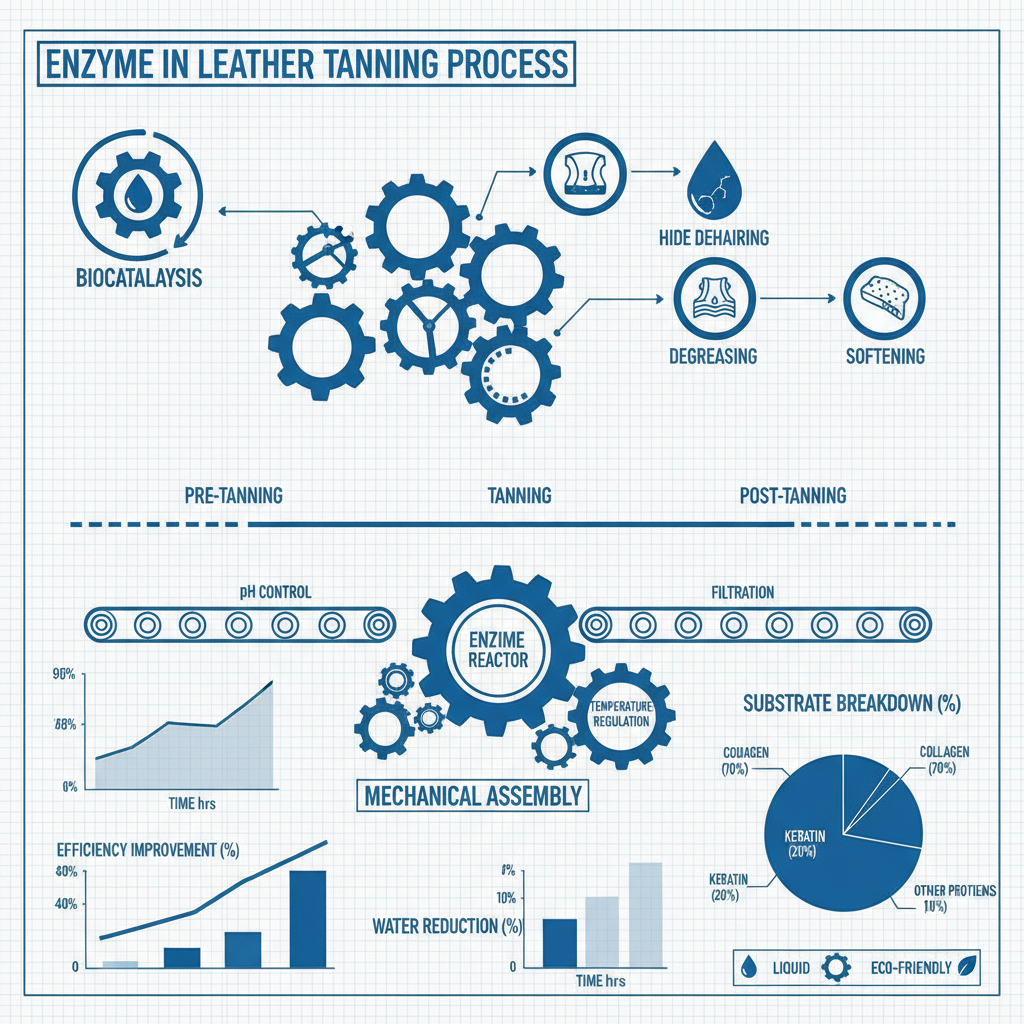
A variety of enzymes are employed throughout the leather manufacturing process. Proteases are critical for unhairing and bating, breaking down keratin and non-collagenous proteins, resulting in a softer and more pliable leather. Amylases remove starch-based sizing agents used during processing. Lipases effectively degrease the hide, removing natural fats. Cellulases assist in the loosening of fiber structures, enhancing the softness and feel of the final product. Choosing the right enzyme, and optimizing its application, is key to achieving desired results.
Enzyme Applications:
• Unhairing: Proteases
• Bating: Proteases
• Degreasing: Lipases
• Softening: Cellulases
Comparing Enzyme Treatment with Traditional Chemical Processes
Traditionally, leather processing relied heavily on lime, sulfides, and chromates. These chemicals, while effective, pose significant environmental and health risks. Enzyme-based processes offer a compelling alternative. Enzymes function under milder conditions (lower temperatures, neutral pH), reducing energy consumption. The reduced reliance on harsh chemicals leads to cleaner effluent, minimizing pollution. Furthermore, enzyme treatments often yield a softer, more supple leather with improved dye uptake.
Dyeingchem's Enzyme Solutions for the Leather Industry
At Dyeingchem, we are committed to providing high-performance enzyme formulations tailored to the specific needs of the leather industry. Our range of enzymes delivers consistent results, contributing to improved leather quality and reduced environmental impact. We offer technical support and customized solutions to optimize your leather processing operations. We prioritize sustainability and work closely with our clients to promote eco-friendly practices.
Future Trends in Enzyme Technology for Leather Processing
The future of leather processing is inextricably linked to advancements in enzyme technology. Research focuses on developing more robust and efficient enzymes capable of operating under a wider range of conditions. Genetic engineering and protein engineering are being employed to enhance enzyme activity and specificity. The integration of enzyme technology with other sustainable practices, such as water recycling and renewable energy sources, will further minimize the environmental footprint of the leather industry. We expect to see increasing adoption of enzyme-based solutions as the demand for eco-friendly leather products grows.
Conclusion: Embracing a Sustainable Future with Enzymes
The transition to enzyme-based processes in the leather industry represents a significant step towards sustainability and efficiency. By embracing this innovative technology, manufacturers can reduce their environmental impact, improve product quality, and meet the growing demand for eco-friendly leather goods. Dyeingchem is dedicated to supporting this transition by providing cutting-edge enzyme solutions and expert technical assistance.
Frequently Asked Questions (FAQs)
What are the main environmental benefits of using enzymes in leather processing?
The primary environmental benefits include significantly reduced water usage, decreased chemical waste, lower energy consumption due to milder processing conditions, and the biodegradability of enzymes themselves. Replacing harsh chemicals with enzymes minimizes pollution and reduces the overall environmental footprint of leather manufacturing. Enzymes also enable the use of more sustainable raw materials and contribute to a circular economy by facilitating the recovery and reuse of valuable resources.
How does Dyeingchem ensure the quality and consistency of its enzymes?
Dyeingchem employs rigorous quality control measures throughout the enzyme production process, from strain selection to fermentation and purification. Our enzymes undergo extensive testing for activity, specificity, and stability. We adhere to strict industry standards and certifications, ensuring that our products consistently meet the highest levels of quality and performance. We also provide detailed technical data sheets and support to assist our customers in optimizing enzyme application.
Are enzymes suitable for all types of leather processing?
While enzymes offer significant advantages in many leather processing applications, their suitability depends on the specific type of leather and the desired end product. Enzymes are highly effective in unhairing, bating, degreasing, and softening processes. However, certain specialized treatments may still require chemical interventions. Dyeingchem offers a range of enzyme formulations tailored to different leather types and processing requirements, and our technical team can provide expert guidance on the optimal enzyme selection.
What is the optimal temperature and pH for enzyme activity in leather processing?
The optimal temperature and pH vary depending on the specific enzyme used. Generally, most enzymes used in leather processing exhibit optimal activity within a temperature range of 30-60°C and a pH range of 6-8. However, it’s crucial to consult the technical data sheet for each enzyme to determine the precise optimal conditions. Maintaining the correct temperature and pH is essential for maximizing enzyme activity and achieving the desired processing results.