Comprehensive Guide to Wetting Agents for Enhanced Industrial Applications
Comprehensive Guide to Wetting Agents for Enhanced Industrial Applications
Understanding Wetting Agents: A Comprehensive Guide
Wetting agents, also known as surfactants, play a crucial role in a wide array of industrial applications, particularly within textile processing, paints, coatings, and cleaning products. These compounds reduce the surface tension of a liquid, enabling it to spread more easily across a solid surface. This article delves into the science behind wetting agents, their diverse types, applications, and how to select the right agent for your specific needs. Understanding the role of wetting agents can significantly improve process efficiency and product quality.
What are Wetting Agents and How Do They Work?
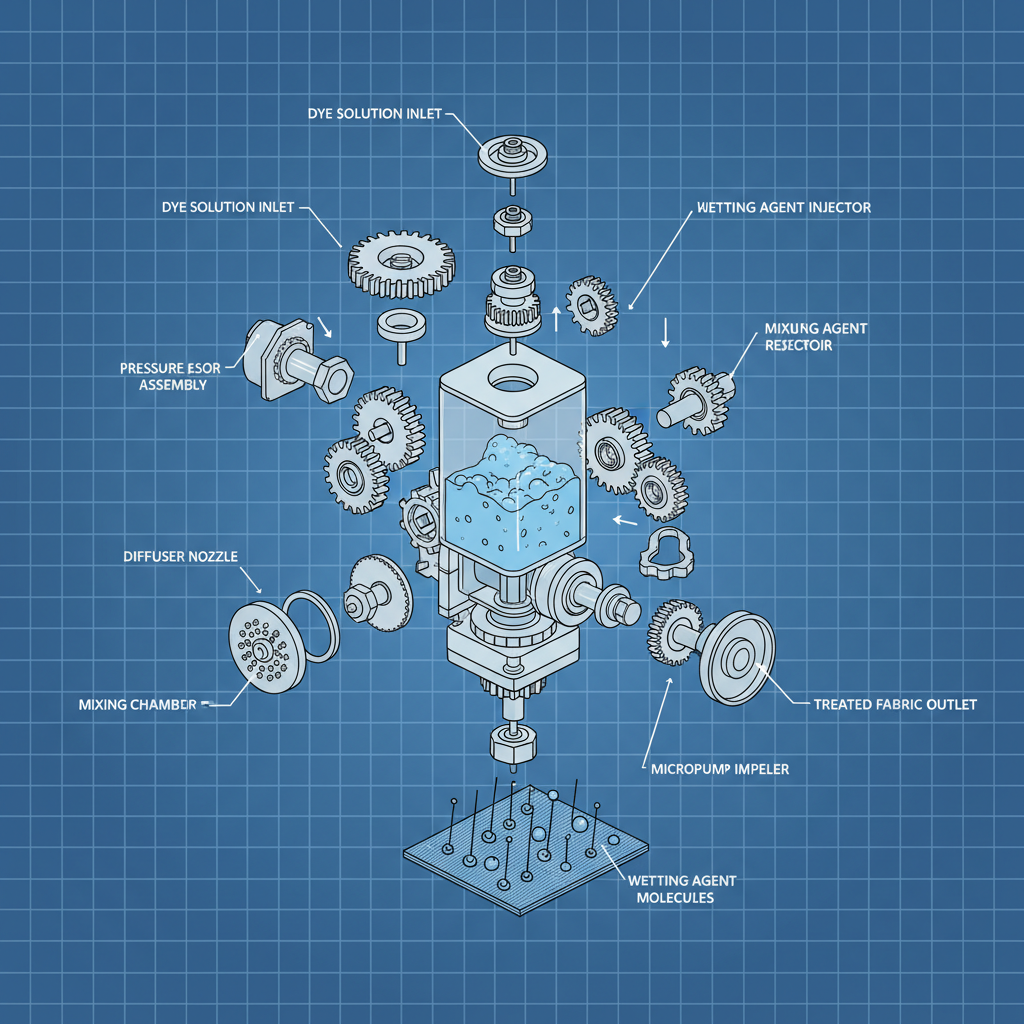
At their core, wetting agents are amphiphilic molecules, meaning they contain both hydrophobic (water-repelling) and hydrophilic (water-attracting) portions. This unique structure allows them to accumulate at the interface between liquids and solids, disrupting the intermolecular forces that cause liquids to bead up. By lowering the surface tension, wetting agents promote spreading, penetration, and emulsification. This is fundamental in processes where thorough contact between a liquid and a surface is essential. Dyeingchem's range of wetting agents are designed for optimal performance in diverse applications.
Key Benefit: Efficient wetting ensures better coverage, increased reaction rates, and enhanced product performance.
Types of Wetting Agents
Wetting agents come in several different forms, each with its own unique properties and best-suited applications. The primary categories include anionic, cationic, nonionic, and amphoteric surfactants. Anionic surfactants are negatively charged and often used in detergents. Cationic surfactants are positively charged and commonly found in fabric softeners. Nonionic surfactants are uncharged and offer excellent compatibility. Amphoteric surfactants can exhibit both positive and negative charges depending on the pH of the solution. The selection depends heavily on the substrate and liquid being used.
Wetting Agent Categories:
• Anionic: Negatively charged, excellent cleaning power
• Cationic: Positively charged, often used in fabric softeners
• Nonionic: Uncharged, broad compatibility
• Amphoteric: Can be positive or negative, versatile
Applications of Wetting Agents Across Industries
The versatility of wetting agents extends across numerous industries. In the textile industry, they are critical for efficient dyeing and finishing processes, ensuring uniform color distribution and improved fabric softness. In the paint and coatings sector, wetting agents improve pigment dispersion, leveling, and adhesion. Cleaning products rely on wetting agents to effectively remove dirt and grime. They are also used in agriculture to enhance pesticide and herbicide coverage, and in metal processing for cleaning and surface preparation. Dyeingchem provides tailored wetting agent solutions for each of these applications.
Selecting the Right Wetting Agent
Choosing the ideal wetting agent requires careful consideration of several factors. The substrate’s surface energy, the liquid's viscosity, and the desired application parameters all play a critical role. Furthermore, compatibility with other ingredients in the formulation is essential to prevent unwanted interactions. Factors like temperature, pH, and the presence of hard water can also influence performance. Dyeingchem's technical experts can provide guidance in selecting the optimal wetting agent for your specific requirements.

Product Specifications: Dyeingchem Wetting Agent D-101
Here's a look at one of our popular wetting agents:
Conclusion: Optimizing Performance with Wetting Agents
Selecting and utilizing the appropriate wetting agent is crucial for optimizing process efficiency and achieving superior product quality. Dyeingchem offers a comprehensive range of high-performance wetting agents tailored to meet the diverse needs of various industries. Contact our team today to discover how we can help you enhance your operations.
Frequently Asked Questions (FAQs)
What is the difference between a wetting agent and a detergent?
While both wetting agents and detergents reduce surface tension, they have different primary functions. Wetting agents primarily aim to improve the spread of a liquid across a surface, enhancing contact. Detergents, on the other hand, are formulated to remove dirt, grease, and other contaminants. They typically contain surfactants, builders, and other additives to achieve this cleaning action. Many detergents contain wetting agents to enhance their performance, but a wetting agent alone doesn't necessarily possess cleaning properties.
How do I determine the optimal concentration of a wetting agent?
The optimal concentration depends on the specific application, the substrate, and the liquid being used. It’s best to start with the manufacturer's recommended dosage and then conduct small-scale tests to determine the most effective concentration. Increasing the concentration beyond a certain point may not provide further benefits and could even lead to foaming or other undesirable effects. Factors like water hardness can also influence the required dosage.
Are wetting agents environmentally friendly?
The environmental impact of wetting agents varies depending on their chemical composition. Many traditional surfactants are not readily biodegradable. However, there's a growing trend towards developing eco-friendly wetting agents based on renewable resources. These bio-based surfactants are designed to be more readily biodegradable and have a lower environmental footprint. Dyeingchem offers several environmentally responsible wetting agent options.