Exploring the Science and Application of Dark Denim Dye for Superior Results
Exploring the Science and Application of Dark Denim Dye for Superior Results
Understanding Dark Denim Dye: A Comprehensive Guide
Dark denim dye is a cornerstone of the fashion industry, delivering the iconic indigo shades we associate with jeans, jackets, and a multitude of other garments. Achieving consistent, high-quality dark denim shades requires careful selection of dyes and optimized dyeing processes. At Dyeingchem, we specialize in providing premium dyes and expert solutions for denim manufacturers worldwide. This article will explore the intricacies of dark denim dye, covering its types, application techniques, and the future of sustainable denim dyeing.
Types of Dyes Used for Dark Denim
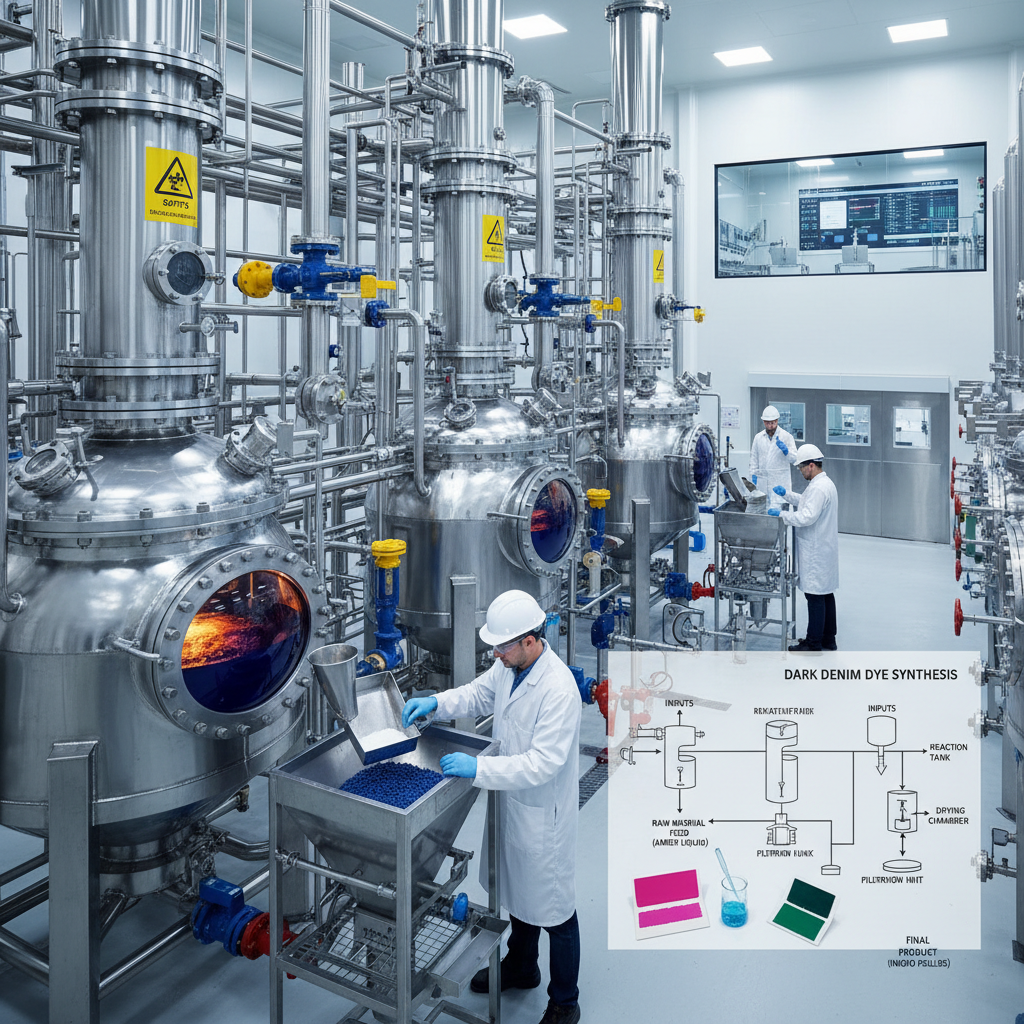
Several dye classes are commonly used to achieve dark denim hues. Indigo, naturally derived from the indigofera plant, remains the dominant choice for authentic denim. However, synthetic indigo and sulfur dyes are also prevalent, offering cost-effectiveness and process control. Reactive dyes, while less common for deep indigos, can be used in combination to achieve unique shades and enhance colorfastness. The selection of dye depends on factors like desired shade depth, cost considerations, and environmental impact. Dyeingchem offers a comprehensive range of these dyes, ensuring optimal performance and consistency.
Key Highlights: We provide high-quality indigo, sulfur, and reactive dyes specifically formulated for denim dyeing. Our dyes are rigorously tested for colorfastness and consistency, ensuring exceptional results.
The Indigo Dyeing Process: A Detailed Look
Traditional indigo dyeing involves a reduction-oxidation (redox) process. Indigo itself is insoluble in water, so it must be reduced to leuco-indigo, a soluble form. This is typically achieved using sodium hydrosulfite. The fabric is then immersed in the leuco-indigo solution, allowing the dye to penetrate the fibers. Exposure to air oxidizes the leuco-indigo back to insoluble indigo, trapping it within the fabric. Multiple dips, known as 'vatting', are performed to build up the desired shade depth. Achieving a true, consistent dark denim color requires precise control of pH, temperature, and dye concentration. Dyeingchem provides both the dyes and technical expertise to optimize this process.
Key Steps in Indigo Dyeing:
• Reduction of Indigo to Leuco-Indigo
• Immersion of Fabric in Leuco-Indigo Solution
• Oxidation of Leuco-Indigo to Indigo within the Fabric
• Repeat Dipping for Desired Shade Depth
Dark Denim Dye Comparison: Indigo vs. Sulfur
While both indigo and sulfur dyes can produce dark denim shades, they differ significantly in their properties and application. Indigo provides a brighter, cleaner shade with excellent wash-down potential, creating the characteristic fading patterns of denim. Sulfur dyes, on the other hand, offer a more muted, less expensive alternative. However, sulfur dyes typically exhibit lower colorfastness and can contribute to odor issues if not properly processed. Here’s a comparative overview:
Sustainable Denim Dyeing: The Future of the Industry
Traditional denim dyeing processes can be water-intensive and generate significant wastewater containing harmful chemicals. Increasingly, the industry is adopting sustainable practices to minimize environmental impact. These include using low-impact dyes, implementing water recycling systems, and exploring alternative dyeing technologies like foam dyeing and laser finishing. Dyeingchem is committed to providing eco-friendly dye solutions that meet the growing demand for sustainable denim production.
Product Specifications: Our Indigo Dye Range
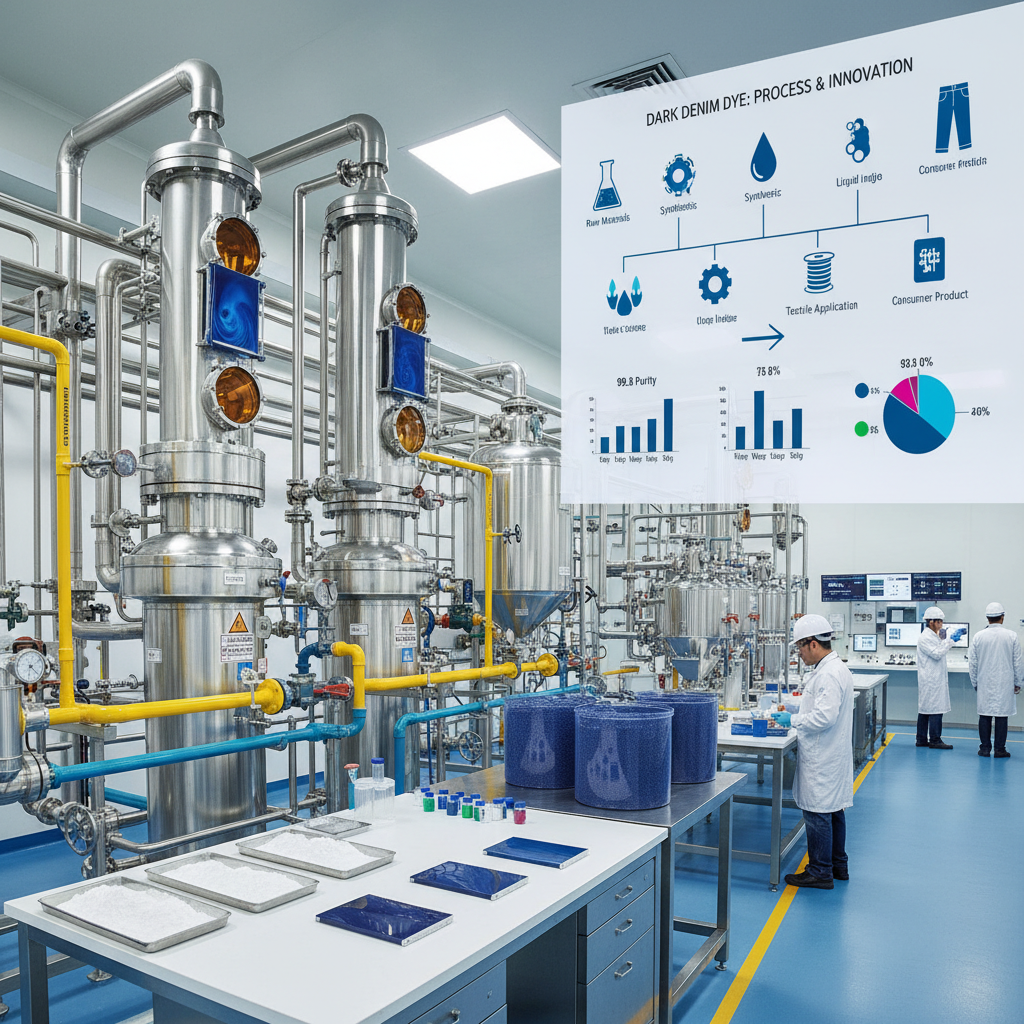
We offer a variety of indigo dyes to suit different denim dyeing requirements. Here's a glimpse into our product specifications:
Conclusion: Partner with Dyeingchem for Superior Denim Dyeing
At Dyeingchem, we are dedicated to providing high-quality dyes, technical expertise, and sustainable solutions for the denim industry. Whether you're looking for classic indigo shades or innovative eco-friendly options, we have the products and knowledge to help you achieve exceptional results. Contact us today to learn more about our comprehensive range of denim dyes and how we can support your business.
Frequently Asked Questions (FAQs)
What factors influence the final shade of dark denim dye?
The final shade of dark denim is influenced by several factors, including the dye concentration, the pH of the dye bath, the temperature, the immersion time, and the fabric’s fiber content and construction. The quality of the water used also plays a role. Precise control of these parameters is crucial to achieving consistent, reproducible results. Pre-treatment of the fabric, such as desizing and scouring, is also vital for optimal dye uptake. At Dyeingchem, we offer tailored solutions and technical support to help you optimize these factors for your specific requirements.
How can I minimize water usage in denim dyeing?
Minimizing water usage involves implementing water recycling systems, optimizing dye bath ratios, and exploring alternative dyeing technologies like foam dyeing and air dyeing. Using low liquor ratio dyeing machines and carefully controlling the dye bath concentration can also significantly reduce water consumption. Furthermore, efficient rinsing processes and wastewater treatment technologies are essential. Dyeingchem is committed to promoting sustainable dyeing practices and offers dyes that are compatible with water-saving technologies.
What is the difference between vat dyeing and sulfur dyeing?
Vat dyeing, primarily used for indigo, involves reducing the dye to a soluble leuco form before application, followed by oxidation to trap it within the fiber. This results in excellent colorfastness and wash-down effects. Sulfur dyeing, on the other hand, utilizes sulfur dyes that are applied in a soluble sulfide form and then oxidized. While less expensive, sulfur dyeing generally offers lower colorfastness and can generate more wastewater. Vat dyeing, specifically indigo vat dyeing, is preferred for high-quality denim requiring authentic fading characteristics.
How does Dyeingchem ensure dye quality and consistency?
Dyeingchem implements rigorous quality control measures throughout the entire production process, from raw material sourcing to final product testing. Our dyes undergo comprehensive analysis to ensure purity, strength, and shade consistency. We utilize advanced analytical equipment and adhere to strict industry standards. Furthermore, we provide detailed technical data sheets and support to help our customers achieve optimal dyeing results with every batch. We are committed to delivering dyes that meet and exceed your expectations.