Optimizing Poultry Nutrition with Effective Feed Enzymes Strategies
Optimizing Poultry Nutrition with Effective Feed Enzymes Strategies
Optimizing Poultry Nutrition with Feed Enzymes
In the dynamic world of poultry farming, maximizing feed efficiency and bird health is paramount. Feed enzymes are increasingly recognized as a crucial tool in achieving these goals. These biological catalysts enhance nutrient digestibility, leading to improved growth rates, reduced feed costs, and enhanced overall flock performance. This article will explore the science behind feed enzyme supplementation in poultry nutrition, detailing their benefits, types, and application strategies. Understanding and utilizing these tools is essential for modern, sustainable poultry production.

The Science Behind Feed Enzymes in Poultry
Poultry, particularly those raised for meat production, often struggle to fully digest complex carbohydrates and proteins present in common feed ingredients like corn, soybean meal, and wheat. This undigested feed passes through the digestive system, representing a waste of resources and potentially leading to digestive issues. Feed enzymes work by breaking down these complex molecules into simpler, more readily absorbed forms. This allows the bird to extract more nutrients from the same amount of feed, improving growth and reducing feed conversion ratio (FCR). The use of enzymes addresses the inherent limitations of the bird’s digestive system, optimizing nutrient utilization and promoting gut health.
Key Benefits: Enhanced nutrient absorption, improved growth rates, reduced FCR, minimized feed waste, and enhanced gut health.
Common Types of Feed Enzymes Used in Poultry
Several types of feed enzymes are commonly used in poultry diets, each targeting specific substrates. Here’s a breakdown of the most prevalent:
- Phytase: Breaks down phytate, an anti-nutritional factor in plant-based feeds that binds phosphorus and makes it unavailable for absorption. Releasing phosphorus improves bone development and overall growth.
- Xylanase: Hydrolyzes xylan, a non-starch polysaccharide found in cereals like wheat and barley. Improving xylan digestibility reduces feed viscosity and enhances nutrient absorption.
- Beta-Glucanase: Degrades beta-glucans, another non-starch polysaccharide found in barley and oats. Similar to xylanase, it improves nutrient utilization and reduces gut viscosity.
- Protease: Breaks down proteins into peptides and amino acids, improving protein digestibility and nitrogen utilization.
- Amylase: Hydrolyzes starch into simpler sugars, enhancing starch digestibility.
The Impact of Feed Enzymes on Feed Conversion Ratio (FCR)
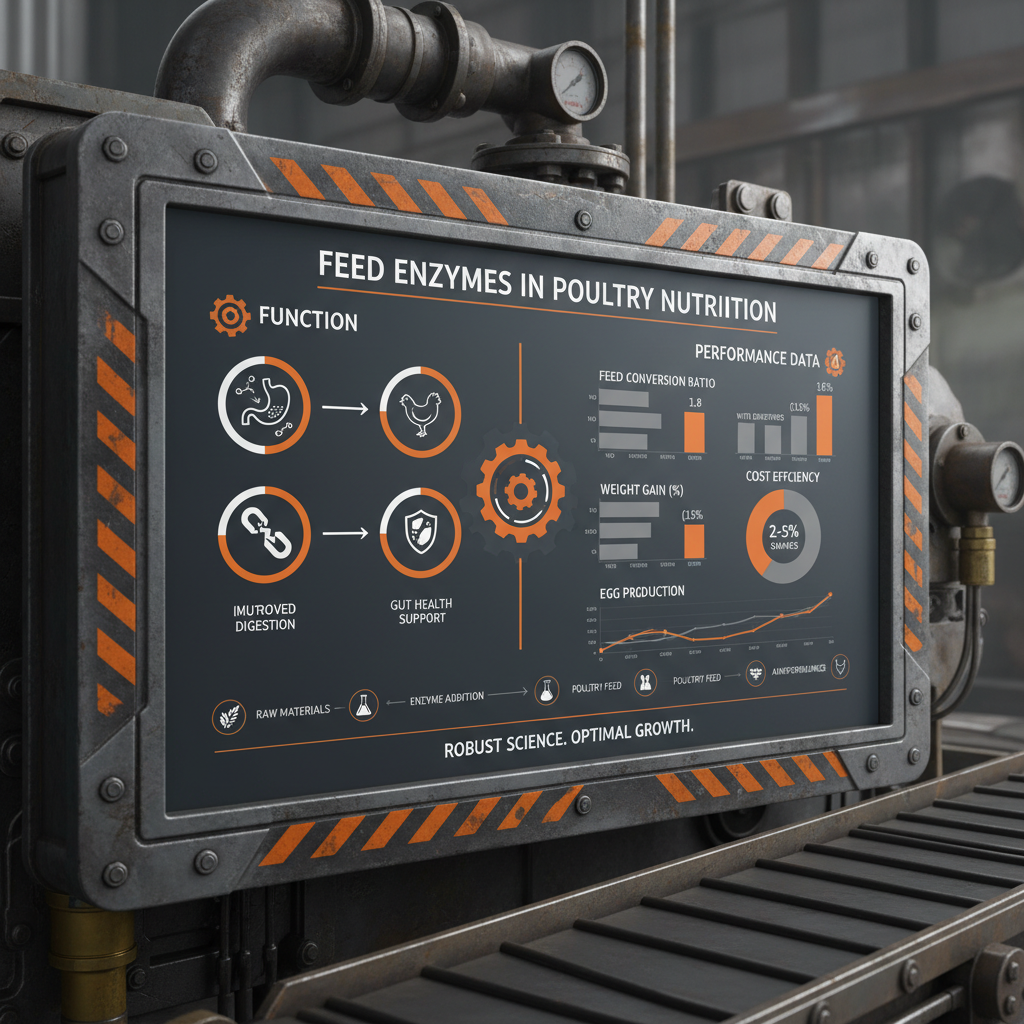
Perhaps the most significant benefit of feed enzymes is their ability to lower FCR. FCR, the amount of feed required to produce one unit of weight gain, is a key indicator of feed efficiency. By improving nutrient digestibility, enzymes allow birds to gain more weight with less feed. Numerous studies have demonstrated the positive impact of enzyme supplementation on FCR across different poultry species and ages.
FCR Improvement with Enzyme Supplementation:
• Broilers: 3-7% reduction in FCR
• Layers: 2-5% reduction in FCR
• Turkey: 5-10% reduction in FCR
Comparing Enzyme Combinations vs. Single Enzyme Supplementation
While single enzyme supplementation can be beneficial, a synergistic effect is often observed when using enzyme combinations. Different feed ingredients contain varying levels of different substrates, and therefore, a multi-enzyme approach can address a wider range of digestive challenges. For example, combining phytase, xylanase, and protease provides a more comprehensive solution compared to using phytase alone. Here's a comparison:
Factors Influencing Feed Enzyme Effectiveness and Dosage
Several factors can influence the effectiveness of feed enzymes. These include the composition of the diet, the age and physiological state of the birds, and environmental conditions. Proper storage and handling of enzymes are also crucial to maintain their activity. Dosage recommendations vary depending on the specific enzyme, the dietary substrate levels, and the target species. Consulting with a poultry nutritionist or feed enzyme supplier is recommended to determine the optimal dosage for your specific situation.
Conclusion: Harnessing the Power of Feed Enzymes for Sustainable Poultry Production
Investing in feed enzymes is a strategic move towards improving poultry production efficiency and sustainability. By enhancing nutrient utilization, reducing feed costs, and promoting bird health, enzymes contribute to a more profitable and environmentally responsible farming operation. Embrace the science of feed enzymes and unlock the full potential of your poultry flock.
Frequently Asked Questions (FAQs)
What is the optimal storage condition for feed enzymes?
Feed enzymes are biological products, and their activity can be affected by temperature, humidity, and exposure to sunlight. It is crucial to store enzymes in a cool, dry, and dark place, ideally at temperatures below 25°C (77°F). Keep the packaging tightly sealed to prevent moisture absorption. Avoid direct sunlight and contact with oxidizing agents. Following the manufacturer’s storage recommendations is essential to maintain enzyme potency. Improper storage can lead to reduced efficacy and economic losses.
Can feed enzymes replace other feed additives?
While feed enzymes can significantly improve nutrient utilization and reduce the need for certain feed additives, they are generally not a direct replacement for all additives. For example, enzymes do not provide vitamins or minerals, so these nutrients still need to be supplemented in the diet. However, by improving phosphorus availability, phytase can reduce the need for inorganic phosphate supplementation. It’s best to view enzymes as a complementary tool that enhances the overall nutritional value of the feed rather than a complete substitute for other essential additives. A balanced approach is key.
Are there any potential negative effects of using feed enzymes?
Generally, feed enzymes are considered safe for poultry when used at recommended dosages. However, over-supplementation can sometimes lead to digestive upset or imbalances in gut microbiota. It's crucial to follow the manufacturer’s guidelines and consult with a poultry nutritionist to determine the appropriate dosage for your specific situation. Some enzymes may also interact with other feed additives, so it's important to consider the entire diet formulation. Monitoring bird performance and health is essential to identify any potential adverse effects.
How do I know which enzymes my poultry need?
The specific enzyme needs of your poultry depend on the composition of their diet and their age. If your birds are fed a diet high in cereals like wheat or barley, xylanase and beta-glucanase may be beneficial. If the diet is primarily based on soybean meal, phytase and protease can improve nutrient availability. A feed analysis can help identify the levels of various substrates and guide enzyme selection. Consulting with a poultry nutritionist or a feed enzyme specialist is the best way to determine the optimal enzyme strategy for your flock.