Understanding the Crucial Function of Wetting Agent in Textile Processing
Understanding the Crucial Function of Wetting Agent in Textile Processing
Understanding the Function of Wetting Agent in Textile Processing
The textile industry relies heavily on efficient and effective chemical processes. A critical, yet often overlooked, component of these processes is the wetting agent. These compounds play a vital role in preparing textiles for dyeing, printing, and finishing, ultimately impacting the quality and performance of the final product. This article will delve into the specific functions of wetting agents in textile processing, outlining their benefits and applications. Proper utilization of wetting agents ensures optimal results and minimizes production issues.
What is a Wetting Agent and How Does it Work?
A wetting agent, also known as a surfactant, is a substance that lowers the surface tension between a liquid and a solid. In textile processing, this translates to a faster and more complete penetration of processing liquids (like dyes, detergents, or finishing agents) into the fabric. Textile fibers, especially synthetic ones, often have a naturally hydrophobic (water-repelling) surface. This resistance hinders the uniform absorption of liquids. Wetting agents overcome this by reducing the interfacial tension, allowing the liquid to spread more easily and quickly across the fiber surface. The key to their function lies in their molecular structure - possessing both hydrophilic (water-loving) and hydrophobic (water-repelling) parts.
The Core Functions of Wetting Agents in Textile Applications
Wetting agents serve multiple critical functions throughout the textile processing chain. Their primary role is to improve the absorbency of textiles, but their influence extends much further. These include: facilitating even dye distribution, enhancing detergent cleaning power, improving the effectiveness of finishing agents, and preparing fabrics for subsequent processes. Without effective wetting, issues such as uneven dyeing, poor color fastness, and inadequate finishing can arise, leading to lower product quality and increased production costs. Selecting the right textile wetting agent is therefore crucial for optimal outcomes.
Key Benefits: Enhanced liquid penetration, improved uniformity, increased efficiency of processing chemicals, reduced processing time, and higher quality finished textiles.
Wetting Agent Performance: Ionic, Non-Ionic, and Cationic Types
Wetting agents are categorized based on their ionic charge. The three main types are anionic, non-ionic, and cationic. Each type exhibits different characteristics and is suitable for specific applications. Anionic wetting agents are negatively charged and are highly effective in alkaline conditions, often used in scouring and dyeing processes. Non-ionic wetting agents, lacking an electrical charge, are compatible with a wider range of chemicals and pH levels, making them versatile for various applications. Cationic wetting agents, positively charged, are typically used for synthetic fibers like acrylics, providing good leveling properties. Understanding these differences is vital for selecting the correct agent for a given textile and process.
Wetting Agent Type Comparison:
• Anionic: Excellent wetting, effective in alkaline conditions, cost-effective.
• Non-Ionic: Versatile, compatible with many chemicals, good for synthetic fibers.
• Cationic: Suitable for acrylics and modified polyesters, provides leveling properties.
Application-Specific Wetting Agent Selection and Dosage
The optimal wetting agent and dosage vary significantly depending on the fabric type, processing method, and desired outcome. For example, highly hydrophobic synthetic fabrics require a more powerful wetting agent compared to natural fibers like cotton. Dyeing processes often demand higher concentrations of wetting agents than finishing treatments. The water quality also plays a role; hard water can reduce the effectiveness of some wetting agents, necessitating increased dosage. Careful experimentation and monitoring are essential to determine the ideal conditions for each specific application. Dyeingchem offers a wide range of wetting agents tailored to diverse textile needs.
Future Trends in Wetting Agent Technology
The textile industry is continuously evolving, and so too is wetting agent technology. Current research focuses on developing more environmentally friendly and sustainable options, such as bio-based surfactants derived from renewable resources. There's also growing interest in low-foaming wetting agents to reduce water consumption and effluent treatment costs. Furthermore, intelligent wetting agents that respond to specific conditions (like temperature or pH) are being explored to optimize performance and minimize chemical usage. These innovations promise to further enhance the efficiency and sustainability of textile processing.
Conclusion: Optimizing Textile Processing with Wetting Agents
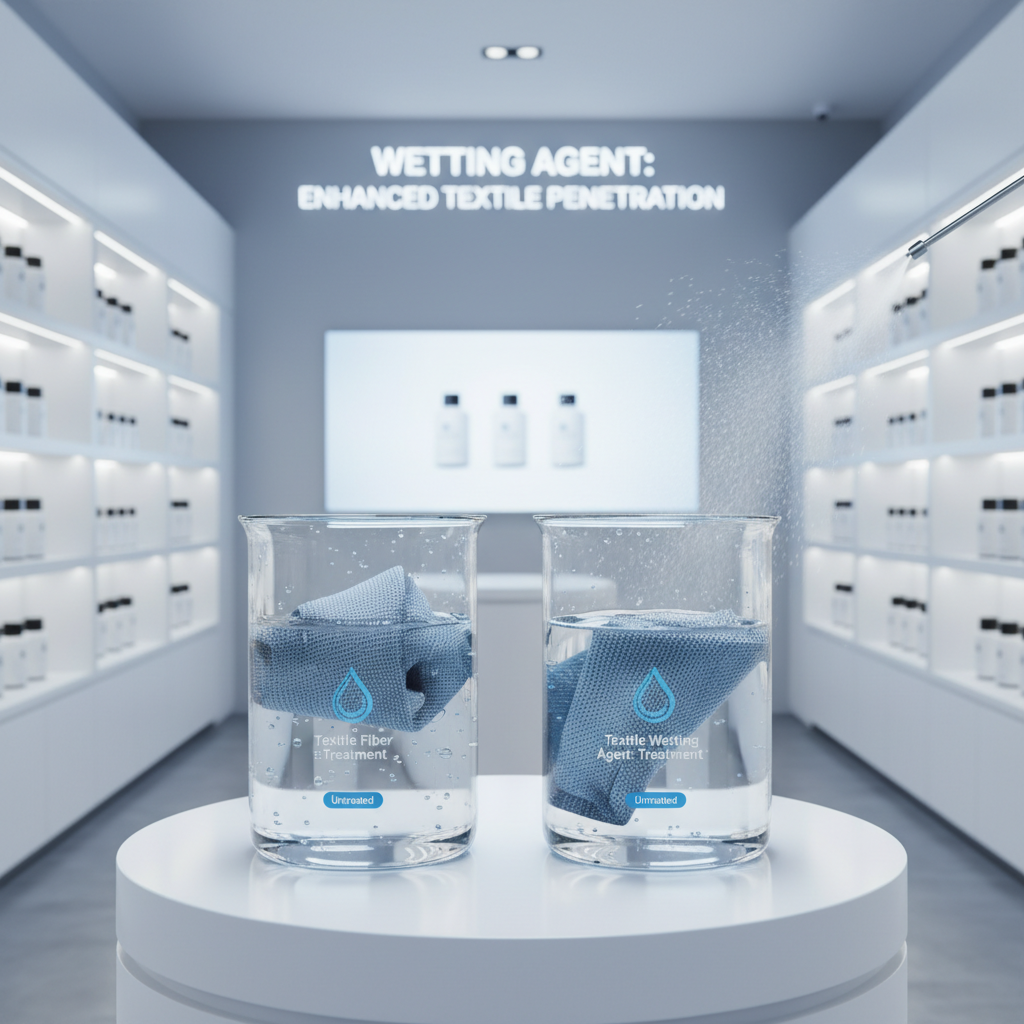
The function of wetting agents in textile processing is multifaceted and crucial for achieving high-quality results. Understanding the different types, applications, and optimal dosages allows for efficient and effective textile treatment. By selecting the right wetting agent and implementing best practices, manufacturers can enhance product performance, reduce costs, and minimize environmental impact.
Frequently Asked Questions (FAQs)
What factors influence the choice of a wetting agent?
Several factors determine the ideal wetting agent. These include the type of textile fiber (natural vs. synthetic), the specific processing stage (desizing, scouring, dyeing, finishing), the pH of the process bath, water hardness, and the desired performance characteristics. For example, synthetic fibers typically require more powerful wetting agents than natural fibers. Furthermore, the compatibility of the wetting agent with other chemicals used in the process must be considered. Choosing a wetting agent should involve a careful assessment of these factors to ensure optimal results and avoid any adverse interactions.
How can I determine the optimal dosage of a wetting agent?
Determining the optimal dosage often requires experimentation. Start with the manufacturer's recommended dosage range and conduct trials with varying concentrations. Assess the wetting performance by observing the speed and uniformity of liquid penetration into the fabric. Visual inspection, along with laboratory tests for wettability and absorbency, can help identify the ideal dosage. It's crucial to find a balance – using too little may result in inadequate wetting, while using too much can lead to excessive foaming or residues.
Are there any environmental concerns associated with wetting agents?
Traditionally, some wetting agents contained harmful substances like alkylphenol ethoxylates (APEOs). However, due to environmental regulations, there's a growing trend towards using more eco-friendly alternatives, such as bio-based surfactants and APEO-free formulations. These newer options offer comparable performance with a reduced environmental footprint. Choosing sustainable wetting agents is crucial for minimizing the environmental impact of textile processing and meeting increasingly stringent regulations. Dyeingchem prioritizes offering environmentally responsible products.
How do I address foaming issues caused by wetting agents?
Foaming can be a common problem, especially with anionic wetting agents. Several strategies can mitigate this. Using a defoamer or antifoaming agent is a direct solution. Alternatively, selecting a low-foaming wetting agent or reducing the dosage can help. Adjusting the process water temperature and avoiding vigorous agitation can also minimize foam formation. If foam persists, it may interfere with processing efficiency and result in uneven application of chemicals, thus requiring careful control.