Understanding the Critical Function of Wetting Agent in Dyeing Processes
Understanding the Critical Function of Wetting Agent in Dyeing Processes
Understanding the Function of Wetting Agent in Dyeing
The dyeing process, while seemingly straightforward, relies on a complex interplay of chemical and physical phenomena. A critical component in achieving optimal dye uptake and levelness is the wetting agent. At Dyeingchem.com, we specialize in providing high-quality dyeing auxiliaries, including a comprehensive range of wetting agents designed to enhance your dyeing operations. This article delves into the function of wetting agents in dyeing, their importance, types, and selection criteria. Ensuring proper wetting is paramount for consistent and vibrant dye results.
What is a Wetting Agent and Why is it Important?
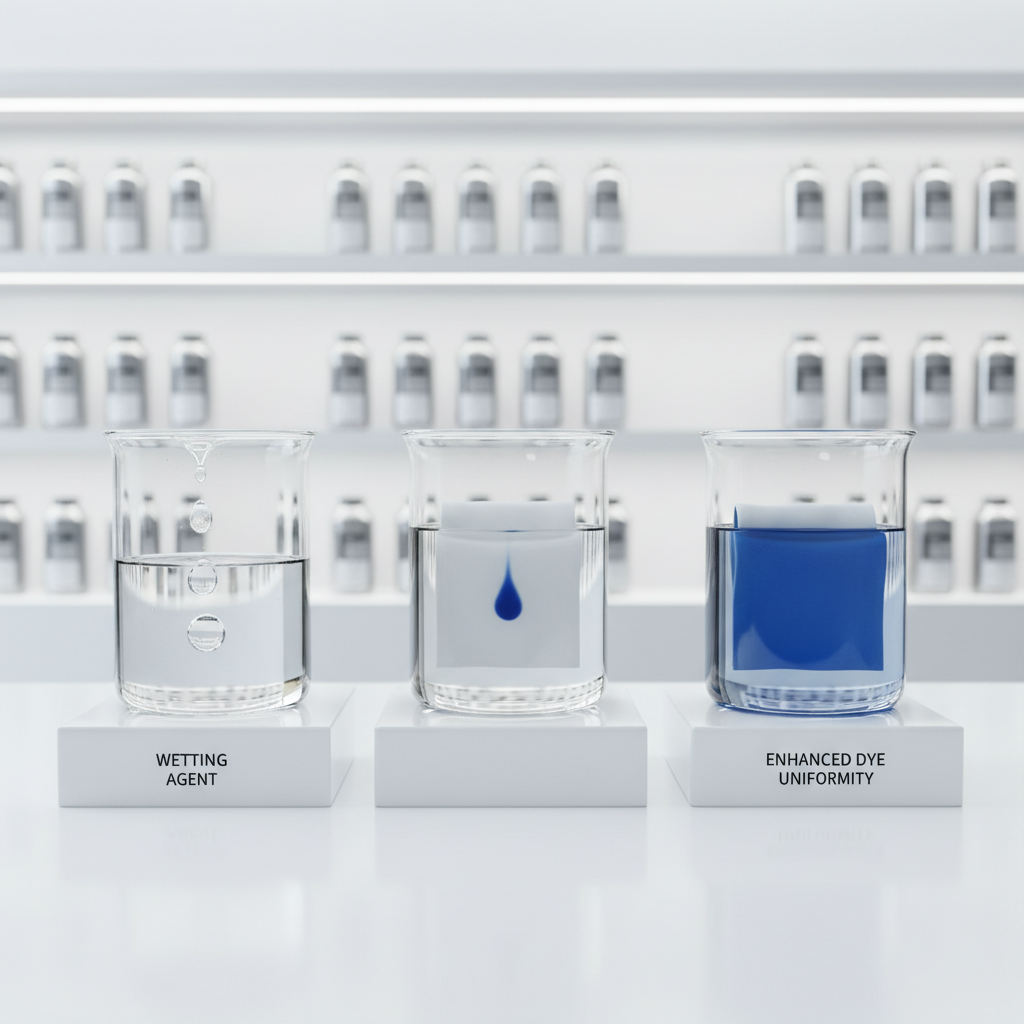
A wetting agent, also known as a surface-active agent, reduces the surface tension of a liquid, allowing it to spread more easily across a solid surface. In the context of dyeing, this means promoting the rapid and uniform penetration of the dye liquor into the textile material. Without effective wetting, the dye liquor may bead up on the fabric surface, leading to uneven dyeing, poor color yield, and ultimately, fabric defects. Effective wetting is the first crucial step in achieving high-quality dyeing results. It prepares the fabric to receive the dye, creating a foundation for even distribution and strong bonding.
Key Benefits of Using Wetting Agents:
- Improved dye penetration and levelness
- Enhanced color yield and vibrancy
- Reduced dyeing time and costs
- Prevention of fabric defects like uneven dyeing and spotting
The Function of Wetting Agent in Dyeing: A Detailed Look
The primary function of a wetting agent is to lower the surface tension between the dye liquor and the textile fibers. This reduction in surface tension allows the dye liquor to wet the fibers more rapidly and completely. This is particularly important for synthetic fibers like polyester and nylon, which are inherently hydrophobic (water-repellent). Wetting agents also help to displace air trapped within the fabric structure, ensuring the dye liquor reaches all parts of the material. Furthermore, they promote the migration of dye molecules within the fiber, leading to a more uniform color distribution. A well-chosen wetting agent acts as a bridge, facilitating the interaction between the dye and the fiber.
Types of Wetting Agents Used in Dyeing
Wetting agents come in various chemical compositions, each with its own strengths and weaknesses. Common types include:
- Non-ionic wetting agents: These are widely used due to their good compatibility with various dyes and electrolytes. They are effective in most dyeing applications and generally exhibit good stability.
- Anionic wetting agents: These provide excellent wetting and leveling properties, particularly for direct and reactive dyes. However, they may be sensitive to hard water and certain electrolytes.
- Cationic wetting agents: These are often used in dyeing acrylic fibers, where they provide good leveling and penetration.
- Amphoteric wetting agents: These combine both anionic and cationic properties, offering versatility and compatibility with a wide range of dyes and fibers.
Selecting the Right Wetting Agent: Key Considerations
Choosing the appropriate wetting agent is crucial for optimizing the dyeing process. Several factors should be considered:
- Fiber type: Different fibers require different wetting agents. For example, hydrophobic fibers like polyester require more powerful wetting agents than hydrophilic fibers like cotton.
- Dye class: The type of dye being used (e.g., reactive, direct, disperse) will influence the choice of wetting agent.
- Water quality: Hard water can reduce the effectiveness of some wetting agents, particularly anionic ones.
- Dyeing process: The temperature, pH, and other conditions of the dyeing process will also impact wetting agent performance.
Wetting Agent Comparison
Dyeingchem: Your Partner in Dyeing Solutions
At Dyeingchem.com, we offer a wide range of high-quality wetting agents formulated to meet the diverse needs of the textile dyeing industry. Our expert team can provide tailored recommendations to help you select the optimal wetting agent for your specific application. Contact us today to learn more about how we can help you achieve superior dyeing results.

Conclusion
The function of wetting agents in dyeing is paramount for achieving vibrant, level, and durable colors. Choosing the right wetting agent, based on fiber type, dye class, and water quality, is essential for optimizing the dyeing process. Dyeingchem.com provides comprehensive solutions and expert support to help you maximize your dyeing efficiency and quality.
Frequently Asked Questions (FAQs)
What is the optimal dosage of wetting agent for dyeing?
The optimal dosage of wetting agent varies depending on several factors, including the fiber type, dye class, water quality, and the specific wetting agent used. Generally, dosages range from 0.1% to 2% owf (on weight of fabric). It's crucial to follow the manufacturer's recommendations and conduct trial runs to determine the ideal dosage for your specific process. Excessive wetting agent can lead to foam formation and reduced dye exhaustion, while insufficient wetting agent may result in uneven dyeing. A good starting point is to follow the recommendations on the product’s technical data sheet available at Dyeingchem.com.
Can wetting agents be used in combination with other dyeing auxiliaries?
Yes, wetting agents are often used in combination with other dyeing auxiliaries, such as leveling agents, dispersing agents, and anti-foaming agents. However, compatibility must be considered. Ensure that the different auxiliaries do not interact negatively with each other, causing precipitation or reducing their effectiveness. Consulting with a dyeing specialist or the auxiliary supplier can help ensure optimal compatibility. At Dyeingchem.com, we offer guidance on combining different products for synergistic effects.
How do I know if I'm using the right wetting agent?
Signs that you're using the right wetting agent include rapid and uniform wetting of the fabric, even dye distribution, high color yield, and a soft handle. If you're experiencing problems like uneven dyeing, poor color penetration, or excessive foam, it may indicate that the wetting agent is not suitable for your application. Regularly monitor the dyeing process and adjust the wetting agent dosage or type as needed. Our technical support team at Dyeingchem.com can assist with troubleshooting and optimization.