0%

Table of Contents

Selective reducing agent technologies are increasingly vital in modern industrial processes and environmental remediation. These agents, carefully designed to target specific compounds, play a crucial role in reducing pollutants, optimizing chemical reactions, and improving product quality across diverse sectors. Understanding their applications and advancements is paramount for sustainable development and responsible manufacturing practices globally.

The demand for efficient and environmentally friendly chemical processes drives the innovation in selective reducing agent chemistry. Global regulations concerning emissions and waste management are becoming increasingly stringent, forcing industries to adopt cleaner technologies. Furthermore, the pursuit of resource efficiency and the circular economy necessitate the use of agents that minimize by-products and maximize the recovery of valuable materials.

Ultimately, understanding and utilizing selective reducing agent effectively translates to reduced environmental impact, improved economic viability, and enhanced safety in a wide array of applications, establishing it as a cornerstone of contemporary chemical engineering and sustainable practices.
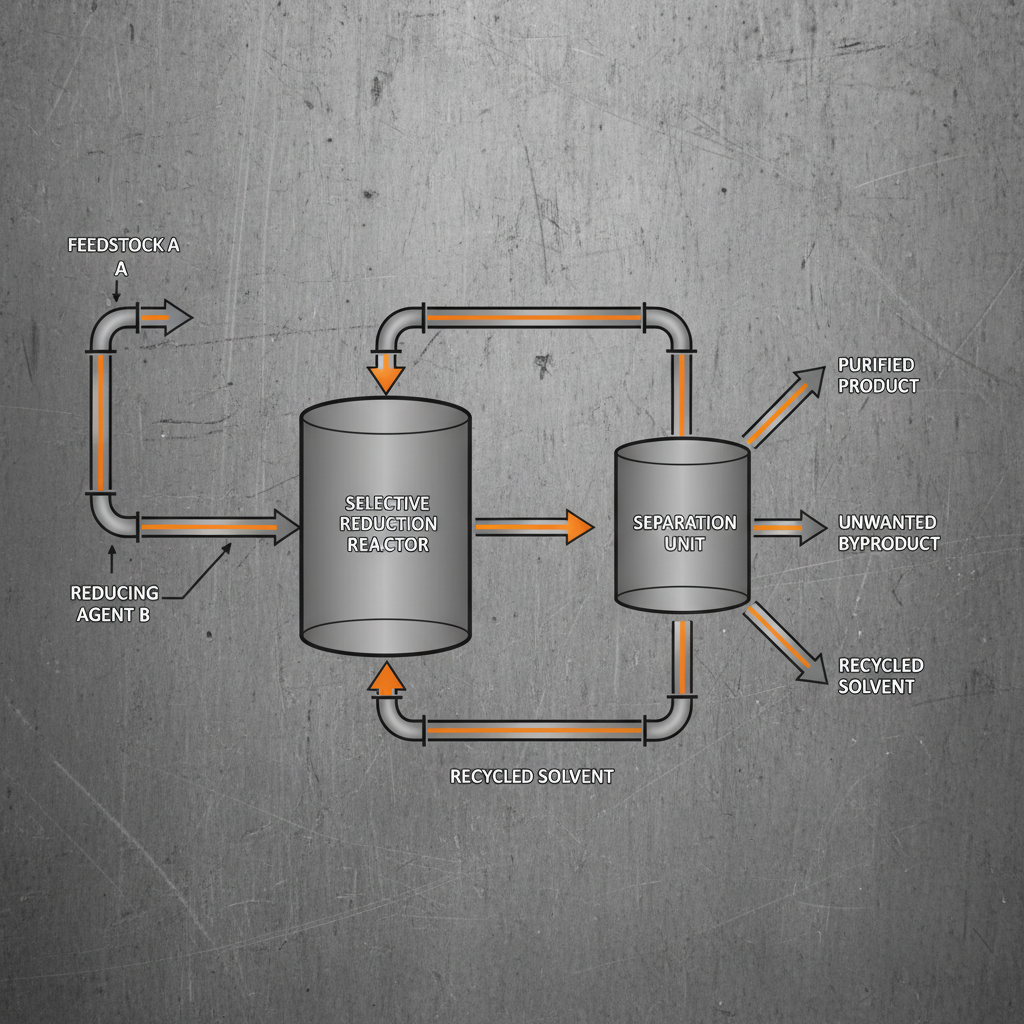
selective reducing agent

Introduction to Selective Reducing Agents
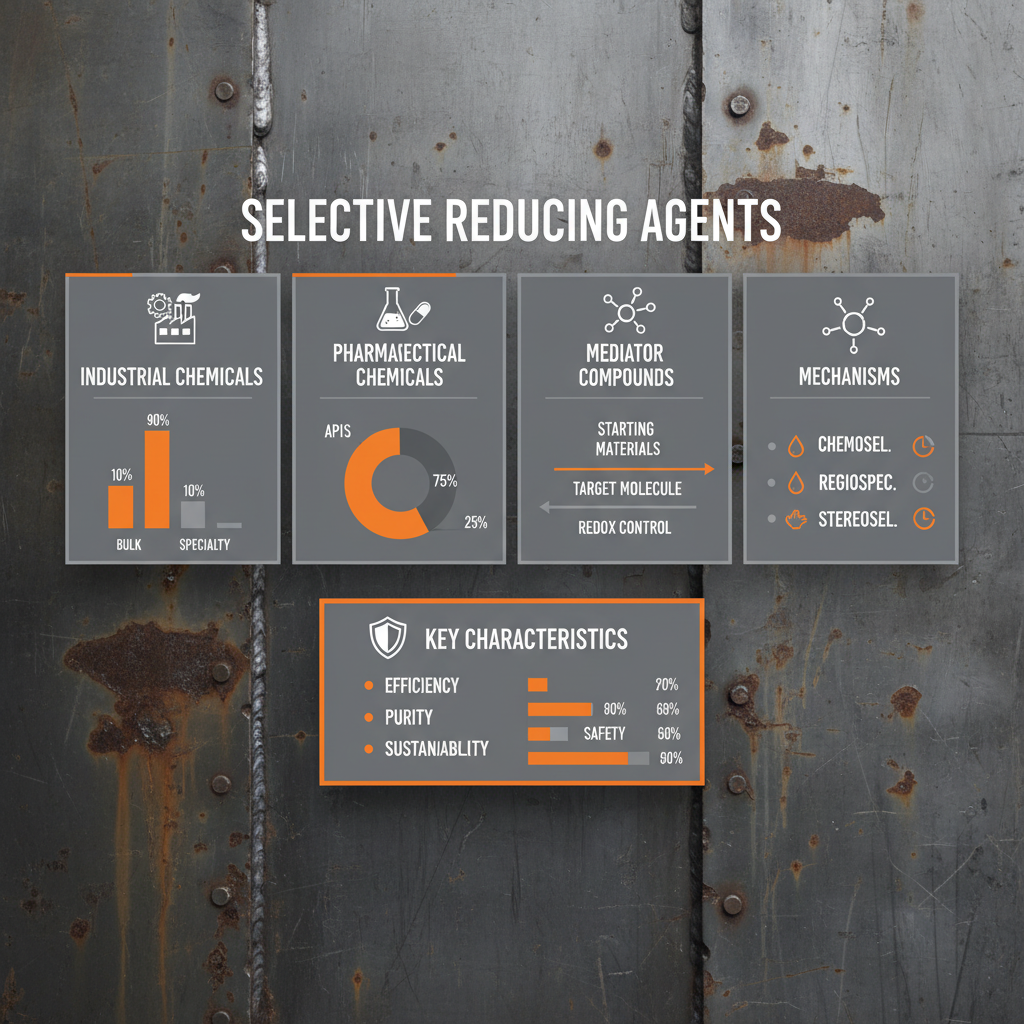
selective reducing agent

Selective reducing agent are essential components in many industrial processes, enabling targeted chemical transformations while minimizing unwanted side reactions. Their precise control over reduction reactions makes them indispensable in industries ranging from pharmaceuticals to petrochemicals.

The ability of these agents to selectively reduce specific functional groups within a complex molecule is a key advantage. This selectivity not only improves product yields but also reduces waste generation and purification costs, contributing to more sustainable and efficient manufacturing. Furthermore, research into novel selective reducing agent is constantly expanding their range of applications.

Defining Selective Reducing Agents

A selective reducing agent is a chemical substance designed to facilitate the reduction of a specific functional group within a molecule while leaving others untouched. Unlike non-selective reducing agents that indiscriminately reduce all reducible groups, selective agents exhibit a high degree of specificity, making them vital in complex organic synthesis.

This selectivity is achieved through careful manipulation of the agent's chemical structure and reaction conditions. Factors like steric hindrance, electronic effects, and the presence of catalytic species contribute to the targeted reduction process. Understanding the underlying principles of selective reduction is essential for optimizing chemical processes and developing new synthetic routes.

The rise of sustainable chemistry has placed increasing importance on these agents, as they contribute to minimizing waste and maximizing atom economy, aligning with principles of green chemistry and contributing to humanitarian needs through cleaner manufacturing processes.

Core Characteristics of Selective Reducing Agents

One crucial characteristic of selective reducing agent is their reactivity profile, which dictates which functional groups they will target. This reactivity is often tuned by altering the agent’s structure or employing appropriate catalysts. Control over reactivity is paramount for ensuring the desired chemical transformation occurs efficiently and selectively.

Stability is another key factor. Selective reducing agent must be stable under the reaction conditions employed, avoiding decomposition or unwanted side reactions. The shelf life and storage requirements of the agent are also important considerations for practical applications, influencing logistics and cost-effectiveness.

Cost-effectiveness plays a significant role in industrial adoption. The price of the reducing agent, combined with its efficiency and recyclability, determines the overall economic viability of the process. Continuous research is focused on developing more affordable and readily available selective reducing agent to broaden their applicability.

Global Applications and Industry Impact

Selective reducing agent find widespread use in the pharmaceutical industry for the synthesis of complex drug molecules, ensuring the precise introduction of functional groups without affecting other sensitive parts of the molecule. This precision is critical for drug efficacy and safety.

In the petrochemical industry, these agents are employed in the upgrading of crude oil fractions and the production of specialty chemicals. They play a vital role in removing sulfur compounds and other impurities, improving fuel quality and reducing environmental pollution. Regions with significant petrochemical industries, such as the Middle East and Southeast Asia, heavily rely on these technologies.

Efficiency Comparison of Selective Reducing Agent Methods

Advantages and Long-Term Benefits

The use of selective reducing agent leads to significant cost savings due to increased product yields and reduced waste disposal expenses. Minimizing by-products streamlines purification processes, lessening the need for energy-intensive separation techniques.

Environmentally, the benefits are substantial. Reduced waste generation lowers the environmental burden, and the ability to selectively target pollutants contributes to cleaner manufacturing processes. These agents also support the principles of a circular economy by facilitating the recovery and reuse of valuable materials.

Future Trends in Selective Reduction

Ongoing research focuses on developing greener and more sustainable selective reducing agent, utilizing renewable resources and minimizing the use of hazardous materials. Biocatalytic reduction methods, employing enzymes as catalysts, are gaining prominence due to their high selectivity and mild reaction conditions.

The integration of artificial intelligence and machine learning is accelerating the discovery and optimization of new agents. These technologies can predict reactivity patterns, identify promising candidates, and streamline the development process, leading to more efficient and effective solutions.

Automation and flow chemistry are also poised to revolutionize the field, enabling precise control over reaction parameters and continuous production of selective reducing agent, enhancing scalability and reducing manufacturing costs.

Challenges and Innovative Solutions

A primary challenge is the development of selective reducing agent capable of operating under mild conditions, avoiding the need for harsh solvents or extreme temperatures. This requires innovative catalyst design and reaction engineering strategies.

Another hurdle is the potential for catalyst poisoning or deactivation during the reduction process. Researchers are exploring techniques to enhance catalyst stability and prevent deactivation, such as encapsulation or the use of protective ligands.

Furthermore, the scalability of these reactions can be a limitation. Continuous flow reactors and microreactors offer promising solutions for scaling up production while maintaining precise control and minimizing waste.

Summary of Challenges and Solutions in Selective Reduction

Challenge Impact on Process Proposed Solution Expected Outcome
Harsh Reaction Conditions Increased energy consumption, environmental impact Development of novel biocatalysts Mild reaction conditions, reduced waste
Catalyst Deactivation Reduced efficiency, increased costs Catalyst encapsulation and ligand modification Enhanced catalyst stability and longevity
Selectivity Issues Formation of unwanted by-products, purification challenges Rational catalyst design and optimization Improved product purity and yield
Scalability Limitations Difficulty in transferring lab-scale results to industrial production Implementation of continuous flow reactors Enhanced production capacity and control
High Agent Cost Reduced economic viability of processes Development of recyclable or reusable agents Lower overall production costs
Environmental Impact Potential pollution from agent or byproducts Use of bio-derived or biodegradable agents Reduced environmental footprint

FAQS

What are the primary advantages of using selective reducing agent over traditional reduction methods?

Selective reducing agent offer significant advantages, including higher product yields, reduced waste generation, and lower energy consumption. Traditional methods often rely on harsh conditions and produce unwanted by-products, requiring extensive purification. Selective agents precisely target specific functional groups, minimizing side reactions and simplifying downstream processing. This translates to cost savings and a reduced environmental impact, aligning with principles of green chemistry.

How do I select the appropriate selective reducing agent for my specific reaction?

Selecting the right selective reducing agent depends on several factors, including the functional groups present in the molecule, the desired selectivity, and the reaction conditions. Careful consideration of the agent’s reactivity profile, steric properties, and compatibility with other reagents is essential. Consulting literature, databases, and expert advice can help narrow down the options and optimize the reaction for desired outcomes.

Are there any safety concerns associated with handling selective reducing agent?

Some selective reducing agent can be air-sensitive, moisture-sensitive, or flammable. Therefore, it’s crucial to handle them with appropriate safety precautions, including wearing personal protective equipment (PPE) such as gloves, goggles, and a lab coat. Reactions should be conducted in a well-ventilated area or under an inert atmosphere. Always refer to the safety data sheet (SDS) for specific handling and disposal instructions.

Can selective reducing agent be recycled or reused?

Recycling or reusing selective reducing agent can significantly reduce waste and lower costs. Certain agents can be recovered through techniques like distillation or extraction. However, the feasibility of recycling depends on the agent's stability and the presence of impurities. Research is ongoing to develop more recyclable and reusable agents, contributing to more sustainable chemical processes.

What is the role of catalysts in selective reduction processes?

Catalysts play a crucial role in enhancing the efficiency and selectivity of reduction processes. They lower the activation energy of the reaction, enabling it to proceed at a faster rate and under milder conditions. Catalysts can also influence the selectivity by favoring the reduction of specific functional groups. The choice of catalyst is critical for achieving the desired outcome and optimizing the reaction performance.

How are advancements in green chemistry influencing the development of selective reducing agent?

Advancements in green chemistry are driving the development of selective reducing agent derived from renewable resources, minimizing the use of hazardous solvents, and promoting atom economy. Biocatalytic reduction methods, utilizing enzymes as catalysts, are becoming increasingly popular due to their high selectivity and mild reaction conditions. These innovations contribute to more sustainable and environmentally friendly chemical processes.

Conclusion

In summary, selective reducing agent represent a cornerstone of modern chemical synthesis and industrial processes. Their ability to selectively target specific functional groups, coupled with the drive for sustainability and efficiency, makes them indispensable across diverse sectors, from pharmaceuticals to petrochemicals. The ongoing development of greener, more efficient, and readily available selective reducing agent promises to further revolutionize these fields.

Looking ahead, continued research and innovation in this area are essential for addressing global challenges related to environmental pollution, resource scarcity, and sustainable manufacturing. By embracing advancements in biocatalysis, automation, and material science, we can unlock the full potential of selective reducing agent and pave the way for a more sustainable and prosperous future. For more information and cutting-edge solutions, visit our website: www.dyeingchem.com.

Robert Chen

Robert Chen

Robert Chen is our Head of International Business, based in our Hong Kong office. He’s been with the company for 16 years, starting in domestic sales and transitioning to international markets in 2010. Robert was vital in establishing our international business center in 2023, leveraging his deep understanding of both our manufacturing strengths and global customer needs. He excels at building strong relationships with partners worldwide and ensuring seamless communication. Robert's expertise includes navigating complex export regulations and adapting our solutions to diverse regional requirements. He consistently seeks opportunities to expand our global footprint and drive growth.
Previous Exploring the Versatile Applications of Inorganic Reducing Agents in Industry and Beyond
Next Understanding Oxygen Reducing Agent Applications and Future Advancements

If you are interested in our products, you can choose to leave your information here, and we will be in touch with you shortly.